Home > Press > Graphene carpets: So neurons communicate better: Research by SISSA reveals that graphene can strengthen neuronal activity, confirming the unique properties of this nanomaterial. The study has been published on Nature Nanotechnology
 |
Abstract:
A work led by SISSA and published on Nature Nanotechnology reports for the first time experimentally the phenomenon of ion 'trapping' by graphene carpets and its effect on the communication between neurons. The researchers have observed an increase in the activity of nerve cells grown on a single layer of graphene. Combining theoretical and experimental approaches they have shown that the phenomenon is due to the ability of the material to 'trap' several ions present in the surrounding environment on its surface, modulating its composition. Graphene is the thinnest bi-dimensional material available today, characterised by incredible properties of conductivity, flexibility and transparency. Although there are great expectations for its applications in the biomedical field, only very few works have analysed its interactions with neuronal tissue.
Graphene carpets: So neurons communicate better: Research by SISSA reveals that graphene can strengthen neuronal activity, confirming the unique properties of this nanomaterial. The study has been published on Nature Nanotechnology
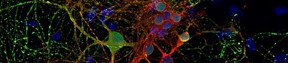
Trieste, Italy | Posted on June 13th, 2018A study conducted by SISSA - Scuola Internazionale Superiore di Studi Avanzati, in association with the University of Antwerp (Belgium), the University of Trieste and the Institute of Science and Technology of Barcelona (Spain), has analysed the behaviour of neurons grown on a single layer of graphene, observing a strengthening in their activity. Through theoretical and experimental approaches the researchers have shown that such behaviour is due to reduced ion mobility, in particular of potassium, to the neuron-graphene interface. This phenomenon is commonly called 'ion trapping', already known at theoretical level, but observed experimentally for the first time only now. "It is as if graphene behaves as an ultra-thin magnet on whose surface some of the potassium ions present in the extra cellular solution between the cells and the graphene remain trapped. It is this small variation that determines the increase in neuronal excitability" comments Denis Scaini, researcher at SISSA who has led the research alongside Laura Ballerini.
The study has also shown that this strengthening occurs when the graphene itself is supported by an insulator, like glass, or suspended in solution, while it disappears when lying on a conductor. "Graphene is a highly conductive material which could potentially be used to coat any surface. Understanding how its behaviour varies according to the substratum on which it is laid is essential for its future applications, above all in the neurological field" continues Scaini, "considering the unique properties of graphene it is natural to think for example about the development of innovative electrodes of cerebral stimulation or visual devices".
It is a study with a double outcome. Laura Ballerini comments as follows: "This 'ion trap' effect was described only in theory. Studying the impact of the 'technology of materials' on biological systems, we have documented a mechanism to regulate membrane excitability, but at the same time we have also experimentally described a property of the material through the biology of neurons."
###
The work has been carried out within the Graphene Flagship supported by the European Union.
####
For more information, please click here
Contacts:
Chiara Saviane - SISSA
0039-333-767-5962
Copyright © SCUOLA INTERNAZIONALE SUPERIORE DI STUDI AVANZATI
If you have a comment, please Contact us.Issuers of news releases, not 7th Wave, Inc. or Nanotechnology Now, are solely responsible for the accuracy of the content.
Bookmark:


| Related News Press |
News and information
 Quantum computer improves AI predictions April 17th, 2026
Flexible sensor gains sensitivity under pressure April 17th, 2026
A reusable chip for particulate matter sensing April 17th, 2026
Detecting vibrational quantum beating in the predissociation dynamics of SF6 using time-resolved photoelectron spectroscopy April 17th, 2026
Graphene/ Graphite
Electrifying results shed light on graphene foam as a potential material for lab grown cartilage June 6th, 2025
Breakthrough in proton barrier films using pore-free graphene oxide: Kumamoto University researchers achieve new milestone in advanced coating technologies September 13th, 2024
Brain-Computer Interfaces
Taking salt out of the water equation October 7th, 2022
New brain-like computing device simulates human learning: Researchers conditioned device to learn by association, like Pavlov's dog April 30th, 2021
Govt.-Legislation/Regulation/Funding/Policy
Quantum computer improves AI predictions April 17th, 2026
Metasurfaces smooth light to boost magnetic sensing precision January 30th, 2026
New imaging approach transforms study of bacterial biofilms August 8th, 2025
Possible Futures
A fundamentally new therapeutic approach to cystic fibrosis: Nanobody repairs cellular defect April 17th, 2026
UC Irvine physicists discover method to reverse ‘quantum scrambling’ : The work addresses the problem of information loss in quantum computing system April 17th, 2026
Nanomedicine
A fundamentally new therapeutic approach to cystic fibrosis: Nanobody repairs cellular defect April 17th, 2026
New molecular technology targets tumors and simultaneously silences two ‘undruggable’ cancer genes August 8th, 2025
New imaging approach transforms study of bacterial biofilms August 8th, 2025
Electrifying results shed light on graphene foam as a potential material for lab grown cartilage June 6th, 2025
Discoveries
Quantum computer improves AI predictions April 17th, 2026
Flexible sensor gains sensitivity under pressure April 17th, 2026
A reusable chip for particulate matter sensing April 17th, 2026
Detecting vibrational quantum beating in the predissociation dynamics of SF6 using time-resolved photoelectron spectroscopy April 17th, 2026
Announcements
A fundamentally new therapeutic approach to cystic fibrosis: Nanobody repairs cellular defect April 17th, 2026
UC Irvine physicists discover method to reverse ‘quantum scrambling’ : The work addresses the problem of information loss in quantum computing system April 17th, 2026
Nanobiotechnology
A fundamentally new therapeutic approach to cystic fibrosis: Nanobody repairs cellular defect April 17th, 2026
New molecular technology targets tumors and simultaneously silences two ‘undruggable’ cancer genes August 8th, 2025
New imaging approach transforms study of bacterial biofilms August 8th, 2025
Electrifying results shed light on graphene foam as a potential material for lab grown cartilage June 6th, 2025
 |
||
 |
||
| The latest news from around the world, FREE | ||
 |
||
|
|
||
| Premium Products | ||
 |
||
|
Only the news you want to read!
Learn More |
||
 |
||
|
Full-service, expert consulting
Learn More |
||
|
|
||