Home > Press > Electronic nose smells pesticides and nerve gas
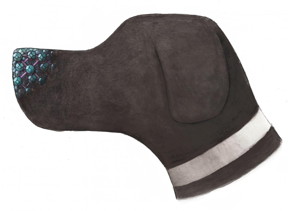 |
| Detecting pesticides and nerve gas in very low concentrations. An international team of researchers led by Ivo Stassen and Rob Ameloot from KU Leuven, Belgium, have made it possible.
© KU Leuven - Joris Snaet |
Abstract:
Detecting pesticides and nerve gas in very low concentrations. An international team of researchers led by Ivo Stassen and Rob Ameloot from KU Leuven, Belgium, have made it possible.
Electronic nose smells pesticides and nerve gas
Leuven, Belgium | Posted on July 6th, 2016The best-known electronic nose is the breathalyser. As drivers breathe into the device, a chemical sensor measures the amount of alcohol in their breath. This chemical reaction is then converted into an electronic signal, allowing the police officer to read off the result. Alcohol is easy to detect, because the chemical reaction is specific and the concentration of the measured gas is fairly high. But many other gases are complex mixtures of molecules in very low concentrations. Building electronic noses to detect them is thus quite a challenge.
Researchers from KU Leuven have now built a very sensitive electronic nose with metal-organic frameworks (MOFs). "MOFs are like microscopic sponges," postdoctoral researcher Ivo Stassen explains. "They can absorb quite a lot of gas into their minuscule pores."
"We created a MOF that absorbs the phosphonates found in pesticides and nerve gases. This means you can use it to find traces of chemical weapons such as sarin or to identify the residue of pesticides on food. This MOF is the most sensitive gas sensor to date for these dangerous substances. Our measurements were conducted in cooperation with imec, the Leuven-based nanotechnology research centre. The concentrations we're dealing with are extremely low: parts per billion - a drop of water in an Olympic swimming pool - and parts per trillion."
The chemical sensor can easily be integrated into existing electronic devices, Professor Rob Ameloot adds. "You can apply the MOF as a thin film over the surface of, for instance, an electric circuit. Therefore, it's fairly easy to equip a smartphone with a gas sensor for pesticides and nerve gas."
"Further research will allow us to examine other applications as well," Professor Ameloot continues. "MOFs can measure very low concentrations, so we could use them to screen someone's breath for diseases such as lung cancer and MS in an early stage. Or we could use the signature scent of a product to find out whether food has gone bad or to distinguish imitation wine from the original. This technology, in other words, offers a wide range of perspectives."
###
This research project is funded by the Research Foundation Flanders (FWO) and is carried out in collaboration with imec research centre for nanotechnology (Leuven and Eindhoven), Ghent University, and Kiel University.
####
For more information, please click here
Contacts:
Ivo Stassen
32-163-76732
Rob Ameloot
32-163-76674
Copyright © KU Leuven
If you have a comment, please Contact us.Issuers of news releases, not 7th Wave, Inc. or Nanotechnology Now, are solely responsible for the accuracy of the content.
Bookmark:


| Related Links |
| Related News Press |
News and information
 Quantum computer improves AI predictions April 17th, 2026
Flexible sensor gains sensitivity under pressure April 17th, 2026
A reusable chip for particulate matter sensing April 17th, 2026
Detecting vibrational quantum beating in the predissociation dynamics of SF6 using time-resolved photoelectron spectroscopy April 17th, 2026
Govt.-Legislation/Regulation/Funding/Policy
Quantum computer improves AI predictions April 17th, 2026
Metasurfaces smooth light to boost magnetic sensing precision January 30th, 2026
New imaging approach transforms study of bacterial biofilms August 8th, 2025
Possible Futures
A fundamentally new therapeutic approach to cystic fibrosis: Nanobody repairs cellular defect April 17th, 2026
UC Irvine physicists discover method to reverse ‘quantum scrambling’ : The work addresses the problem of information loss in quantum computing system April 17th, 2026
Sensors
Flexible sensor gains sensitivity under pressure April 17th, 2026
Tiny nanosheets, big leap: A new sensor detects ethanol at ultra-low levels January 30th, 2026
From sensors to smart systems: the rise of AI-driven photonic noses January 30th, 2026
Sensors innovations for smart lithium-based batteries: advancements, opportunities, and potential challenges August 8th, 2025
Discoveries
Quantum computer improves AI predictions April 17th, 2026
Flexible sensor gains sensitivity under pressure April 17th, 2026
A reusable chip for particulate matter sensing April 17th, 2026
Detecting vibrational quantum beating in the predissociation dynamics of SF6 using time-resolved photoelectron spectroscopy April 17th, 2026
Announcements
A fundamentally new therapeutic approach to cystic fibrosis: Nanobody repairs cellular defect April 17th, 2026
UC Irvine physicists discover method to reverse ‘quantum scrambling’ : The work addresses the problem of information loss in quantum computing system April 17th, 2026
Interviews/Book Reviews/Essays/Reports/Podcasts/Journals/White papers/Posters
A fundamentally new therapeutic approach to cystic fibrosis: Nanobody repairs cellular defect April 17th, 2026
UC Irvine physicists discover method to reverse ‘quantum scrambling’ : The work addresses the problem of information loss in quantum computing system April 17th, 2026
Homeland Security
The picture of health: Virginia Tech researchers enhance bioimaging and sensing with quantum photonics June 30th, 2023
Sensors developed at URI can identify threats at the molecular level: More sensitive than a dog's nose and the sensors don't get tired May 21st, 2021
Highly sensitive dopamine detector uses 2D materials August 7th, 2020
Military
Quantum engineers ‘squeeze’ laser frequency combs to make more sensitive gas sensors January 17th, 2025
Chainmail-like material could be the future of armor: First 2D mechanically interlocked polymer exhibits exceptional flexibility and strength January 17th, 2025
Single atoms show their true color July 5th, 2024
NRL charters Navy’s quantum inertial navigation path to reduce drift April 5th, 2024
Environment
A reusable chip for particulate matter sensing April 17th, 2026
Researchers unveil a groundbreaking clay-based solution to capture carbon dioxide and combat climate change June 6th, 2025
Grants/Sponsored Research/Awards/Scholarships/Gifts/Contests/Honors/Records
Quantum computer improves AI predictions April 17th, 2026
Detecting vibrational quantum beating in the predissociation dynamics of SF6 using time-resolved photoelectron spectroscopy April 17th, 2026
Metasurfaces smooth light to boost magnetic sensing precision January 30th, 2026
Research partnerships
Lab to industry: InSe wafer-scale breakthrough for future electronics August 8th, 2025
HKU physicists uncover hidden order in the quantum world through deconfined quantum critical points April 25th, 2025
 |
||
 |
||
| The latest news from around the world, FREE | ||
 |
||
|
|
||
| Premium Products | ||
 |
||
|
Only the news you want to read!
Learn More |
||
 |
||
|
Full-service, expert consulting
Learn More |
||
|
|
||