Home > Press > Miracle material graphene could deliver internet one hundred times faster
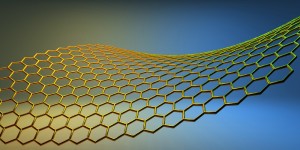 |
| Researchers look at new ways to use graphene in telecommunications |
Abstract:
The use of graphene in telecommunications could dramatically accelerate internet speeds by up to a hundred times, according to new research by scientists in our Department of Physics.
Miracle material graphene could deliver internet one hundred times faster
Bath, UK | Posted on July 14th, 2013In a paper published in Physical Review Letters, researchers from the Centre for Graphene Science at the Universities of Bath and Exeter have demonstrated for the first time incredibly short optical response rates using graphene, which could pave the way for a revolution in telecommunications.
Every day large amounts of information is transmitted and processed through optoelectronic devices such as optical fibres, photodetectors and lasers. Signals are sent by photons at infrared wavelengths and processed using optical switches, which convert signals into a series of light pulses.
Ordinarily optical switches respond at rate of a few picoseconds - around a trillionth of a second. Through this study physicists have observed the response rate of an optical switch using ‘few layer graphene' to be around one hundred femtoseconds - nearly a hundred times quicker than current materials.
Graphene is just one atom thick, but remarkably strong. Scientists have suggested that it would take an elephant, balanced on a pencil to break through a single sheet. Already dubbed a miracle material due to its strength, lightness, flexibility, conductivity and low cost, it could now enter the market to dramatically improve telecommunications.
Commenting on the report's main findings, lead researcher Dr Enrico Da Como said: "We've seen an ultrafast optical response rate, using ‘few-layer graphene', which has exciting applications for the development of high speed optoelectronic components based on graphene. This fast response is in the infrared part of the electromagnetic spectrum, where many applications in telecommunications, security and also medicine are currently developing and affecting our society."
Co-Director of the Centre for Graphene Science at Bath, Professor Simon Bending added: "The more we find out about graphene the more remarkable its properties seem to be. This research shows that it also has unique optical properties which could find important new applications."
In the long term this research could also lead to the development of quantum cascade lasers based on graphene. Quantum cascade lasers are semiconductor lasers used in pollution monitoring, security and spectroscopy. Few-layer graphene could emerge as a unique platform for this interesting application.
####
About University of Bath
We are one of the UK's leading universities with an international reputation for quality research and teaching. Our Mission is to deliver world class research and teaching, educating our graduates to become future leaders and innovators, and benefiting the wider population through our research, enterprise and influence. Our courses are innovative and interdisciplinary and we have an outstanding record of graduate employment.
For more information, please click here
Contacts:
Andy Dunne
University Press Office
44(0)1225386883
44(0)7966 341357
Copyright © University of Bath
If you have a comment, please Contact us.Issuers of news releases, not 7th Wave, Inc. or Nanotechnology Now, are solely responsible for the accuracy of the content.
Bookmark:


| Related Links |
| Related News Press |
News and information
 Quantum computer improves AI predictions April 17th, 2026
Flexible sensor gains sensitivity under pressure April 17th, 2026
A reusable chip for particulate matter sensing April 17th, 2026
Detecting vibrational quantum beating in the predissociation dynamics of SF6 using time-resolved photoelectron spectroscopy April 17th, 2026
Graphene/ Graphite
Electrifying results shed light on graphene foam as a potential material for lab grown cartilage June 6th, 2025
Breakthrough in proton barrier films using pore-free graphene oxide: Kumamoto University researchers achieve new milestone in advanced coating technologies September 13th, 2024
Law enforcement/Anti-Counterfeiting/Security/Loss prevention
Chainmail-like material could be the future of armor: First 2D mechanically interlocked polymer exhibits exceptional flexibility and strength January 17th, 2025
Sensors
Flexible sensor gains sensitivity under pressure April 17th, 2026
Tiny nanosheets, big leap: A new sensor detects ethanol at ultra-low levels January 30th, 2026
From sensors to smart systems: the rise of AI-driven photonic noses January 30th, 2026
Sensors innovations for smart lithium-based batteries: advancements, opportunities, and potential challenges August 8th, 2025
Discoveries
Quantum computer improves AI predictions April 17th, 2026
Flexible sensor gains sensitivity under pressure April 17th, 2026
A reusable chip for particulate matter sensing April 17th, 2026
Detecting vibrational quantum beating in the predissociation dynamics of SF6 using time-resolved photoelectron spectroscopy April 17th, 2026
Announcements
A fundamentally new therapeutic approach to cystic fibrosis: Nanobody repairs cellular defect April 17th, 2026
UC Irvine physicists discover method to reverse ‘quantum scrambling’ : The work addresses the problem of information loss in quantum computing system April 17th, 2026
Interviews/Book Reviews/Essays/Reports/Podcasts/Journals/White papers/Posters
A fundamentally new therapeutic approach to cystic fibrosis: Nanobody repairs cellular defect April 17th, 2026
UC Irvine physicists discover method to reverse ‘quantum scrambling’ : The work addresses the problem of information loss in quantum computing system April 17th, 2026
Environment
A reusable chip for particulate matter sensing April 17th, 2026
Researchers unveil a groundbreaking clay-based solution to capture carbon dioxide and combat climate change June 6th, 2025
Photonics/Optics/Lasers
Metasurfaces smooth light to boost magnetic sensing precision January 30th, 2026
From sensors to smart systems: the rise of AI-driven photonic noses January 30th, 2026
 |
||
 |
||
| The latest news from around the world, FREE | ||
 |
||
|
|
||
| Premium Products | ||
 |
||
|
Only the news you want to read!
Learn More |
||
 |
||
|
Full-service, expert consulting
Learn More |
||
|
|
||