Home > Press > Buckle up for fast ionic conduction
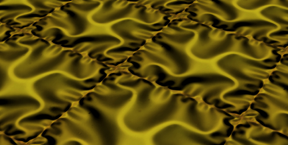 |
| ETH researchers engineered free-standing ceramic membranes for so-called micro energy converters. The strain patterns of these membranes control their properties. Illustration: Shi Y et al. Nature Materials 2015 |
Abstract:
ETH material engineers found that the performance of ion-conducting ceramic membranes that are so important in industry depends largely on their strain and buckling profiles. For the first time, scientists can now selectively manipulate the buckling profile, and thus the physical properties, allowing new technical applications of these membranes.
Buckle up for fast ionic conduction
Zurich, Switzerland | Posted on June 16th, 2015"Ionics, ion-based data processing and energy conversion, is the electronics of the future", says Jennifer Rupp, a professor of Electrochemical Materials at ETH Zurich, and therewith sums up her field of research. Together with her group, Rupp produces ceramic materials that can conduct charged atoms (ions), such as oxygen or lithium ions, very quickly. Such materials are already being used today; for example, in lambda sensors of automotive catalytic converters and solid oxide fuel cells. The ETH professor is convinced that the industrial importance of these materials will even further increase - for example, in gas sensors, new classes of data storage and computer circuits, and in the conversion of chemical energy into electrical energy and vice versa.
One of the most important research questions in Rupp's field currently is how to optimise these materials, which are usually produced in the form of a thin membrane, so that ions can move more quickly within them. In a study just published in the scientific journal Nature Materials, several doctoral students in her group demonstrated how ion transport depends greatly on the manner in which these membranes are strained. The group also succeeded in controlling the strain of the membranes selectively, which is a breakthrough in the development of future technical applications.
Free-standing membrane
The scientists worked in their study with a very thin ceramic layer; namely, gadolinium-doped ceria. "This is one of the most frequently used ion conductors in the industry," explains Sebastian Schweiger, a doctoral student.
In previous research, the material had been usually studied in the form of a thin film on a silicon substrate. Yanuo Shi, another doctoral student in Rupp's group and first author of the recently published paper, instead created a free-standing membrane from the material by free-etching the substrate under the thin ceramic layer. The material was then no longer flat but buckled due to changes of the internal stress in the layer during the etching process. Shi attached microelectrodes to small pieces of these membranes to create tiny components that can be used to generate electricity from hydrogen or organic compounds and from oxygen in the air.
Electrode design affects buckling profile
The researchers also found that the arrangement of the electrodes affects the buckling profile of the ceramic membrane and the material structure at the atomic level. In turn, this greatly influences the conductivity of the membrane for oxygen ions. The scientists are able to describe this effect in detail. "For the first time, we are able to selectively control the buckling profile and ion conductivity of such membranes," says Alexander Bork, another doctoral student.
In recent decades, scientists have attempted mainly to influence the conductivity of such ion conductors by deliberately 'contaminating' the material with certain foreign atoms - in technical terms, doping. The ETH researchers have now shown that the conductivity can be controlled to a much greater degree by manipulation of the strain and buckling profile in real devices.
"Even in earlier experiments, scientists noticed that power generation in micro solid oxide fuel cells varies greatly depending on the structure of such cells. In the experiment with the strain of the ion conductor, we have now found a possible explanation for this behaviour," says Rupp. It now appears possible to optimise the characteristics of ion-conducting membranes. This supports the development of future gas sensors, ion-based data storage and micro energy converters, such as fuel cells - and potentially a range of other as yet unknown applications in the promising field of ionics.
####
For more information, please click here
Contacts:
Dr. Jennifer Rupp
41-792-900-697
Copyright © ETH Zurich
If you have a comment, please Contact us.Issuers of news releases, not 7th Wave, Inc. or Nanotechnology Now, are solely responsible for the accuracy of the content.
Bookmark:


| Related Links |
| Related News Press |
News and information
 Quantum computer improves AI predictions April 17th, 2026
Flexible sensor gains sensitivity under pressure April 17th, 2026
A reusable chip for particulate matter sensing April 17th, 2026
Detecting vibrational quantum beating in the predissociation dynamics of SF6 using time-resolved photoelectron spectroscopy April 17th, 2026
Chip Technology
A reusable chip for particulate matter sensing April 17th, 2026
Metasurfaces smooth light to boost magnetic sensing precision January 30th, 2026
Memory Technology
Researchers tackle the memory bottleneck stalling quantum computing October 3rd, 2025
First real-time observation of two-dimensional melting process: Researchers at Mainz University unveil new insights into magnetic vortex structures August 8th, 2025
Utilizing palladium for addressing contact issues of buried oxide thin film transistors April 5th, 2024
Sensors
Flexible sensor gains sensitivity under pressure April 17th, 2026
Tiny nanosheets, big leap: A new sensor detects ethanol at ultra-low levels January 30th, 2026
From sensors to smart systems: the rise of AI-driven photonic noses January 30th, 2026
Sensors innovations for smart lithium-based batteries: advancements, opportunities, and potential challenges August 8th, 2025
Discoveries
Quantum computer improves AI predictions April 17th, 2026
Flexible sensor gains sensitivity under pressure April 17th, 2026
A reusable chip for particulate matter sensing April 17th, 2026
Detecting vibrational quantum beating in the predissociation dynamics of SF6 using time-resolved photoelectron spectroscopy April 17th, 2026
Materials/Metamaterials/Magnetoresistance
First real-time observation of two-dimensional melting process: Researchers at Mainz University unveil new insights into magnetic vortex structures August 8th, 2025
Researchers unveil a groundbreaking clay-based solution to capture carbon dioxide and combat climate change June 6th, 2025
A 1960s idea inspires NBI researchers to study hitherto inaccessible quantum states June 6th, 2025
Institute for Nanoscience hosts annual proposal planning meeting May 16th, 2025
Announcements
A fundamentally new therapeutic approach to cystic fibrosis: Nanobody repairs cellular defect April 17th, 2026
UC Irvine physicists discover method to reverse ‘quantum scrambling’ : The work addresses the problem of information loss in quantum computing system April 17th, 2026
Interviews/Book Reviews/Essays/Reports/Podcasts/Journals/White papers/Posters
A fundamentally new therapeutic approach to cystic fibrosis: Nanobody repairs cellular defect April 17th, 2026
UC Irvine physicists discover method to reverse ‘quantum scrambling’ : The work addresses the problem of information loss in quantum computing system April 17th, 2026
Energy
Sensors innovations for smart lithium-based batteries: advancements, opportunities, and potential challenges August 8th, 2025
Simple algorithm paired with standard imaging tool could predict failure in lithium metal batteries August 8th, 2025
Automotive/Transportation
Decoding hydrogen‑bond network of electrolyte for cryogenic durable aqueous zinc‑ion batteries January 30th, 2026
Sensors innovations for smart lithium-based batteries: advancements, opportunities, and potential challenges August 8th, 2025
Simple algorithm paired with standard imaging tool could predict failure in lithium metal batteries August 8th, 2025
Industrial
Tiny nanosheets, big leap: A new sensor detects ethanol at ultra-low levels January 30th, 2026
Quantum interference in molecule-surface collisions February 28th, 2025
Boron nitride nanotube fibers get real: Rice lab creates first heat-tolerant, stable fibers from wet-spinning process June 24th, 2022
Battery Technology/Capacitors/Generators/Piezoelectrics/Thermoelectrics/Energy storage
Decoding hydrogen‑bond network of electrolyte for cryogenic durable aqueous zinc‑ion batteries January 30th, 2026
COF scaffold membrane with gate‑lane nanostructure for efficient Li+/Mg2+ separation January 30th, 2026
MXene nanomaterials enter a new dimension Multilayer nanomaterial: MXene flakes created at Drexel University show new promise as 1D scrolls January 30th, 2026
Fuel Cells
Deciphering local microstrain-induced optimization of asymmetric Fe single atomic sites for efficient oxygen reduction August 8th, 2025
Current and Future Developments in Nanomaterials and Carbon Nanotubes: Applications of Nanomaterials in Energy Storage and Electronics October 28th, 2022
 |
||
 |
||
| The latest news from around the world, FREE | ||
 |
||
|
|
||
| Premium Products | ||
 |
||
|
Only the news you want to read!
Learn More |
||
 |
||
|
Full-service, expert consulting
Learn More |
||
|
|
||