Home > Press > Excellent Research at the Ceramics Workshop
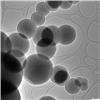 |
| Carbon structures in the nanometer and micrometer range are produced by pyrolysis of plastics in high-performance kilns Photo: KIT / A. P. Vogt |
Abstract:
Ceramic vases and battery electrodes serve different purposes, but have an important production step in common: Only at very high temperatures are they given their excellent properties. For this reason, the chemist Andrew P. Vogt of KIT uses the kilns of the Majolika Ceramics Manufactory in Karlsruhe for his materials research project. He applies tailored plastic molecules to develop prototypes of nanostructured carbon materials for battery electrodes or chemical catalysts.
Excellent Research at the Ceramics Workshop
Karlsruhe, Germany | Posted on May 14th, 2014"For my research, it is sheer luck that the kilns of the Majolika are located just around the corner of the campus," Andrew Vogt brims with enthusiasm. Already during his Ph. D. phase he developed processes to generate small structures in materials. Nanostructured materials may be applied as filters to clean contaminated water or as chemical catalysts. They might also be suited for batteries or electronics. Carbon rich materials can be nanostructured as well, where even thin samples do not tear and are easy to modify chemically.
To produce nanostructured materials, Vogt uses long-chain "polymer" molecules, i.e. plastics. With the help of additives, various polymer types with precisely adjusted properties can be produced. "Then, we have to carefully decompose the molecules to obtain carbon rich structures in vacuum tanks with extreme heat," Vogt states explaining the process of the so-called "pyrolysis". The kilns at Majolika have turned out to be a suitable tool for this purpose.
To successfully decompose the polymers and generate carbon rich structures, the temperature has to be controlled precisely at a particular rate of time. The samples are heated up to more than 800°C. "The Majolika operates high-performance kilns, whose temperature does not fluctuate," Vogt says. The kilns are equipped with very thick walls, because a constant temperature also is of great importance when baking and glazing large ceramic vases and tiles. Temperature fluctuations may cause the color to deviate or cracks to develop.
Vogt, who conducts research at the KIT Chair for Preparative Macromolecular Chemistry of Christopher Barner-Kowollik under a grant of the Alexander von Humboldt Foundation, is presently examining the novel carbon nanostructures for applicability. Stable, nanoporous filters, for instance, might be used for cleaning water or oil. Chemical catalysts might be applied for the production of chemicals or battery electrodes with enhanced properties. "We are only at the beginning, but conversations with colleagues at KIT have already revealed exciting perspectives," Barner-Kowollik and Vogt exclaim - summing up the status of research at the moment.
####
About Karlsruhe Institute of Technology
Karlsruhe Institute of Technology (KIT) is a public corporation according to the legislation of the state of Baden-Württemberg. It fulfills the mission of a university and the mission of a national research center of the Helmholtz Association. Research activities focus on energy, the natural and built environment as well as on society and technology and cover the whole range extending from fundamental aspects to application. With about 9000 employees, including nearly 6000 staff members in the science and education sector, and 24000 students, KIT is one of the biggest research and education institutions in Europe. Work of KIT is based on the knowledge triangle of research, teaching, and innovation.
For more information, please click here
Contacts:
Monika Landgraf
Karlsruher Institut für Technologie
+49 721 608
Copyright © AlphaGalileo
If you have a comment, please Contact us.Issuers of news releases, not 7th Wave, Inc. or Nanotechnology Now, are solely responsible for the accuracy of the content.
Bookmark:


| Related News Press |
News and information
 Quantum computer improves AI predictions April 17th, 2026
Flexible sensor gains sensitivity under pressure April 17th, 2026
A reusable chip for particulate matter sensing April 17th, 2026
Detecting vibrational quantum beating in the predissociation dynamics of SF6 using time-resolved photoelectron spectroscopy April 17th, 2026
Chemistry
Projecting light to dispense liquids: A new route to ultra-precise microdroplets January 30th, 2026
From sensors to smart systems: the rise of AI-driven photonic noses January 30th, 2026
"Nanoreactor" cage uses visible light for catalytic and ultra-selective cross-cycloadditions October 3rd, 2025
Cambridge chemists discover simple way to build bigger molecules – one carbon at a time June 6th, 2025
Single-atom catalysts change spin state when boosted by a magnetic field June 4th, 2025
Laboratories
Researchers develop molecular qubits that communicate at telecom frequencies October 3rd, 2025
Discoveries
Quantum computer improves AI predictions April 17th, 2026
Flexible sensor gains sensitivity under pressure April 17th, 2026
A reusable chip for particulate matter sensing April 17th, 2026
Detecting vibrational quantum beating in the predissociation dynamics of SF6 using time-resolved photoelectron spectroscopy April 17th, 2026
Materials/Metamaterials/Magnetoresistance
First real-time observation of two-dimensional melting process: Researchers at Mainz University unveil new insights into magnetic vortex structures August 8th, 2025
Researchers unveil a groundbreaking clay-based solution to capture carbon dioxide and combat climate change June 6th, 2025
A 1960s idea inspires NBI researchers to study hitherto inaccessible quantum states June 6th, 2025
Institute for Nanoscience hosts annual proposal planning meeting May 16th, 2025
Announcements
A fundamentally new therapeutic approach to cystic fibrosis: Nanobody repairs cellular defect April 17th, 2026
UC Irvine physicists discover method to reverse ‘quantum scrambling’ : The work addresses the problem of information loss in quantum computing system April 17th, 2026
Battery Technology/Capacitors/Generators/Piezoelectrics/Thermoelectrics/Energy storage
Decoding hydrogen‑bond network of electrolyte for cryogenic durable aqueous zinc‑ion batteries January 30th, 2026
COF scaffold membrane with gate‑lane nanostructure for efficient Li+/Mg2+ separation January 30th, 2026
MXene nanomaterials enter a new dimension Multilayer nanomaterial: MXene flakes created at Drexel University show new promise as 1D scrolls January 30th, 2026
 |
||
 |
||
| The latest news from around the world, FREE | ||
 |
||
|
|
||
| Premium Products | ||
 |
||
|
Only the news you want to read!
Learn More |
||
 |
||
|
Full-service, expert consulting
Learn More |
||
|
|
||