Home > Press > INRS develops a nanohybrid with remarkable properties using a new laser-plasma process: Towards a new generation of optoelectronic nanomaterials
 |
Abstract:
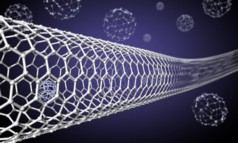
By achieving the synthesis of a novel nanohybrid structure by means of the pulsed laser ablation (PLA) technique, Professor My Ali El Khakani and his team paved the way for a new generation of optoelectronic materials. The combination of carbon nanotubes and lead sulfide (PbS) nanoparticles was performed using an effective and relatively simple process that offers considerable latitude for creating other nanohybrids for a variety of applications. The INRS Énergie Matériaux Télécommunications Research Centre researcher's work, published in the renowned journal Advanced Materials, presents very promising prospects for the development of third-generation solar devices, fast photodetectors, and optoelectronic switches.
INRS develops a nanohybrid with remarkable properties using a new laser-plasma process: Towards a new generation of optoelectronic nanomaterials
Montreal, Canada | Posted on January 25th, 2013In recent years, research on the photoelectronic properties of semiconductor nanoparticles, such as PbS, has been growing. The coupling of these nanoparticles with carbon nanotubes is a promising strategy for effectively generating photocurrent. The synthesis methods used by other research teams had significant limitations. "When chemically synthesizing nanohybrids, researchers used ligands, which prevented nanoparticle agglomeration, on one hand, but significantly affected the charge transfer dynamics from nanoparticles to nanotubes," said Professor El Khakani. Ligands reduce photoresponse efficiency and increase the reaction time—two effects that were not observed in nanohybrids produced by PLA since PbS is in direct atomic contact with the nanotubes' surafce.
"At the beginning, we didn't know if the nanohybrids would form in such a way as to enable their effective use for photodetection," said Ibrahima Ka, an INRS doctoral student working under the supervision of Professor El Khakani and co-supervised by Professor Dongling Ma. "By optimizing our approach, we developed nanohybrids whose photoactivity can be almost tailored at will." By integrating the new nanohybrid material into functional photoconductive devices, the researchers were pleased to demonstrate its strong photoresponse, which overpasses the results obtained by other methods. Thus, they have been able to achieve photoresponse values as high as 670% at 633 nm and 1350% at 405 nm under conditions where other nanohybrids did not exceed 37%. Furthermore, when the material is illuminated by a laser, the photocurrent response time is 1,000 to 100,000 times faster than those reported to date for other nanohybrids.
The PLA synthesis process produces very pure nanostructures and provides greater control over nanohybrid characteristics. Professor El Khakani's results demonstrate the enormous potential of these carbon nanotubes with PbS quantum dots.
Source: Stéphanie Thibault, Communications Advisor
####
About INRS
Institut national de recherche scientifique (INRS) is research intensive university which offers graduate level training. It ranks first in Canada for research intensity (average grant funding per faculty member). INRS brings together some 150 professors and close to 700 students and postdoctoral fellows at its four centres in Montreal, Quebec City, Laval, and Varennes. Its applied and fundamental research is essential to the advancement of science in Quebec and internationally, even as it plays a key role in the development of concrete solutions to the problems faced by our society.
About this publication
The article entitled "Pulsed Laser Ablation based Direct Synthesis of Single-Wall Carbon Nanotube/PbS Quantum Dot Nanohybrids Exhibiting Strong, Spectrally Wide and Fast Photoresponse" was published in the journal Advanced Materials on December 11, 2012, (Vol. 24, pp. 6289) and selected for the journal's frontispiece. The research of My Ali El Khakani, a professor and researcher at INRS's Énergie Matériaux Télécommunications Research Centre, was made possible by the financial support of the Natural Sciences and Engineering Research Council of Canada (NSERC) and the Fonds de recherche du Québec Nature and Technology fund, as well as support from Plasma-Québec's strategic network and Nano-Québec.
For more information, please click here
Contacts:
Stéphanie Thibault
Communications Advisor
Communications and Public Affairs Department
450-687-5010 x8865
Copyright © INRS
If you have a comment, please Contact us.Issuers of news releases, not 7th Wave, Inc. or Nanotechnology Now, are solely responsible for the accuracy of the content.
Bookmark:


| Related News Press |
News and information
 Quantum computer improves AI predictions April 17th, 2026
Flexible sensor gains sensitivity under pressure April 17th, 2026
A reusable chip for particulate matter sensing April 17th, 2026
Detecting vibrational quantum beating in the predissociation dynamics of SF6 using time-resolved photoelectron spectroscopy April 17th, 2026
Nanotubes/Buckyballs/Fullerenes/Nanorods/Nanostrings/Nanosheets
Tiny nanosheets, big leap: A new sensor detects ethanol at ultra-low levels January 30th, 2026
Enhancing power factor of p- and n-type single-walled carbon nanotubes April 25th, 2025
Chainmail-like material could be the future of armor: First 2D mechanically interlocked polymer exhibits exceptional flexibility and strength January 17th, 2025
Innovative biomimetic superhydrophobic coating combines repair and buffering properties for superior anti-erosion December 13th, 2024
Optical computing/Photonic computing
ICFO researchers overcome long-standing bottleneck in single photon detection with twisted 2D materials August 8th, 2025
Programmable electron-induced color router array May 14th, 2025
Sensors
Flexible sensor gains sensitivity under pressure April 17th, 2026
Tiny nanosheets, big leap: A new sensor detects ethanol at ultra-low levels January 30th, 2026
From sensors to smart systems: the rise of AI-driven photonic noses January 30th, 2026
Sensors innovations for smart lithium-based batteries: advancements, opportunities, and potential challenges August 8th, 2025
Discoveries
Quantum computer improves AI predictions April 17th, 2026
Flexible sensor gains sensitivity under pressure April 17th, 2026
A reusable chip for particulate matter sensing April 17th, 2026
Detecting vibrational quantum beating in the predissociation dynamics of SF6 using time-resolved photoelectron spectroscopy April 17th, 2026
Announcements
A fundamentally new therapeutic approach to cystic fibrosis: Nanobody repairs cellular defect April 17th, 2026
UC Irvine physicists discover method to reverse ‘quantum scrambling’ : The work addresses the problem of information loss in quantum computing system April 17th, 2026
Energy
Sensors innovations for smart lithium-based batteries: advancements, opportunities, and potential challenges August 8th, 2025
Simple algorithm paired with standard imaging tool could predict failure in lithium metal batteries August 8th, 2025
Quantum Dots/Rods
A new kind of magnetism November 17th, 2023
IOP Publishing celebrates World Quantum Day with the announcement of a special quantum collection and the winners of two prestigious quantum awards April 14th, 2023
Qubits on strong stimulants: Researchers find ways to improve the storage time of quantum information in a spin rich material January 27th, 2023
NIST’s grid of quantum islands could reveal secrets for powerful technologies November 18th, 2022
Photonics/Optics/Lasers
Metasurfaces smooth light to boost magnetic sensing precision January 30th, 2026
From sensors to smart systems: the rise of AI-driven photonic noses January 30th, 2026
Solar/Photovoltaic
Spinel-type sulfide semiconductors to operate the next-generation LEDs and solar cells For solar-cell absorbers and green-LED source October 3rd, 2025
KAIST researchers introduce new and improved, next-generation perovskite solar cell November 8th, 2024
Groundbreaking precision in single-molecule optoelectronics August 16th, 2024
Development of zinc oxide nanopagoda array photoelectrode: photoelectrochemical water-splitting hydrogen production January 12th, 2024
 |
||
 |
||
| The latest news from around the world, FREE | ||
 |
||
|
|
||
| Premium Products | ||
 |
||
|
Only the news you want to read!
Learn More |
||
 |
||
|
Full-service, expert consulting
Learn More |
||
|
|
||