Home > Press > Practical superconducting nanowire single photon detector with record detection efficiency over 90 percent
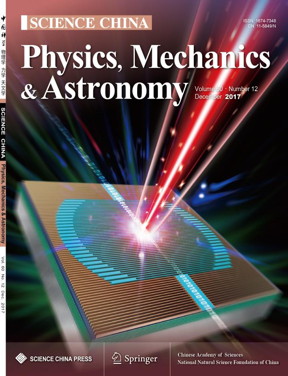 |
| Schematics of fiber-coupled superconducting nanowire single photon detector. CREDIT ©Science China Press |
Abstract:
Superconducting nanowire single-photon detectors (SNSPDs) offer significant improvement on detection efficiency (DE) compared to their semiconducting counterparts, having enabled many breakthrough applications in quantum information technologies. The team headed by Prof. Lixing You from Shanghai Institute of Microsystem and Information Technology (SIMIT), Chinese Academy of Sciences (CAS) (also affiliated to CAS Center for Excellence in Superconducting Electronics (CENSE)) first demonstrated the fabrication and operation of a NbN-SNSPD with system detection efficiency over 90% at 2.1 K at a wavelength of 1550 nm, which paves the way for practical application of SNSPD (Figure 1).
Practical superconducting nanowire single photon detector with record detection efficiency over 90 percent
Beijing, China | Posted on November 9th, 2017The results were published recently on SCIENCE CHINA Physics, Mechanics & Astronomy [1] as a cover image story. Dr. Weijun Zhang is the first author and Dr. Lixing You is the corresponding author.
At 1550 nm, which is the most important wavelength for applications, the state of the art SNSPD made of WSi superconductor has reached a DE record of 93% [2], compared to InGaAs detector with DE ~30%. Unfortunately, WSi-SNSPD usually operates at sub-kelvin temperatures, requiring expensive and user unfriendly refrigeration equipment.
Extensive efforts are made on the development of SNSPDs based on NbN, targeted at operating temperature above 2K, accessible to inexpensive and user-friendly compact cryocoolers. With a decade research, the detection efficiency of NbN-SNSPDs were gradually increased to ~ 80%. However, further improvements are not reported. Achieving DE over 90% requires the simultaneous optimization of many different factors, including near perfect optical coupling, near perfect absorption, and near unity intrinsic quantum efficiency. Previous attempts at doing this have mostly been made through a process of trial and error.
This paper first reported a NbN-SNSPD system based on G-M cryocooler with system detection efficiency over 90% (at dark count rate of 10 Hz) at 2.1 K at a wavelength of 1550 nm. The efficiency of the device saturates to 92% when the temperature is lowered to 1.8 K.
The success of this device has been the result of using an integrated Distributed Bragg Reflector (DBR) cavity offering near unity refection at the interface, and through systematic optimization of the NbN nanowire's meandered geometry. The joint efforts enable researchers to simultaneously achieve the stringent requirements for coupling, absorption and intrinsic quantum efficiency. What is more, the device exhibit timing jitters down to 79 ps, almost half that of previously reported WSi-SNSPD, promising additional advantages in applications requiring high timing precision. The devices have been applied to the quantum information frontier experiments in University of Science and Technology of China.
SNSPD with near unity detection efficiency operational on economical and user-friendly compact cryocooler will provide researchers a powerful and easy accessible tool, envisage further breakthrough in quantum information areas such as optical quantum computation/simulation, quantum key distribution etc., in a foreseeable near future. Aiming to this niche and growing market, Dr. You et al also founded a start-up company (Shanghai Photon Technology CO LTD, http://www.sconphoton.com/ ) to commercialize the technology.
The SNSPDs with start-of-art performance from SIMIT have provided key support to quantum communication of China. Collaborated with JW Pan's group, many world records on fiber quantum key distribution have been made including the current record of the longest distance of 404 km [3]. Dr. You believes that there is still room for further improving the detection efficiency of NbN SNSPD. In the new National Key R&D Program of China kicked off in July of 2017 directed by Dr. You, the new target of the detection efficiency is 93-95%.
###
This research was funded by National Key R&D Program of China (2017YFA0304000); Strategic Priority Research Program (B) of the Chinese Academy of Sciences (XDB04010200); National Natural Science Foundation of China (91121022, 61401441, and 61401443) and the Science and Technology Commission of Shanghai Municipality (16JC1400402)
####
For more information, please click here
Contacts:
YOU Lixing
Copyright © Science China Press
If you have a comment, please Contact us.Issuers of news releases, not 7th Wave, Inc. or Nanotechnology Now, are solely responsible for the accuracy of the content.
Bookmark:


| Related Links |
| Related News Press |
News and information
 Quantum computer improves AI predictions April 17th, 2026
Flexible sensor gains sensitivity under pressure April 17th, 2026
A reusable chip for particulate matter sensing April 17th, 2026
Detecting vibrational quantum beating in the predissociation dynamics of SF6 using time-resolved photoelectron spectroscopy April 17th, 2026
Possible Futures
A fundamentally new therapeutic approach to cystic fibrosis: Nanobody repairs cellular defect April 17th, 2026
UC Irvine physicists discover method to reverse ‘quantum scrambling’ : The work addresses the problem of information loss in quantum computing system April 17th, 2026
Chip Technology
A reusable chip for particulate matter sensing April 17th, 2026
Metasurfaces smooth light to boost magnetic sensing precision January 30th, 2026
Optical computing/Photonic computing
ICFO researchers overcome long-standing bottleneck in single photon detection with twisted 2D materials August 8th, 2025
Programmable electron-induced color router array May 14th, 2025
Sensors
Flexible sensor gains sensitivity under pressure April 17th, 2026
Tiny nanosheets, big leap: A new sensor detects ethanol at ultra-low levels January 30th, 2026
From sensors to smart systems: the rise of AI-driven photonic noses January 30th, 2026
Sensors innovations for smart lithium-based batteries: advancements, opportunities, and potential challenges August 8th, 2025
Discoveries
Quantum computer improves AI predictions April 17th, 2026
Flexible sensor gains sensitivity under pressure April 17th, 2026
A reusable chip for particulate matter sensing April 17th, 2026
Detecting vibrational quantum beating in the predissociation dynamics of SF6 using time-resolved photoelectron spectroscopy April 17th, 2026
Announcements
A fundamentally new therapeutic approach to cystic fibrosis: Nanobody repairs cellular defect April 17th, 2026
UC Irvine physicists discover method to reverse ‘quantum scrambling’ : The work addresses the problem of information loss in quantum computing system April 17th, 2026
Interviews/Book Reviews/Essays/Reports/Podcasts/Journals/White papers/Posters
A fundamentally new therapeutic approach to cystic fibrosis: Nanobody repairs cellular defect April 17th, 2026
UC Irvine physicists discover method to reverse ‘quantum scrambling’ : The work addresses the problem of information loss in quantum computing system April 17th, 2026
Photonics/Optics/Lasers
Metasurfaces smooth light to boost magnetic sensing precision January 30th, 2026
From sensors to smart systems: the rise of AI-driven photonic noses January 30th, 2026
 |
||
 |
||
| The latest news from around the world, FREE | ||
 |
||
|
|
||
| Premium Products | ||
 |
||
|
Only the news you want to read!
Learn More |
||
 |
||
|
Full-service, expert consulting
Learn More |
||
|
|
||