Home > Press > Groundbreaking research unveils unified theory for optical singularities in photonic microstructures
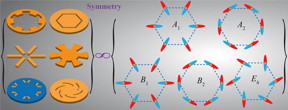 |
| Graphical abstract Credit Jie Yang et al. |
Abstract:
In a recent study published in Engineering, a team of researchers has made significant strides in understanding optical singularities within photonic microstructures. This research presents a unified theoretical scheme that sheds light on the complex relationship between the symmetries of these microstructures and the generation of optical singularities, opening new avenues for advancements in photonics and optics.
Groundbreaking research unveils unified theory for optical singularities in photonic microstructures
Beijing, China | Posted on December 13th, 2024Optical singularities, which are topological defects in electromagnetic fields, have been a subject of intense research due to their potential applications in various fields such as subwavelength focusing, high-capacity communications, and on-chip applications. However, previous attempts to understand and manipulate these singularities have been limited by the lack of a comprehensive theoretical framework applicable to different types of photonic microstructures.
The research team focused on photonic microstructures with rosette symmetries, which are prevalent in many engineered systems designed to generate optical singularities. By leveraging the principles of electromagnetic scattering theory and group representation theory, the team developed a novel approach to categorize the eigencurrents and eigenmodes of these microstructures based on their symmetry features.
Through an electric dipole model, the researchers demonstrated that the eigenmodes of symmetric microstructures can support multiplexed phase singularities in different components. This discovery not only deepens our understanding of the fundamental nature of optical singularities but also paves the way for the synthesis of more complex singularities, including C points, V points, L lines, and different types of optical skyrmions.
One of the key findings of the study is the revelation that the topological invariants associated with optical singularities are protected by the symmetries of the microstructures. This symmetry protection provides a robust foundation for the design and engineering of photonic devices with predictable and stable optical singularity properties.
The researchers also formulated a symmetry matching condition that clarifies the excitation requirements for specific optical singularities. This condition is expected to serve as a guiding principle for future research in photonic spin-orbit interaction and the development of selection rules for optical processes.
The implications of this research are far-reaching. The unified theoretical scheme not only enhances our understanding of the underlying physics of optical singularities but also offers practical tools for the design and optimization of photonic microstructures with tailored singularity properties. This could lead to the development of novel optical devices with enhanced performance and functionality, such as more efficient optical communication systems, advanced imaging technologies, and precise light-matter interaction platforms.
This groundbreaking research represents a significant step forward in the field of photonics. By unraveling the mysteries of optical singularities in photonic microstructures, the study provides a roadmap for future research and innovation, with the potential to transform various technological applications that rely on the precise control of light.
####
About Higher Education Press
For more information about the Engineering, follow us on X ( https://twitter.com/EngineeringJrnl ) & like us on Facebook ( https://www.facebook.com/EngineeringJrnl ).
For more information, please click here
Contacts:
Rong Xie
Higher Education Press
Office: +86 010-5855-6485
Copyright © Higher Education Press
If you have a comment, please Contact us.Issuers of news releases, not 7th Wave, Inc. or Nanotechnology Now, are solely responsible for the accuracy of the content.
Bookmark:


| Related Links |
| Related News Press |
News and information
 Decoding hydrogen‑bond network of electrolyte for cryogenic durable aqueous zinc‑ion batteries January 30th, 2026
COF scaffold membrane with gate‑lane nanostructure for efficient Li+/Mg2+ separation January 30th, 2026
Possible Futures
Decoding hydrogen‑bond network of electrolyte for cryogenic durable aqueous zinc‑ion batteries January 30th, 2026
COF scaffold membrane with gate‑lane nanostructure for efficient Li+/Mg2+ separation January 30th, 2026
Optical computing/Photonic computing
ICFO researchers overcome long-standing bottleneck in single photon detection with twisted 2D materials August 8th, 2025
Programmable electron-induced color router array May 14th, 2025
Nanophotonic platform boosts efficiency of nonlinear-optical quantum teleportation April 25th, 2025
Discoveries
From sensors to smart systems: the rise of AI-driven photonic noses January 30th, 2026
Decoding hydrogen‑bond network of electrolyte for cryogenic durable aqueous zinc‑ion batteries January 30th, 2026
COF scaffold membrane with gate‑lane nanostructure for efficient Li+/Mg2+ separation January 30th, 2026
Announcements
Decoding hydrogen‑bond network of electrolyte for cryogenic durable aqueous zinc‑ion batteries January 30th, 2026
COF scaffold membrane with gate‑lane nanostructure for efficient Li+/Mg2+ separation January 30th, 2026
Interviews/Book Reviews/Essays/Reports/Podcasts/Journals/White papers/Posters
Metasurfaces smooth light to boost magnetic sensing precision January 30th, 2026
COF scaffold membrane with gate‑lane nanostructure for efficient Li+/Mg2+ separation January 30th, 2026
Photonics/Optics/Lasers
Metasurfaces smooth light to boost magnetic sensing precision January 30th, 2026
From sensors to smart systems: the rise of AI-driven photonic noses January 30th, 2026
ICFO researchers overcome long-standing bottleneck in single photon detection with twisted 2D materials August 8th, 2025
 |
||
 |
||
| The latest news from around the world, FREE | ||
 |
||
|
|
||
| Premium Products | ||
 |
||
|
Only the news you want to read!
Learn More |
||
 |
||
|
Full-service, expert consulting
Learn More |
||
|
|
||