Home > Press > A simple, rapid test to help ensure safer meat
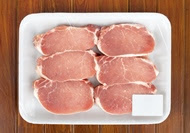 |
| A new rapid test could help the food industry ensure that customers are getting unspoiled meat. Credit: urfinguss/iStock/Thinkstock |
Abstract:
Deciding whether to cook or toss a steak that's been in the fridge for a few days calls for a sniff test. This generally works well for home cooks. But food manufacturers that supply tons of meats to consumers require more reliable measures. In a new journal called ACS Sensors, scientists report a simple method that uses nanotubes to quickly detect spoilage. It could help make sure meats are safe when they hit store shelves.
A simple, rapid test to help ensure safer meat
Washington, DC | Posted on November 19th, 2015Transporting meats and seafood from the farm or sea to the market while they're still fresh is a high priority. But telling whether a product has gone bad isn't a simple process. Current strategies for measuring freshness can be highly sensitive to spoilage but require bulky, slow equipment, which prevents real-time analysis. Some newer methods designed to speed up the testing process have fallen short in sensitivity. Yanke Che and colleagues wanted to develop one simple test that could deliver both rapid and sensitive results.
The researchers turned to highly fluorescent, hollow nanotubes that grow dim when they react with compounds given off by meat as it decomposes. To test the nanotubes, the team sealed commercial samples — 1 gram each — of pork, beef, chicken, fish and shrimp in containers for up to four days. When they exposed the portable system to a teaspoon of vapor emitted by the samples, it reacted in under an hour, fast enough to serve as a real-time measure of freshness. The researchers also found that if the tubes' glow dulled by more than 10 percent, this meant a sample was spoiled.
The authors acknowledge funding from the Chinese Academy of Sciences.
####
About American Chemical Society
The American Chemical Society is a nonprofit organization chartered by the U.S. Congress. With more than 158,000 members, ACS is the world's largest scientific society and a global leader in providing access to chemistry-related research through its multiple databases, peer-reviewed journals and scientific conferences. Its main offices are in Washington, D.C., and Columbus, Ohio.
For more information, please click here
Contacts:
Michael Bernstein
202-872-6042
Yanke Che, Ph.D.
Key laboratory of Photochemistry
Institute of Chemistry
Chinese Academy of Sciences
Beijing, China
Copyright © American Chemical Society
If you have a comment, please Contact us.Issuers of news releases, not 7th Wave, Inc. or Nanotechnology Now, are solely responsible for the accuracy of the content.
Bookmark:


| Related Links |
| Related News Press |
News and information
 Quantum computer improves AI predictions April 17th, 2026
Flexible sensor gains sensitivity under pressure April 17th, 2026
A reusable chip for particulate matter sensing April 17th, 2026
Detecting vibrational quantum beating in the predissociation dynamics of SF6 using time-resolved photoelectron spectroscopy April 17th, 2026
Govt.-Legislation/Regulation/Funding/Policy
Quantum computer improves AI predictions April 17th, 2026
Metasurfaces smooth light to boost magnetic sensing precision January 30th, 2026
New imaging approach transforms study of bacterial biofilms August 8th, 2025
Nanotubes/Buckyballs/Fullerenes/Nanorods/Nanostrings/Nanosheets
Tiny nanosheets, big leap: A new sensor detects ethanol at ultra-low levels January 30th, 2026
Enhancing power factor of p- and n-type single-walled carbon nanotubes April 25th, 2025
Chainmail-like material could be the future of armor: First 2D mechanically interlocked polymer exhibits exceptional flexibility and strength January 17th, 2025
Innovative biomimetic superhydrophobic coating combines repair and buffering properties for superior anti-erosion December 13th, 2024
Sensors
Flexible sensor gains sensitivity under pressure April 17th, 2026
Tiny nanosheets, big leap: A new sensor detects ethanol at ultra-low levels January 30th, 2026
From sensors to smart systems: the rise of AI-driven photonic noses January 30th, 2026
Sensors innovations for smart lithium-based batteries: advancements, opportunities, and potential challenges August 8th, 2025
Discoveries
Quantum computer improves AI predictions April 17th, 2026
Flexible sensor gains sensitivity under pressure April 17th, 2026
A reusable chip for particulate matter sensing April 17th, 2026
Detecting vibrational quantum beating in the predissociation dynamics of SF6 using time-resolved photoelectron spectroscopy April 17th, 2026
Announcements
A fundamentally new therapeutic approach to cystic fibrosis: Nanobody repairs cellular defect April 17th, 2026
UC Irvine physicists discover method to reverse ‘quantum scrambling’ : The work addresses the problem of information loss in quantum computing system April 17th, 2026
Interviews/Book Reviews/Essays/Reports/Podcasts/Journals/White papers/Posters
A fundamentally new therapeutic approach to cystic fibrosis: Nanobody repairs cellular defect April 17th, 2026
UC Irvine physicists discover method to reverse ‘quantum scrambling’ : The work addresses the problem of information loss in quantum computing system April 17th, 2026
Food/Agriculture/Supplements
New imaging approach transforms study of bacterial biofilms August 8th, 2025
SMART researchers pioneer first-of-its-kind nanosensor for real-time iron detection in plants February 28th, 2025
Nanobiotechnology
A fundamentally new therapeutic approach to cystic fibrosis: Nanobody repairs cellular defect April 17th, 2026
New molecular technology targets tumors and simultaneously silences two ‘undruggable’ cancer genes August 8th, 2025
New imaging approach transforms study of bacterial biofilms August 8th, 2025
Electrifying results shed light on graphene foam as a potential material for lab grown cartilage June 6th, 2025
 |
||
 |
||
| The latest news from around the world, FREE | ||
 |
||
|
|
||
| Premium Products | ||
 |
||
|
Only the news you want to read!
Learn More |
||
 |
||
|
Full-service, expert consulting
Learn More |
||
|
|
||