Home > Press > Graphene shows potential as novel anti-cancer therapeutic strategy: University of Manchester scientists have used graphene to target and neutralise cancer stem cells while not harming other cells
 |
Abstract:
This new development opens up the possibility of preventing or treating a broad range of cancers, using a non-toxic material.
Graphene shows potential as novel anti-cancer therapeutic strategy: University of Manchester scientists have used graphene to target and neutralise cancer stem cells while not harming other cells
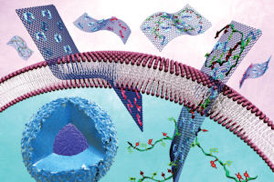
Manchester, UK | Posted on February 26th, 2015Writing in the journal Oncotarget, the team of researchers led by Professor Michael Lisanti and Dr Aravind Vijayaraghavan has shown that graphene oxide, a modified form of graphene, acts as an anti-cancer agent that selectively targets cancer stem cells (CSCs). In combination with existing treatments, this could eventually lead to tumour shrinkage as well as preventing the spread of cancer and its recurrence after treatment. However, more pre-clinical studies and extensive clinical trials will be necessary to move this forward into the clinic to ensure patient benefit.
Professor Lisanti, the Director of the Manchester Centre for Cellular Metabolism within the University's Institute of Cancer Sciences, explained: "Cancer stem cells possess the ability to give rise to many different tumour cell types. They are responsible for the spread of cancer within the body - known as metastasis- which is responsible for 90% of cancer deaths.
"They also play a crucial role in the recurrence of tumours after treatment. This is because conventional radiation and chemotherapies only kill the 'bulk' cancer cells, but do not generally affect the CSCs."
Dr Vijayaraghavan added: "Graphene oxide is stable in water and has shown potential in biomedical applications. It can readily enter or attach to the surface of cells, making it a candidate for targeted drug delivery. In this work, surprisingly, it's the graphene oxide itself that has been shown to be an effective anti-cancer drug.
"Cancer stem cells differentiate to form a small mass of cells known as a tumour-sphere. We saw that the graphene oxide flakes prevented CSCs from forming these, and instead forced them to differentiate into non-cancer stem-cells.
"Naturally, any new discovery such as this needs to undergo extensive study and trials before emerging as a therapeutic. We hope that these exciting results in laboratory cell cultures can translate into an equally effective real-life option for cancer therapy."
The team prepared a variety of graphene oxide formulations for testing against six different cancer types - breast, pancreatic, lung, brain, ovarian and prostate. The flakes inhibited the formation of tumour sphere formation in all six types, suggesting that graphene oxide can be effective across all, or at least a large number of different cancers, by blocking processes which take place at the surface of the cells. The researchers suggest that, used in combination with conventional cancer treatments, this may deliver a better overall clinical outcome.
Dr Federica Sotgia, one of the co-authors of the study concluded: "These findings show that graphene oxide could possibly be applied as a lavage or rinse during surgery to clear CSCs or as a drug targeted at CSCs.
"Our results also show that graphene oxide is not toxic to healthy cells, which suggests that this treatment is likely to have fewer side-effects if used as an anti-cancer therapy."
Graphene has the potential to revolutionise a vast number of applications, lighter, stronger composites to flexible, bendable electronics. Graphene oxide can be used to create membranes that can coat surfaces to prevent corrosion, or filter clean water in real time. Demonstrating the remarkable properties of graphene won a University team of researchers the Nobel Prize for Physics in 2010.
####
For more information, please click here
Contacts:
Jamie Brown
44-016-127-58383
Copyright © University of Manchester
If you have a comment, please Contact us.Issuers of news releases, not 7th Wave, Inc. or Nanotechnology Now, are solely responsible for the accuracy of the content.
Bookmark:


| Related News Press |
News and information
 Quantum computer improves AI predictions April 17th, 2026
Flexible sensor gains sensitivity under pressure April 17th, 2026
A reusable chip for particulate matter sensing April 17th, 2026
Detecting vibrational quantum beating in the predissociation dynamics of SF6 using time-resolved photoelectron spectroscopy April 17th, 2026
Cancer
New molecular technology targets tumors and simultaneously silences two ‘undruggable’ cancer genes August 8th, 2025
Ben-Gurion University of the Negev researchers several steps closer to harnessing patient's own T-cells to fight off cancer June 6th, 2025
Self-propelled protein-based nanomotors for enhanced cancer therapy by inducing ferroptosis June 6th, 2025
Graphene/ Graphite
Electrifying results shed light on graphene foam as a potential material for lab grown cartilage June 6th, 2025
Nanomedicine
A fundamentally new therapeutic approach to cystic fibrosis: Nanobody repairs cellular defect April 17th, 2026
New molecular technology targets tumors and simultaneously silences two ‘undruggable’ cancer genes August 8th, 2025
New imaging approach transforms study of bacterial biofilms August 8th, 2025
Electrifying results shed light on graphene foam as a potential material for lab grown cartilage June 6th, 2025
Discoveries
Quantum computer improves AI predictions April 17th, 2026
Flexible sensor gains sensitivity under pressure April 17th, 2026
A reusable chip for particulate matter sensing April 17th, 2026
Detecting vibrational quantum beating in the predissociation dynamics of SF6 using time-resolved photoelectron spectroscopy April 17th, 2026
Materials/Metamaterials/Magnetoresistance
First real-time observation of two-dimensional melting process: Researchers at Mainz University unveil new insights into magnetic vortex structures August 8th, 2025
Researchers unveil a groundbreaking clay-based solution to capture carbon dioxide and combat climate change June 6th, 2025
A 1960s idea inspires NBI researchers to study hitherto inaccessible quantum states June 6th, 2025
Institute for Nanoscience hosts annual proposal planning meeting May 16th, 2025
Announcements
A fundamentally new therapeutic approach to cystic fibrosis: Nanobody repairs cellular defect April 17th, 2026
UC Irvine physicists discover method to reverse ‘quantum scrambling’ : The work addresses the problem of information loss in quantum computing system April 17th, 2026
Interviews/Book Reviews/Essays/Reports/Podcasts/Journals/White papers/Posters
A fundamentally new therapeutic approach to cystic fibrosis: Nanobody repairs cellular defect April 17th, 2026
UC Irvine physicists discover method to reverse ‘quantum scrambling’ : The work addresses the problem of information loss in quantum computing system April 17th, 2026
 |
||
 |
||
| The latest news from around the world, FREE | ||
 |
||
|
|
||
| Premium Products | ||
 |
||
|
Only the news you want to read!
Learn More |
||
 |
||
|
Full-service, expert consulting
Learn More |
||
|
|
||