Home > Press > Nanoscale heat flow predictions: Heat flow in novel nanomaterials could help in creating environmentally friendly and cost-effective nanometric-scale energy devices
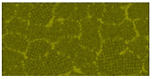 |
| Snapshot of the final configuration of a nc-Si sample © Melis et al. |
Abstract:
Physicists are now designing novel materials with physical properties tailored to meet specific energy consumption needs. Before these so-called materials-by-design can be applied, it is essential to understand their characteristics, such as heat flow. Now, a team of Italian physicists has developed a predictive theoretical model for heat flux in these materials, using atom-scale calculations. The research, carried out by Claudio Melis and colleagues from the University of Cagliary, Italy, is published in EPJ B. Their findings could have implications for optimising the thermal budget of nanoelectronic devices—which means they could help dissipate the total amount of thermal energy generated by electron currents—or in the production of energy through thermoelectric effects in novel nanomaterials.
Nanoscale heat flow predictions: Heat flow in novel nanomaterials could help in creating environmentally friendly and cost-effective nanometric-scale energy devices
Heidelberg, Germany and New York, NY | Posted on May 7th, 2014The authors relied on large-scale molecular dynamics simulations to investigate nanoscale thermal transport and determine the corresponding physical characteristics, which determine thermal conductivity. Traditional atomistic calculation methods involve a heavy computational workload, which sometimes prevents their application to systems large enough to model the experimental structural complexity of real samples.
Instead, Melis and colleagues adopted a method called approach equilibrium molecular dynamics (AEMD), which is robust and suitable for representing large systems. Thus, it can use simulations to deliver trustworthy predictions on thermal transport. The authors investigated the extent to which the reliability of the AEMD method results is affected by any implementation issues.
In addition, they applied the method to thermal transport in nanostructured silicon, a system of current interest with high potential impact on thermoelectric technology, using simulations of unprecedented size. Ultimately, the model could be applied to semiconductors used as high-efficiency thermoelectrics, and to graphene nanoribbons used as heat sinks for so-called ultra large scale integration devices, such as computer microprocessors.
####
For more information, please click here
Contacts:
Saskia Rohmer
49-622-148-78414
Copyright © Springer
If you have a comment, please Contact us.Issuers of news releases, not 7th Wave, Inc. or Nanotechnology Now, are solely responsible for the accuracy of the content.
Bookmark:


| Related Links |
| Related News Press |
News and information
 Quantum computer improves AI predictions April 17th, 2026
Flexible sensor gains sensitivity under pressure April 17th, 2026
A reusable chip for particulate matter sensing April 17th, 2026
Detecting vibrational quantum beating in the predissociation dynamics of SF6 using time-resolved photoelectron spectroscopy April 17th, 2026
Physics
UC Irvine physicists discover method to reverse ‘quantum scrambling’ : The work addresses the problem of information loss in quantum computing system April 17th, 2026
Quantum computers simulate fundamental physics: shedding light on the building blocks of nature June 6th, 2025
Chip Technology
A reusable chip for particulate matter sensing April 17th, 2026
Metasurfaces smooth light to boost magnetic sensing precision January 30th, 2026
Discoveries
Quantum computer improves AI predictions April 17th, 2026
Flexible sensor gains sensitivity under pressure April 17th, 2026
A reusable chip for particulate matter sensing April 17th, 2026
Detecting vibrational quantum beating in the predissociation dynamics of SF6 using time-resolved photoelectron spectroscopy April 17th, 2026
Materials/Metamaterials/Magnetoresistance
First real-time observation of two-dimensional melting process: Researchers at Mainz University unveil new insights into magnetic vortex structures August 8th, 2025
Researchers unveil a groundbreaking clay-based solution to capture carbon dioxide and combat climate change June 6th, 2025
A 1960s idea inspires NBI researchers to study hitherto inaccessible quantum states June 6th, 2025
Institute for Nanoscience hosts annual proposal planning meeting May 16th, 2025
Announcements
A fundamentally new therapeutic approach to cystic fibrosis: Nanobody repairs cellular defect April 17th, 2026
UC Irvine physicists discover method to reverse ‘quantum scrambling’ : The work addresses the problem of information loss in quantum computing system April 17th, 2026
Interviews/Book Reviews/Essays/Reports/Podcasts/Journals/White papers/Posters
A fundamentally new therapeutic approach to cystic fibrosis: Nanobody repairs cellular defect April 17th, 2026
UC Irvine physicists discover method to reverse ‘quantum scrambling’ : The work addresses the problem of information loss in quantum computing system April 17th, 2026
Battery Technology/Capacitors/Generators/Piezoelectrics/Thermoelectrics/Energy storage
Decoding hydrogen‑bond network of electrolyte for cryogenic durable aqueous zinc‑ion batteries January 30th, 2026
COF scaffold membrane with gate‑lane nanostructure for efficient Li+/Mg2+ separation January 30th, 2026
MXene nanomaterials enter a new dimension Multilayer nanomaterial: MXene flakes created at Drexel University show new promise as 1D scrolls January 30th, 2026
 |
||
 |
||
| The latest news from around the world, FREE | ||
 |
||
|
|
||
| Premium Products | ||
 |
||
|
Only the news you want to read!
Learn More |
||
 |
||
|
Full-service, expert consulting
Learn More |
||
|
|
||