Home > Press > Researchers dismantle bacteria's war machinery: A nano-machine cell killer: EPFL researchers decipher the attack strategy of certain bacteria, including the infamous Staphylococcus aureus
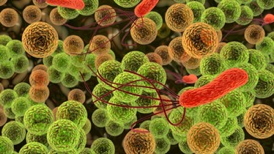 |
| © photos.com |
Abstract:
This is a veritable mechanics of aggression on the nanoscale. Certain bacteria, including Staphylococcus aureus, have the ability to deploy tiny darts. This biological weapon kills the host cell by piercing the membrane. Researchers at EPFL have dismantled, piece by piece, this intriguing little machine and found an assembly of proteins that, in unfolding at the right time, takes the form of a spur. Published in Nature Chemical Biology, this discovery offers new insight into the fight against pathogens that are increasingly resistant to antibiotics.
Researchers dismantle bacteria's war machinery: A nano-machine cell killer: EPFL researchers decipher the attack strategy of certain bacteria, including the infamous Staphylococcus aureus
Lausanne, Switzerland | Posted on August 5th, 2013To attack the host cell, the weapon must first attach. On the surface of the aggressor is a mechanism composed of seven proteins that are folded over and assembled into a ring. The researchers were able to show how, in time, these long molecules unfold to form a kind of spur.
The trigger is just another part of the machine - a peptide, or a small organic molecule. When exposed to the enzymes of the host organism, it detaches. The balance of the assembly adjusts: the proteins adopt a new form, spreading out in a circular motion to form a spur, which then pierces the membrane of the host cell.
Mechanical at the molecular level
No chemical reaction is involved in these biological weapons. This is a mechanical phenomenon, albeit on the molecular level. Matteo Dal Peraro, co-author of this study, also uses the term "nanomachine" to refer to this tool of aggression.
The EPFL researchers have worked on strains of Aeromonas hydrophila - a bacterium well-known among travelers for the intestinal disorders it causes. In Petri dishes the researchers could, at will, cause the formation of these darts, thereby exposing microorganisms to digestive enzymes. They were able to model precisely how each protein dynamically rearranges, once the peptide is missing, to form the spur.
Hinder the attack mechanism
For co-author Gisou Van der Goot, this discovery opens new therapeutic perspectives, for example in cases of nosocomial infection staphylococci. "We could imagine catheters coated with substitute peptides," she says. "They could prevent the formation of the ring and, thus, the spur. We would avoid many hospital infections."
The concept is to address the weaponry of the bacteria rather than the bacteria itself. This is particularly attractive at a time when multiple antibiotic resistances are becoming increasingly common. "This approach would have the advantage of not causing mutations, and thereby resistance, in pathogenic bacteria," says the researcher.
####
About Ecole Polytechnique Fédérale de Lausanne
EPFL is Europe’s most cosmopolitan technical university. It receives students, professors and staff from over 120 nationalities. With both a Swiss and international calling, it is therefore guided by a constant wish to open up; its missions of teaching, research and partnership impact various circles: universities and engineering schools, developing and emerging countries, secondary schools and gymnasiums, industry and economy, political circles and the general public.
For more information, please click here
Contacts:
Matteo Dal Peraro
41-798-083-220
Copyright © Ecole Polytechnique Fédérale de Lausanne
If you have a comment, please Contact us.Issuers of news releases, not 7th Wave, Inc. or Nanotechnology Now, are solely responsible for the accuracy of the content.
Bookmark:


| Related Links |
| Related News Press |
News and information
 Quantum computer improves AI predictions April 17th, 2026
Flexible sensor gains sensitivity under pressure April 17th, 2026
A reusable chip for particulate matter sensing April 17th, 2026
Detecting vibrational quantum beating in the predissociation dynamics of SF6 using time-resolved photoelectron spectroscopy April 17th, 2026
Molecular Machines
First electric nanomotor made from DNA material: Synthetic rotary motors at the nanoscale perform mechanical work July 22nd, 2022
Nanotech scientists create world's smallest origami bird March 17th, 2021
Giant nanomachine aids the immune system: Theoretical chemistry August 28th, 2020
Nanomedicine
A fundamentally new therapeutic approach to cystic fibrosis: Nanobody repairs cellular defect April 17th, 2026
New molecular technology targets tumors and simultaneously silences two ‘undruggable’ cancer genes August 8th, 2025
New imaging approach transforms study of bacterial biofilms August 8th, 2025
Electrifying results shed light on graphene foam as a potential material for lab grown cartilage June 6th, 2025
Discoveries
Quantum computer improves AI predictions April 17th, 2026
Flexible sensor gains sensitivity under pressure April 17th, 2026
A reusable chip for particulate matter sensing April 17th, 2026
Detecting vibrational quantum beating in the predissociation dynamics of SF6 using time-resolved photoelectron spectroscopy April 17th, 2026
Announcements
A fundamentally new therapeutic approach to cystic fibrosis: Nanobody repairs cellular defect April 17th, 2026
UC Irvine physicists discover method to reverse ‘quantum scrambling’ : The work addresses the problem of information loss in quantum computing system April 17th, 2026
Interviews/Book Reviews/Essays/Reports/Podcasts/Journals/White papers/Posters
A fundamentally new therapeutic approach to cystic fibrosis: Nanobody repairs cellular defect April 17th, 2026
UC Irvine physicists discover method to reverse ‘quantum scrambling’ : The work addresses the problem of information loss in quantum computing system April 17th, 2026
 |
||
 |
||
| The latest news from around the world, FREE | ||
 |
||
|
|
||
| Premium Products | ||
 |
||
|
Only the news you want to read!
Learn More |
||
 |
||
|
Full-service, expert consulting
Learn More |
||
|
|
||