Home > Press > Curbing the life-long effects of traumatic brain injury
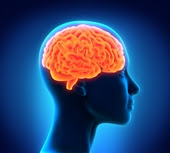 |
| Preventing long-term effects of traumatic brain injury could involve rushing nanoparticles across a weakened blood-brain barrier soon after a blow. Credit: Nerthuz/Shutterstock.com |
Abstract:
A fall down the stairs, a car crash, a sports injury or an explosive blast can all cause traumatic brain injury (TBI). Patients often recover. But in the days or weeks following the hit, they can develop other serious, chronic conditions, such as depression and thinking and memory problems. Now scientists report in the journal ACS Nano a potential way to reduce these effects with a neuron-targeting nanoparticle, using an animal model of TBI.
Curbing the life-long effects of traumatic brain injury
Washington, DC | Posted on August 19th, 2016When someone suffers from a head injury, the damage doesn't necessarily stop after the initial blow. The jolt can cause a cascade of after-effects -- such as inflammation and ultimately the death of brain cells -- and lead to physical and cognitive conditions that can continue for years. One promising approach to treating these after-effects involves delivering short stretches of RNA that can help shut down this chain reaction. But getting the RNA to the damaged part of the brain is a challenge because of the blood-brain barrier, which separates circulating blood from the fluid around brain cells. Sangeeta N. Bhatia and her colleagues at the Massachusetts Institute of Technology's Institute for Medical Engineering & Science wanted to see if they could rush therapeutic RNA to targeted brain cells soon after an injury while the blood-brain barrier is weakened.
The team, led by postdoctoral researcher Ester Kwon, engineered nanoparticles to target neurons by borrowing a protein from the rabies virus. They also loaded the particles with a strip of RNA designed to inhibit the production of a protein associated with neuronal cell death. When given to mice intravenously within a day of receiving a brain injury, the nanoparticles left the circulation and accumulated in the damaged tissue. Analysis also showed that the levels of the protein that the researchers were trying to reduce dropped by about 80 percent in the injured brain tissue.
###
The authors acknowledge funding from the Marie D. & Pierre Casimir-Lambert Fund, the David H. Koch Institute for Integrative Cancer Research at MIT, the National Cancer Institute, the National Institute of Environmental Health Sciences, the Defense Advanced Research Projects Agency and a Ruth L. Kirschstein National Research Service Award.
####
About American Chemical Society
The American Chemical Society is a nonprofit organization chartered by the U.S. Congress. With nearly 157,000 members, ACS is the world's largest scientific society and a global leader in providing access to chemistry-related research through its multiple databases, peer-reviewed journals and scientific conferences. Its main offices are in Washington, D.C., and Columbus, Ohio.
For more information, please click here
Contacts:
Michael Bernstein
202-872-6042
Sangeeta N. Bhatia, M.D., Ph.D.
Institute for Medical Engineering and Science
Massachusetts Institute of Technology
and the Howard Hughes Medical Institute
Cambridge, MA 02139
Email:
Copyright © American Chemical Society
If you have a comment, please Contact us.Issuers of news releases, not 7th Wave, Inc. or Nanotechnology Now, are solely responsible for the accuracy of the content.
Bookmark:


| Related Links |
| Related News Press |
News and information
 Quantum computer improves AI predictions April 17th, 2026
Flexible sensor gains sensitivity under pressure April 17th, 2026
A reusable chip for particulate matter sensing April 17th, 2026
Detecting vibrational quantum beating in the predissociation dynamics of SF6 using time-resolved photoelectron spectroscopy April 17th, 2026
Govt.-Legislation/Regulation/Funding/Policy
Quantum computer improves AI predictions April 17th, 2026
Metasurfaces smooth light to boost magnetic sensing precision January 30th, 2026
New imaging approach transforms study of bacterial biofilms August 8th, 2025
Possible Futures
A fundamentally new therapeutic approach to cystic fibrosis: Nanobody repairs cellular defect April 17th, 2026
UC Irvine physicists discover method to reverse ‘quantum scrambling’ : The work addresses the problem of information loss in quantum computing system April 17th, 2026
Nanomedicine
A fundamentally new therapeutic approach to cystic fibrosis: Nanobody repairs cellular defect April 17th, 2026
New molecular technology targets tumors and simultaneously silences two ‘undruggable’ cancer genes August 8th, 2025
New imaging approach transforms study of bacterial biofilms August 8th, 2025
Electrifying results shed light on graphene foam as a potential material for lab grown cartilage June 6th, 2025
Discoveries
Quantum computer improves AI predictions April 17th, 2026
Flexible sensor gains sensitivity under pressure April 17th, 2026
A reusable chip for particulate matter sensing April 17th, 2026
Detecting vibrational quantum beating in the predissociation dynamics of SF6 using time-resolved photoelectron spectroscopy April 17th, 2026
Announcements
A fundamentally new therapeutic approach to cystic fibrosis: Nanobody repairs cellular defect April 17th, 2026
UC Irvine physicists discover method to reverse ‘quantum scrambling’ : The work addresses the problem of information loss in quantum computing system April 17th, 2026
Interviews/Book Reviews/Essays/Reports/Podcasts/Journals/White papers/Posters
A fundamentally new therapeutic approach to cystic fibrosis: Nanobody repairs cellular defect April 17th, 2026
UC Irvine physicists discover method to reverse ‘quantum scrambling’ : The work addresses the problem of information loss in quantum computing system April 17th, 2026
Military
Quantum engineers ‘squeeze’ laser frequency combs to make more sensitive gas sensors January 17th, 2025
Chainmail-like material could be the future of armor: First 2D mechanically interlocked polymer exhibits exceptional flexibility and strength January 17th, 2025
Single atoms show their true color July 5th, 2024
NRL charters Navy’s quantum inertial navigation path to reduce drift April 5th, 2024
Grants/Sponsored Research/Awards/Scholarships/Gifts/Contests/Honors/Records
Quantum computer improves AI predictions April 17th, 2026
Detecting vibrational quantum beating in the predissociation dynamics of SF6 using time-resolved photoelectron spectroscopy April 17th, 2026
Metasurfaces smooth light to boost magnetic sensing precision January 30th, 2026
Nanobiotechnology
A fundamentally new therapeutic approach to cystic fibrosis: Nanobody repairs cellular defect April 17th, 2026
New molecular technology targets tumors and simultaneously silences two ‘undruggable’ cancer genes August 8th, 2025
New imaging approach transforms study of bacterial biofilms August 8th, 2025
Electrifying results shed light on graphene foam as a potential material for lab grown cartilage June 6th, 2025
 |
||
 |
||
| The latest news from around the world, FREE | ||
 |
||
|
|
||
| Premium Products | ||
 |
||
|
Only the news you want to read!
Learn More |
||
 |
||
|
Full-service, expert consulting
Learn More |
||
|
|
||