Home > Press > NREL Scientist Brian Gregg Named AAAS Fellow: Gregg honored for distinguished contributions to the field of organic solar photoconversion
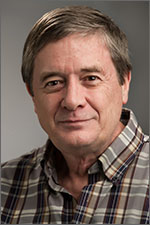 |
| Photo of Brian Gregg, NREL Scientist |
Abstract:
Brian Gregg, a scientist at the Energy Department's National Renewable Energy Laboratory (NREL), has been named a fellow of the American Association for the Advancement of Science (AAAS). AAAS cited Gregg for "distinguished contributions to the field of solar photoconversion, particularly for developing a unified understanding of the photoconversion mechanism in the various cell types."
NREL Scientist Brian Gregg Named AAAS Fellow: Gregg honored for distinguished contributions to the field of organic solar photoconversion
Golden, CO | Posted on January 20th, 2015At NREL, Gregg was the lead researcher for the development of photoelectrochromic window technology, which use sunlight to power changes in the coloration of the windows, automatically darkening when the sunlight is strong, lightening when the interior needs more sun.
"Brian is deeply passionate about science," said Jao van de Lagemaat, director of the Chemistry and Nanoscience Center at NREL. "He is one of those rare individuals who is able to bring a problem down to its very basic roots and generate the most incisive solutions. He also has a keen eye for identifying the basic and applied problems that actually matter. He is a big-picture thinker with few equals."
Gregg started working at the Solar Energy Research Institute (the predecessor of NREL) in 1990 as a staff scientist and is currently an emeritus principal scientist in NREL's Center for Chemistry and Nanoscience. He began his professional career working at a children's hospital in Berlin, Germany, studying diabetes in infants. He later returned to Oregon where he finished his bachelor's degree in chemistry. After working at Tektronix for four years, where he started the ferroelectric liquid crystal display project, he went to the University of Texas at Austin (UT) with an idea for liquid crystalline organic photovoltaic devices.
During his Ph.D. research at UT, Gregg synthesized a novel class of liquid crystal porphyrins and discovered an entirely new photovoltaic effect. Even when sandwiched between two identical electrodes (i.e., with zero bandbending) a PV effect is observed in these devices. Such an observation was unprecedented and challenged common assumptions about how solar cells work. This research set off a lifelong passion for excitonic solar cells, a term he coined. He initiated an entirely new field by recognizing the role and potential of excitonic effects and chemical potential gradients in solar energy conversion. Later, he showed that dye-sensitized solar cells functioned by the same mechanism.
As a postdoc at UT, Gregg invented a way of immobilizing enzymes on an electrode, leading to four different patents. These novel electrodes are now used worldwide in glucose sensors and are sold in neighborhood drugstores.
The 2015 class of AAAS fellows represents a broad range of science and is honored for its distinguished efforts to advance science or its applications. AAAS is the world's largest general scientific society, and publisher of the journal Science. AAAS was founded in 1848 and includes 261 affiliated societies and academies of science, serving 10 million individuals. The AAAS fellow is an honor accorded to, at most, 1 percent of the prestigious scientific society's membership each year.
####
About National Renewable Energy Laboratory (NREL)
NREL is the U.S. Department of Energy's primary national laboratory for renewable energy and energy efficiency research and development. NREL is operated for the Energy Department by The Alliance for Sustainable Energy, LLC.
For more information, please click here
Contacts:
William Scanlon
303-275-4051
Copyright © National Renewable Energy Laboratory (NREL)
If you have a comment, please Contact us.Issuers of news releases, not 7th Wave, Inc. or Nanotechnology Now, are solely responsible for the accuracy of the content.
Bookmark:


| Related News Press |
News and information
 Quantum computer improves AI predictions April 17th, 2026
Flexible sensor gains sensitivity under pressure April 17th, 2026
A reusable chip for particulate matter sensing April 17th, 2026
Detecting vibrational quantum beating in the predissociation dynamics of SF6 using time-resolved photoelectron spectroscopy April 17th, 2026
Laboratories
Researchers develop molecular qubits that communicate at telecom frequencies October 3rd, 2025
A battery’s hopping ions remember where they’ve been: Seen in atomic detail, the seemingly smooth flow of ions through a battery’s electrolyte is surprisingly complicated February 16th, 2024
Govt.-Legislation/Regulation/Funding/Policy
Quantum computer improves AI predictions April 17th, 2026
Metasurfaces smooth light to boost magnetic sensing precision January 30th, 2026
New imaging approach transforms study of bacterial biofilms August 8th, 2025
Announcements
A fundamentally new therapeutic approach to cystic fibrosis: Nanobody repairs cellular defect April 17th, 2026
UC Irvine physicists discover method to reverse ‘quantum scrambling’ : The work addresses the problem of information loss in quantum computing system April 17th, 2026
Energy
Sensors innovations for smart lithium-based batteries: advancements, opportunities, and potential challenges August 8th, 2025
Simple algorithm paired with standard imaging tool could predict failure in lithium metal batteries August 8th, 2025
Grants/Sponsored Research/Awards/Scholarships/Gifts/Contests/Honors/Records
Quantum computer improves AI predictions April 17th, 2026
Detecting vibrational quantum beating in the predissociation dynamics of SF6 using time-resolved photoelectron spectroscopy April 17th, 2026
Metasurfaces smooth light to boost magnetic sensing precision January 30th, 2026
Solar/Photovoltaic
Spinel-type sulfide semiconductors to operate the next-generation LEDs and solar cells For solar-cell absorbers and green-LED source October 3rd, 2025
KAIST researchers introduce new and improved, next-generation perovskite solar cell November 8th, 2024
Groundbreaking precision in single-molecule optoelectronics August 16th, 2024
Development of zinc oxide nanopagoda array photoelectrode: photoelectrochemical water-splitting hydrogen production January 12th, 2024
 |
||
 |
||
| The latest news from around the world, FREE | ||
 |
||
|
|
||
| Premium Products | ||
 |
||
|
Only the news you want to read!
Learn More |
||
 |
||
|
Full-service, expert consulting
Learn More |
||
|
|
||