Home > Press > Grant to SDSU researcher will address congestive heart failure
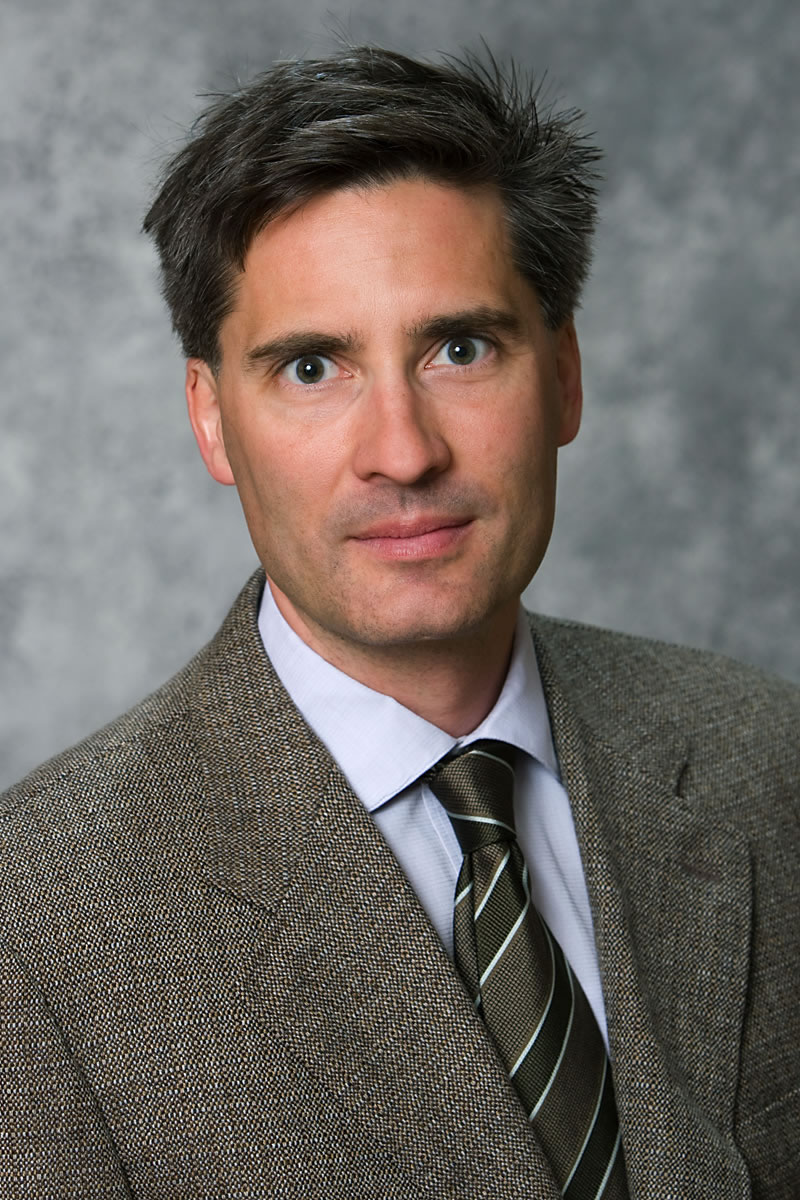 |
| John M. Robinson MD, PhD., Assistant Professor |
Abstract:
A grant of about $1.8 million over five years will help scientists better understand congestive heart failure, a condition that affects 5.7 million Americans annually.
Grant to SDSU researcher will address congestive heart failure
Brookings, SD | Posted on December 21st, 2010John Robinson, a medical doctor and biophysicist at South Dakota State University, has been awarded the funding by the Heart, Lung and Blood Institute of the National Institutes of Health. The research could supply new knowledge about heart failure that could lead to new treatment strategies.
The risk of congestive heart failure increases sharply with age, doubling every 10 years among older adults. At younger ages, blacks are disproportionately affected compared to whites by a ratio of 20 to 1.
Robinson, a member of the Department of Chemistry and Biochemistry in SDSU's College of Arts and Sciences, is especially interested in heart failure in connection with impaired function of the myofilament, a protein assembly regulated by calcium that makes the heart contract.
"The myofilament is the fundamental unit that allows the heart to generate force. Your heart has to beat and relax about once every second," Robinson said. "These periods of contraction and relaxation are regulated by the levels of calcium inside cells of the heart. The myofilament is a calcium-sensitive switch that generates force when calcium binds to it."
However, scientists don't fully understand how the myofilament functions or what goes wrong when it doesn't work properly. Robinson said that's because those processes are taking place at the nanoscale, or roughly at a level 100 to 1,000 times smaller than can be seen by using a conventional microscope.
"Switching in the nanoscale is very different from switching in our world. If I turn a light switch on, it stays on," Robinson said. "What we're seeing with protein switches is that just because calcium binds to it, it will not necessarily turn on. It's sort of error-prone. All of the switching is done by heat random collisions with water is what drives all of this."
Robinson said a revolution in instrumentation is making it possible to unravel such processes, some of which have been studied for decades. Robinson is part of the SDSU-based Center for Biological Control and Analysis by Applied Photonics, or BCAAP. The center is made up of researchers who use light as one of the tools either to control biochemical processes or, in this case, to analyze biochemical processes.
Robinson's laboratory uses a technique called Fluorescence Resonance Energy Transfer, or FRET, to study proteins at the nanoscale. His FRET measurements are at the "single molecule" level, studying myofilaments one at a time.
Robinson's five-year NIH project will work to establish what molecular interactions are taking place as the myofilament contracts; and to understand the mechanisms at work when myofilaments' sensitivity to calcium is altered.
####
For more information, please click here
Copyright © South Dakota State University
If you have a comment, please Contact us.Issuers of news releases, not 7th Wave, Inc. or Nanotechnology Now, are solely responsible for the accuracy of the content.
Bookmark:


| Related News Press |
News and information
 Quantum computer improves AI predictions April 17th, 2026
Flexible sensor gains sensitivity under pressure April 17th, 2026
A reusable chip for particulate matter sensing April 17th, 2026
Detecting vibrational quantum beating in the predissociation dynamics of SF6 using time-resolved photoelectron spectroscopy April 17th, 2026
Govt.-Legislation/Regulation/Funding/Policy
Quantum computer improves AI predictions April 17th, 2026
Metasurfaces smooth light to boost magnetic sensing precision January 30th, 2026
New imaging approach transforms study of bacterial biofilms August 8th, 2025
Academic/Education
Rice University launches Rice Synthetic Biology Institute to improve lives January 12th, 2024
Multi-institution, $4.6 million NSF grant to fund nanotechnology training September 9th, 2022
Nanomedicine
A fundamentally new therapeutic approach to cystic fibrosis: Nanobody repairs cellular defect April 17th, 2026
New molecular technology targets tumors and simultaneously silences two ‘undruggable’ cancer genes August 8th, 2025
New imaging approach transforms study of bacterial biofilms August 8th, 2025
Electrifying results shed light on graphene foam as a potential material for lab grown cartilage June 6th, 2025
Announcements
A fundamentally new therapeutic approach to cystic fibrosis: Nanobody repairs cellular defect April 17th, 2026
UC Irvine physicists discover method to reverse ‘quantum scrambling’ : The work addresses the problem of information loss in quantum computing system April 17th, 2026
Tools
Metasurfaces smooth light to boost magnetic sensing precision January 30th, 2026
From sensors to smart systems: the rise of AI-driven photonic noses January 30th, 2026
Japan launches fully domestically produced quantum computer: Expo visitors to experience quantum computing firsthand August 8th, 2025
Nanobiotechnology
A fundamentally new therapeutic approach to cystic fibrosis: Nanobody repairs cellular defect April 17th, 2026
New molecular technology targets tumors and simultaneously silences two ‘undruggable’ cancer genes August 8th, 2025
New imaging approach transforms study of bacterial biofilms August 8th, 2025
Electrifying results shed light on graphene foam as a potential material for lab grown cartilage June 6th, 2025
 |
||
 |
||
| The latest news from around the world, FREE | ||
 |
||
|
|
||
| Premium Products | ||
 |
||
|
Only the news you want to read!
Learn More |
||
 |
||
|
Full-service, expert consulting
Learn More |
||
|
|
||