Home > Press > Scientists' discovery is paving the way for novel ultrafast quantum computers
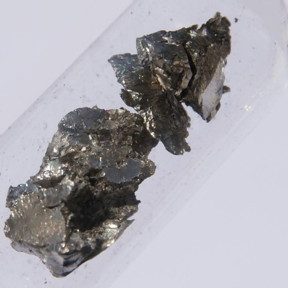 |
| Researchers showed that microcrystals, synthesised on the basis of mixed optical fluoride crystal matrices doped with erbium, praseodymium and some other ions of rare earth elements, can work as qubits that enable ultrafast optical quantum computing. CREDIT wikipedia.org |
Abstract:
Scientists at the Institute of Physics of the University of Tartu have found a way to develop optical quantum computers of a new type. Central to the discovery are rare earth ions that have certain characteristics and can act as quantum bits. These would give quantum computers ultrafast computation speed and better reliability compared to earlier solutions. The University of Tartu researchers Vladimir Hizhnyakov, Vadim Boltrushko, Helle Kaasik and Yurii Orlovskii published the results of their research in the scientific journal Optics Communications.
Scientists' discovery is paving the way for novel ultrafast quantum computers
Tartu, Estonia | Posted on January 15th, 2021While in ordinary computers, the units of information are binary digits or bits, in quantum computers the units are quantum bits or qubits. In an ordinary computer, information is mostly carried by electricity in memory storage cells consisting of field-effect transistors, but in a quantum computer, depending on the type of computer, the information carriers are much smaller particles, for example ions, photons and electrons. The qubit information may be carried by a certain characteristic of this particle (for example, spin of electron or polarisation of photon), which may have two states. While the values of an ordinary bit are 0 or 1, also intermediate variants of these values are possible in the quantum bit. The intermediate state is called the superposition. This property gives quantum computers the ability to solve tasks, which ordinary computers are unable to perform within reasonable time.
Qubits of mixed-ion crystals
Researchers of the Institute of Physics of the University of Tartu showed that microcrystals, synthesised on the basis of mixed optical fluoride crystal matrices doped with erbium, praseodymium and some other ions of rare earth elements, can work as qubits that enable ultrafast optical quantum computing.
Professor Vladimir Hizhnyakov, member of the Estonian Academy of Sciences, says that when selecting the ions, their electronic states of very different properties are of utmost importance. "They must have at least two states in which the ion interaction is very weak. These states are suitable for basic quantum-logic operations on single quantum bits. In addition, a state or states are needed in which the ion interaction is strong - these states enable quantum-logic operations with two or more qubits. All these states must have a long (milli- or microsecond) lifetime and optical transitions must be allowed between these states," Hizhnyakov explained.
He says that so far, finding such electronic states of rare earth ions was not considered possible, and that is why scientists have not looked for such states suitable for qubits among them. "So far, mostly the spin states of atomic nuclei have been studied for the role of qubits. However, their frequency is a million times lower than the frequency of our quantum bits. This is why also quantum computers created on the basis of these qubits would be significantly slower than computers with our electronic states-based quantum bits," he explained.
Higher speed and fewer errors
An ultrafast working cycle would allow, according to Hizhnyakov, to overcome one the major obstacles in the creation of quantum computers. Qubits are namely very sensitive to their environment, which is why any environmental interference may lead to errors in quantum computation. "The coherence time of qubits, i.e. the duration of the pure quantum state, is very short. The faster the computation cycle, the less interference is caused by the surrounding environment in the work of qubits," Hizhnyakov explained.
It has been ascertained that the spectral hole-burning method, previously developed at the Institute of Physics of the University of Tartu can be used for selecting a set of qubits in a microcrystal acting as a computer instance. According to Hizhnyakov, this at present one of most powerful methods of optical spectroscopy, which allows to find those ions in a microcrystal that are the most suitable for use as computer qubits.
Although it is still a long way full of obstacles to an actually working quantum computer, researchers of the laser spectroscopy laboratory of the University of Tartu have started building a pilot prototype of quantum computer based on the new method. According to the researchers, they are on the threshold of presenting the work of the basic elements of the new type of quantum computer.
The completed research study is a part of the joint project "Spectroscopy of entangled states of clusters of rare-earth impurity ions for quantum computing", conducted by the Laboratory of Laser Spectroscopy and the Laboratory of Solid State Theory at the Institute of Physics of the University of Tartu.
####
For more information, please click here
Contacts:
Vladimir Hizhnyakov
372-737-4759
Copyright © Estonian Research Council
If you have a comment, please Contact us.Issuers of news releases, not 7th Wave, Inc. or Nanotechnology Now, are solely responsible for the accuracy of the content.
Bookmark:


| Related News Press |
News and information
 Quantum computer improves AI predictions April 17th, 2026
Flexible sensor gains sensitivity under pressure April 17th, 2026
A reusable chip for particulate matter sensing April 17th, 2026
Detecting vibrational quantum beating in the predissociation dynamics of SF6 using time-resolved photoelectron spectroscopy April 17th, 2026
Possible Futures
A fundamentally new therapeutic approach to cystic fibrosis: Nanobody repairs cellular defect April 17th, 2026
UC Irvine physicists discover method to reverse ‘quantum scrambling’ : The work addresses the problem of information loss in quantum computing system April 17th, 2026
Chip Technology
A reusable chip for particulate matter sensing April 17th, 2026
Metasurfaces smooth light to boost magnetic sensing precision January 30th, 2026
Quantum Computing
Quantum computer improves AI predictions April 17th, 2026
UC Irvine physicists discover method to reverse ‘quantum scrambling’ : The work addresses the problem of information loss in quantum computing system April 17th, 2026
Researchers develop molecular qubits that communicate at telecom frequencies October 3rd, 2025
Discoveries
Quantum computer improves AI predictions April 17th, 2026
Flexible sensor gains sensitivity under pressure April 17th, 2026
A reusable chip for particulate matter sensing April 17th, 2026
Detecting vibrational quantum beating in the predissociation dynamics of SF6 using time-resolved photoelectron spectroscopy April 17th, 2026
Announcements
A fundamentally new therapeutic approach to cystic fibrosis: Nanobody repairs cellular defect April 17th, 2026
UC Irvine physicists discover method to reverse ‘quantum scrambling’ : The work addresses the problem of information loss in quantum computing system April 17th, 2026
Interviews/Book Reviews/Essays/Reports/Podcasts/Journals/White papers/Posters
A fundamentally new therapeutic approach to cystic fibrosis: Nanobody repairs cellular defect April 17th, 2026
UC Irvine physicists discover method to reverse ‘quantum scrambling’ : The work addresses the problem of information loss in quantum computing system April 17th, 2026
 |
||
 |
||
| The latest news from around the world, FREE | ||
 |
||
|
|
||
| Premium Products | ||
 |
||
|
Only the news you want to read!
Learn More |
||
 |
||
|
Full-service, expert consulting
Learn More |
||
|
|
||