Home > Press > 2D sandwich sees molecules with clarity: Rice University engineers adapt 2D ‘sandwich’ for surface-enhanced Raman spectroscopy
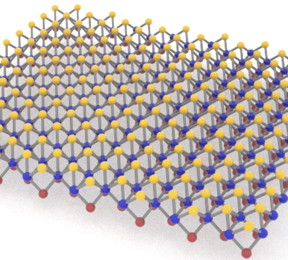 |
| Monolayer Janus MoSSe, a compound of molybdenum, sulfur and selenium developed at Rice University, is adept at detecting biomolecules via surface-enhanced Raman spectroscopy. Its nonmetallic nature helps by curtailing background noise in the signal. (Credit: Lou Group/Rice University) |
Abstract:
A sandwich of molybdenum, sulfur and selenium turns out to be deliciously useful for detecting biomolecules.
2D sandwich sees molecules with clarity: Rice University engineers adapt 2D ‘sandwich’ for surface-enhanced Raman spectroscopy
Houston, TX | Posted on May 15th, 2020platform for improving the detection of biomolecules via surface-enhanced Raman spectroscopy (SERS).
Using glucose to test the material proved its ability to boost its Raman enhancement factor by more than 100,000 times, which the researchers say is comparable to the highest-reported enhancement factor for 2D substrates.
SERS is an established technique that enables the detection and identification of small concentrations of molecules — or even single molecules — that get close to or adsorbed by metallic surfaces, including nanoparticles. It’s often used to detect nanoscale proteins in bodily fluids, helping to detect diseases and determine treatments, and in environmental analysis.
But metallic SERS media often prompt side reactions that create background noise. Janus MoSSe synthesized at Rice is nonmetallic. “This work mainly addresses whether we can enhance the target molecules' signal strength,” said materials scientist and principal investigator Jun Lou. “We wanted to know if we could make it stand out from the background noise.”
The answer was clearly yes, as Lou and his team reported in Nanoscale.
MoSSe introduced by the Lou lab in 2017 was produced by chemical vapor deposition. Molybdenum sits in the middle with a layer of sulfur on one side and another of selenium on the other; hence the two-faced Janus characterization.
The different electronegativities of each layer make it a SERS superstar, said lead author and Rice alumnus Shuai Jia, a former graduate student in Lou’s lab.
“The dipole created between the top sulfur and the bottom selenium lands out-of-plane, and this creates an electrical field a few nanometers beyond the MoSSe,” Jia said. That field interacts with molecules that come close, enhancing their vibrational intensity enough to be detected.
The researchers noted tests with MoSSe also detected molecules of the neurotransmitter dopamine and that the substrate should be adaptable to sense other molecules.
Lou said there’s room for improvement. “We’re looking at hybrids of MoSSe with some metallic nanoparticles, and also trying to enhance the dipole strength,” he said.
Co-authors of the paper are postdoctoral researchers Jing Zhang and Weipeng Wang and graduate student Tianshu Zhai of Rice, and postdoctoral researchers Arkamita Bandyopadhyay and Hemant Kumar and Vivek Shenoy, the Eduardo D. Glandt President's Distinguished Professor of materials science and engineering, mechanical engineering and applied mechanics and of bioengineering, at the University of Pennsylvania. Lou is a professor of materials science and nanoengineering and of chemistry.
The Welch Foundation and the National Science Foundation supported the research.
####
About Rice University
Located on a 300-acre forested campus in Houston, Rice University is consistently ranked among the nation’s top 20 universities by U.S. News & World Report. Rice has highly respected schools of Architecture, Business, Continuing Studies, Engineering, Humanities, Music, Natural Sciences and Social Sciences and is home to the Baker Institute for Public Policy. With 3,962 undergraduates and 3,027 graduate students, Rice’s undergraduate student-to-faculty ratio is just under 6-to-1. Its residential college system builds close-knit communities and lifelong friendships, just one reason why Rice is ranked No. 1 for lots of race/class interaction and No. 4 for quality of life by the Princeton Review. Rice is also rated as a best value among private universities by Kiplinger’s Personal Finance.
Follow Rice News and Media Relations via Twitter @RiceUNews.
For more information, please click here
Contacts:
Jeff Falk
713-348-6775
Mike Williams
713-348-6728
Copyright © Rice University
If you have a comment, please Contact us.Issuers of news releases, not 7th Wave, Inc. or Nanotechnology Now, are solely responsible for the accuracy of the content.
Bookmark:


| Related Links |
 2-faced 2D material is a first at Rice:
Department of Materials Science and NanoEngineering:
George R. Brown School of Engineering:
| Related News Press |
News and information
Quantum computer improves AI predictions April 17th, 2026
Flexible sensor gains sensitivity under pressure April 17th, 2026
A reusable chip for particulate matter sensing April 17th, 2026
Detecting vibrational quantum beating in the predissociation dynamics of SF6 using time-resolved photoelectron spectroscopy April 17th, 2026
2 Dimensional Materials
Flexible sensor gains sensitivity under pressure April 17th, 2026
Govt.-Legislation/Regulation/Funding/Policy
Quantum computer improves AI predictions April 17th, 2026
Metasurfaces smooth light to boost magnetic sensing precision January 30th, 2026
New imaging approach transforms study of bacterial biofilms August 8th, 2025
Possible Futures
A fundamentally new therapeutic approach to cystic fibrosis: Nanobody repairs cellular defect April 17th, 2026
UC Irvine physicists discover method to reverse ‘quantum scrambling’ : The work addresses the problem of information loss in quantum computing system April 17th, 2026
Nanomedicine
A fundamentally new therapeutic approach to cystic fibrosis: Nanobody repairs cellular defect April 17th, 2026
New molecular technology targets tumors and simultaneously silences two ‘undruggable’ cancer genes August 8th, 2025
New imaging approach transforms study of bacterial biofilms August 8th, 2025
Electrifying results shed light on graphene foam as a potential material for lab grown cartilage June 6th, 2025
Discoveries
Quantum computer improves AI predictions April 17th, 2026
Flexible sensor gains sensitivity under pressure April 17th, 2026
A reusable chip for particulate matter sensing April 17th, 2026
Detecting vibrational quantum beating in the predissociation dynamics of SF6 using time-resolved photoelectron spectroscopy April 17th, 2026
Announcements
A fundamentally new therapeutic approach to cystic fibrosis: Nanobody repairs cellular defect April 17th, 2026
UC Irvine physicists discover method to reverse ‘quantum scrambling’ : The work addresses the problem of information loss in quantum computing system April 17th, 2026
Interviews/Book Reviews/Essays/Reports/Podcasts/Journals/White papers/Posters
A fundamentally new therapeutic approach to cystic fibrosis: Nanobody repairs cellular defect April 17th, 2026
UC Irvine physicists discover method to reverse ‘quantum scrambling’ : The work addresses the problem of information loss in quantum computing system April 17th, 2026
Environment
A reusable chip for particulate matter sensing April 17th, 2026
Researchers unveil a groundbreaking clay-based solution to capture carbon dioxide and combat climate change June 6th, 2025
Grants/Sponsored Research/Awards/Scholarships/Gifts/Contests/Honors/Records
Quantum computer improves AI predictions April 17th, 2026
Detecting vibrational quantum beating in the predissociation dynamics of SF6 using time-resolved photoelectron spectroscopy April 17th, 2026
Metasurfaces smooth light to boost magnetic sensing precision January 30th, 2026
Nanobiotechnology
A fundamentally new therapeutic approach to cystic fibrosis: Nanobody repairs cellular defect April 17th, 2026
New molecular technology targets tumors and simultaneously silences two ‘undruggable’ cancer genes August 8th, 2025
New imaging approach transforms study of bacterial biofilms August 8th, 2025
Electrifying results shed light on graphene foam as a potential material for lab grown cartilage June 6th, 2025
Research partnerships
Lab to industry: InSe wafer-scale breakthrough for future electronics August 8th, 2025
HKU physicists uncover hidden order in the quantum world through deconfined quantum critical points April 25th, 2025
 |
||
 |
||
| The latest news from around the world, FREE | ||
 |
||
|
|
||
| Premium Products | ||
 |
||
|
Only the news you want to read!
Learn More |
||
 |
||
|
Full-service, expert consulting
Learn More |
||
|
|
||