Home > Press > Curcumin is the spice of life when delivered via tiny nanoparticles: Treatment for Alzheimer's and genital herpes
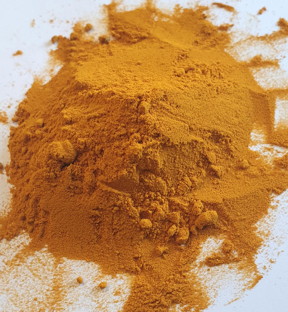 |
| Turmeric (pictured) contains the active compound curcumin, which can now be more easily absorbed by the body thanks to nanotechnology. CREDIT University of South Australia |
Abstract:
For years, curry lovers have sworn by the anti-inflammatory properties of turmeric, but its active compound, curcumin, has long frustrated scientists hoping to validate these claims with clinical studies.
Curcumin is the spice of life when delivered via tiny nanoparticles: Treatment for Alzheimer's and genital herpes
Adelaide, Australia | Posted on March 6th, 2020The failure of the body to easily absorb curcumin has been a thorn in the side of medical researchers seeking scientific proof that curcumin can successfully treat cancer, heart disease, Alzheimer's and many other chronic health conditions.
Now, researchers from the University of South Australia (UniSA), McMaster University in Canada and Texas A&M University have shown that curcumin can be delivered effectively into human cells via tiny nanoparticles.
Sanjay Garg, a professor of pharmaceutical science at UniSA, and his colleague Dr Ankit Parikh are part of an international team that has developed a nano formulation which changes curcumin's behaviour to increase its oral bioavailability by 117 per cent.
The researchers have shown in animal experiments that nanoparticles containing curcumin not only prevents cognitive deterioration but also reverses the damage. This finding paves the way for clinical development trials for Alzheimer's.
Co-author Professor Xin-Fu Zhou, a UniSA neuroscientist, says the new formulation offers a potential solution for Alzheimer's disease.
"Curcumin is a compound that suppresses oxidative stress and inflammation, both key pathological factors for Alzheimer's, and it also helps remove amyloid plaques, small fragments of protein that clump together in the brains of Alzheimer disease patients," Prof Zhou says.
The same delivery method is now being tested to show that curcumin can also prevent the spread of genital herpes.
"To treat genital herpes (HSV-2) you need a form of curcumin that is better absorbed, which is why it needs to be encapsulated in a nano formulation," Prof Garg says.
"Curcumin can stop the genital herpes virus, it helps in reducing the inflammation and makes it less susceptible to HIV and other STIs," Prof Garg says.
Women are biologically more vulnerable to genital herpes as bacterial and viral infections in the female genital tract (FGT) impair the mucosal barrier. Curcumin, however, can minimize genital inflammation and control against HSV-2 infection, which would assist in the prevention of HIV infection in the FGT.
###
Their findings have been published in the International Journal of Molecular Sciences and Drug Delivery and Translational Research as part I and part II. All these papers are available by contacting
####
For more information, please click here
Contacts:
Candy Gibson
61-883-020-961
Copyright © University of South Australia
If you have a comment, please Contact us.Issuers of news releases, not 7th Wave, Inc. or Nanotechnology Now, are solely responsible for the accuracy of the content.
Bookmark:


| Related Links |
| Related News Press |
News and information
 Quantum computer improves AI predictions April 17th, 2026
Flexible sensor gains sensitivity under pressure April 17th, 2026
A reusable chip for particulate matter sensing April 17th, 2026
Detecting vibrational quantum beating in the predissociation dynamics of SF6 using time-resolved photoelectron spectroscopy April 17th, 2026
Possible Futures
A fundamentally new therapeutic approach to cystic fibrosis: Nanobody repairs cellular defect April 17th, 2026
UC Irvine physicists discover method to reverse ‘quantum scrambling’ : The work addresses the problem of information loss in quantum computing system April 17th, 2026
Nanomedicine
A fundamentally new therapeutic approach to cystic fibrosis: Nanobody repairs cellular defect April 17th, 2026
New molecular technology targets tumors and simultaneously silences two ‘undruggable’ cancer genes August 8th, 2025
New imaging approach transforms study of bacterial biofilms August 8th, 2025
Electrifying results shed light on graphene foam as a potential material for lab grown cartilage June 6th, 2025
Discoveries
Quantum computer improves AI predictions April 17th, 2026
Flexible sensor gains sensitivity under pressure April 17th, 2026
A reusable chip for particulate matter sensing April 17th, 2026
Detecting vibrational quantum beating in the predissociation dynamics of SF6 using time-resolved photoelectron spectroscopy April 17th, 2026
Announcements
A fundamentally new therapeutic approach to cystic fibrosis: Nanobody repairs cellular defect April 17th, 2026
UC Irvine physicists discover method to reverse ‘quantum scrambling’ : The work addresses the problem of information loss in quantum computing system April 17th, 2026
Interviews/Book Reviews/Essays/Reports/Podcasts/Journals/White papers/Posters
A fundamentally new therapeutic approach to cystic fibrosis: Nanobody repairs cellular defect April 17th, 2026
UC Irvine physicists discover method to reverse ‘quantum scrambling’ : The work addresses the problem of information loss in quantum computing system April 17th, 2026
Nanobiotechnology
A fundamentally new therapeutic approach to cystic fibrosis: Nanobody repairs cellular defect April 17th, 2026
New molecular technology targets tumors and simultaneously silences two ‘undruggable’ cancer genes August 8th, 2025
New imaging approach transforms study of bacterial biofilms August 8th, 2025
Electrifying results shed light on graphene foam as a potential material for lab grown cartilage June 6th, 2025
 |
||
 |
||
| The latest news from around the world, FREE | ||
 |
||
|
|
||
| Premium Products | ||
 |
||
|
Only the news you want to read!
Learn More |
||
 |
||
|
Full-service, expert consulting
Learn More |
||
|
|
||