Home > Press > TUBALL single wall carbon nanotubes: No ecotoxicity found, unlike other carbon nanotubes
 |
Abstract:
Testing of the ecotoxicity potential of TUBALL single wall carbon nanotubes, carried out according to the relevant OECD guideline, has shown no toxic effects on algae, in contrast to a set of recent results on similar tests with multi wall carbon nanotubes. Among plausible reasons for this is the unique physical nature, particularly the high flexibility, of single wall carbon nanotubes compared with most other types of carbon nanomaterials.
TUBALL single wall carbon nanotubes: No ecotoxicity found, unlike other carbon nanotubes
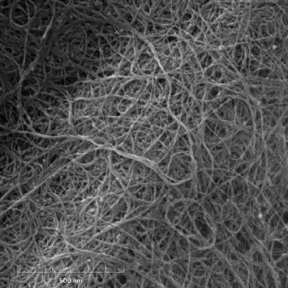
Luxembourg | Posted on October 12th, 2018The range of applications of carbon nanotubes is continuing to increase rapidly and now extends far beyond only hi-tech products to include convenience goods. This has raised concerns about potential adverse environmental effects of carbon nanotubes. A single wall carbon nanotube is a one-atom-thick sheet of graphene that is rolled into a tube: this type of nanotube possesses a number of exciting properties, including high flexibility, that are far superior to those of multi wall carbon nanotubes or carbon fibers. Envigo, an independent European research laboratory, has conducted studies on possible ecotoxic effects of TUBALL™ single wall carbon nanotubes, produced by OCSiAl. The ecotoxicity potential of these nanotubes was examined by treating algae, which are acknowledged as being a very sensitive species, with a saturated solution of the nanotubes for 72 hours, as per the OECD chemical testing guideline 201. The measured algal biomass densities and thus the growth rates demonstrated that there were no toxic effects after exposure of algae to TUBALL nanotubes.
“There is no indication that dissolved TUBALL single wall carbon nanotubes have any intrinsic ecotoxic properties at all when tested in solution as stipulated by the testing guideline. Furthermore, unlike multi wall carbon nanotubes and carbon fibers, single wall carbon nanotubes are highly flexible and may thus generally have a lower potential to harm the cell walls of algae”, concludes Dr Detlef Schuler in his article that is currently being prepared for publication.
Fundamentally distinctive features of single wall carbon nanotubes, compared with multi wall nanotubes and carbon fibers, have historically been underestimated by researchers. A number of recent test results have illuminated various effects of these nanomaterials interacting with the environment. One example is a study led by the Russian Far Eastern Federal University that demonstrated both acute and chronic toxic effects of multi wall carbon nanotubes on marine algae. The researchers concluded that mechanical damage to the cell walls was the reason for this effect, and that this was due to the rigid nature of this type of nanotube.
More specific and comprehensive studies on single wall carbon nanotubes’ potential toxic properties are expected to be conducted in the very near future, including inhalation toxicity studies to be carried according to the relevant OECD test guidelines. Tests on migration of single wall carbon nanotubes from a material’s matrix and case studies in the workplace to measure the exposure to inhaled nanoparticles and the environmental risk for workers are already in the public domain.
####
For more information, please click here
Contacts:
Anastasia Zirka
PR & Advertising manager
OCSiAl Group
+7 913 989 9239
Copyright © OCSiAl Group
If you have a comment, please Contact us.Issuers of news releases, not 7th Wave, Inc. or Nanotechnology Now, are solely responsible for the accuracy of the content.
Bookmark:


| Related News Press |
News and information
 Quantum computer improves AI predictions April 17th, 2026
Flexible sensor gains sensitivity under pressure April 17th, 2026
A reusable chip for particulate matter sensing April 17th, 2026
Detecting vibrational quantum beating in the predissociation dynamics of SF6 using time-resolved photoelectron spectroscopy April 17th, 2026
Nanotubes/Buckyballs/Fullerenes/Nanorods/Nanostrings/Nanosheets
Tiny nanosheets, big leap: A new sensor detects ethanol at ultra-low levels January 30th, 2026
Enhancing power factor of p- and n-type single-walled carbon nanotubes April 25th, 2025
Chainmail-like material could be the future of armor: First 2D mechanically interlocked polymer exhibits exceptional flexibility and strength January 17th, 2025
Innovative biomimetic superhydrophobic coating combines repair and buffering properties for superior anti-erosion December 13th, 2024
Announcements
A fundamentally new therapeutic approach to cystic fibrosis: Nanobody repairs cellular defect April 17th, 2026
UC Irvine physicists discover method to reverse ‘quantum scrambling’ : The work addresses the problem of information loss in quantum computing system April 17th, 2026
Safety-Nanoparticles/Risk management
Tiny nanosheets, big leap: A new sensor detects ethanol at ultra-low levels January 30th, 2026
Onion-like nanoparticles found in aircraft exhaust May 14th, 2025
Closing the gaps — MXene-coating filters can enhance performance and reusability February 28th, 2025
 |
||
 |
||
| The latest news from around the world, FREE | ||
 |
||
|
|
||
| Premium Products | ||
 |
||
|
Only the news you want to read!
Learn More |
||
 |
||
|
Full-service, expert consulting
Learn More |
||
|
|
||