Home > Press > Physicists induce superconductivity in non-superconducting materials: Novel method also can improve efficiency in known superconducting materials
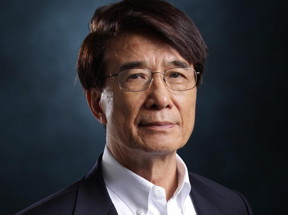 |
| This is Paul C.W. Chu. CREDIT University of Houston |
Abstract:
Researchers at the University of Houston have reported a new method for inducing superconductivity in non-superconducting materials, demonstrating a concept proposed decades ago but never proven.
Physicists induce superconductivity in non-superconducting materials: Novel method also can improve efficiency in known superconducting materials
Houston, TX | Posted on November 2nd, 2016The technique can also be used to boost the efficiency of known superconducting materials, suggesting a new way to advance the commercial viability of superconductors, said Paul C.W. Chu, chief scientist at the Texas Center for Superconductivity at UH (TcSUH) and corresponding author of a paper describing the work, published Oct. 31 in the Proceedings of the National Academy of Sciences.
"Superconductivity is used in many things, of which MRI (magnetic resonance imaging) is perhaps the best known," said Chu, the physicist who holds the TLL Temple Chair of Science at UH. But the technology used in health care, utilities and other fields remains expensive, in part because it requires expensive cooling, which has limited widespread adoption, he said.
The research, demonstrating a new method to take advantage of assembled interfaces to induce superconductivity in the non-superconducting compound calcium iron arsenide, offers a new approach to finding superconductors that work at higher temperatures.
Superconducting materials conduct electric current without resistance, while traditional transmission materials lose as much as 10 percent of energy between the generating source and the end user. That means superconductors could allow utility companies to provide more electricity without increasing the amount of fuel used to generate electricity.
"One way that has long been proposed to achieve enhanced Tcs (critical temperature, or the temperature at which a material becomes superconducting) is to take advantage of artificially or naturally assembled interfaces," the researchers wrote. "The present work clearly demonstrates that high Tc superconductivity in the well-known non-superconducting compound CaFe2As2 (calcium iron arsenide) can be induced by antiferromagnetic/metallic layer stacking and provides the most direct evidence to date for the interface-enhanced Tc in this compound."
Chu's coauthors on the paper include lead author Kui Zhao, a recent UH graduate now at Advanced MicroFabrication Equipment Inc. in Shanghai; Liangzi Deng, Shu-Yuan Huyan and Yu-Yi Xue, both affiliated with the UH Department of Physics and TcSUH, and Bing Lv, a material physicist who recently moved to the University of Texas-Dallas.
The concept that superconductivity could be induced or enhanced at the point where two different materials come together - the interface - was first proposed in the 1970s but had never been conclusively demonstrated, Chu said. Some previous experiments showing enhanced superconducting critical temperature could not exclude other effects due to stress or chemical doping, which prevented verification, he said.
To validate the concept, researchers working in ambient pressure exposed the undoped calcium iron arsenide compound to heat - 350 degrees Centigrade, considered relatively low temperature for this procedure - in a process known as annealing. The compound formed two distinct phases, with one phase increasingly converted to the other the longer the sample was annealed. Chu said neither of the two phases was superconducting, but researchers were able to detect superconductivity at the point when the two phases coexist.
Although the superconducting critical temperature of the sample produced through the process was still relatively low, Chu said the method used to prove the concept offers a new direction in the search for more efficient, less expensive superconducting materials.
####
For more information, please click here
Contacts:
Jeannie Kever
713-743-0778
Copyright © University of Houston
If you have a comment, please Contact us.Issuers of news releases, not 7th Wave, Inc. or Nanotechnology Now, are solely responsible for the accuracy of the content.
Bookmark:


| Related News Press |
News and information
 Quantum computer improves AI predictions April 17th, 2026
Flexible sensor gains sensitivity under pressure April 17th, 2026
A reusable chip for particulate matter sensing April 17th, 2026
Detecting vibrational quantum beating in the predissociation dynamics of SF6 using time-resolved photoelectron spectroscopy April 17th, 2026
Superconductivity
MXene nanomaterials enter a new dimension Multilayer nanomaterial: MXene flakes created at Drexel University show new promise as 1D scrolls January 30th, 2026
Possible Futures
A fundamentally new therapeutic approach to cystic fibrosis: Nanobody repairs cellular defect April 17th, 2026
UC Irvine physicists discover method to reverse ‘quantum scrambling’ : The work addresses the problem of information loss in quantum computing system April 17th, 2026
Discoveries
Quantum computer improves AI predictions April 17th, 2026
Flexible sensor gains sensitivity under pressure April 17th, 2026
A reusable chip for particulate matter sensing April 17th, 2026
Detecting vibrational quantum beating in the predissociation dynamics of SF6 using time-resolved photoelectron spectroscopy April 17th, 2026
Materials/Metamaterials/Magnetoresistance
First real-time observation of two-dimensional melting process: Researchers at Mainz University unveil new insights into magnetic vortex structures August 8th, 2025
Researchers unveil a groundbreaking clay-based solution to capture carbon dioxide and combat climate change June 6th, 2025
A 1960s idea inspires NBI researchers to study hitherto inaccessible quantum states June 6th, 2025
Institute for Nanoscience hosts annual proposal planning meeting May 16th, 2025
Announcements
A fundamentally new therapeutic approach to cystic fibrosis: Nanobody repairs cellular defect April 17th, 2026
UC Irvine physicists discover method to reverse ‘quantum scrambling’ : The work addresses the problem of information loss in quantum computing system April 17th, 2026
Interviews/Book Reviews/Essays/Reports/Podcasts/Journals/White papers/Posters
A fundamentally new therapeutic approach to cystic fibrosis: Nanobody repairs cellular defect April 17th, 2026
UC Irvine physicists discover method to reverse ‘quantum scrambling’ : The work addresses the problem of information loss in quantum computing system April 17th, 2026
 |
||
 |
||
| The latest news from around the world, FREE | ||
 |
||
|
|
||
| Premium Products | ||
 |
||
|
Only the news you want to read!
Learn More |
||
 |
||
|
Full-service, expert consulting
Learn More |
||
|
|
||