Home > Press > Industrial waste converted in coating for aircraft turbines
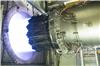 |
| Industrial waste converted in coating for aircraft turbines. |
Abstract:
A group of specialists from the Center for Research in Advanced Materials (Cimav), have developed nanostructured coatings capable of withstanding temperatures exceeding 1000 degrees Celsius, which are used in aviation turbine components.
Industrial waste converted in coating for aircraft turbines
Col. Roma, Mexico | Posted on September 11th, 2014Dr. Ana Maria Arizmendi Morquecho, leader of the project, explained that through the development of coatings the team is looking to solve one of the most common problems in the aviation industry, which is the microstructural degradation of superalloys that integrate turbines due to the high temperatures reached by the devices.
"The components of the blade and nozzle in the hot zone of the turbines, which are made of Nickel-based superalloys, are exposed to temperatures above one thousand degrees Celsius, which causes very strong microstructural degradation of the substrates and impact on the thermal and mechanical properties of the structure by decreasing the energy efficiency of the turbines," explained the researcher.
The project consist in the development of advanced thermal barriers based nanocomposites that would protect the structures from the superalloys some components of the turbine are manufactured with. For this, the group of Arizmendi Morquecho uses flying ash as a ceramic matrix incorporating various nanoparticles to create new materials developed by researchers.
"We found that taking advantage of the large amount of mullite, which is a chemically and thermally stable compound found in the flying ash, we can use this material as a ceramic matrix, which by the addition of different particles have obtained novel nanocomposites that greatly diminish the thermal conductivity and are used in developing coatings for superalloys," said Arizmendi Morquecho.
Besides the application for the aviation industry, this technology seeks to impact in an environmental level with the use of a material that until now was considered polluting industrial waste, such as flying ash, which is mainly obtained from coal plants installed in northern Mexico.
According to Arizmendi Morquecho, after five years of analyzing the different materials that could be used as advanced thermal barrier systems, the team is expecting to make the final tests to validate the materials obtained at the laboratory , to continue with the process of scaling up the technology to be transferred to an interested company.
While this technology is considered basic research, its guidance hopes to solve industrial problems. "This is part of the focus of Cimav at the Park of Research and Technological Innovation located in the Moneterrey, north of Mexico. Therefore, we combine a multidisciplinary group of researchers to conduct basic and applied science, as well as having liaisons with industry, academy and research centers globally," explained Morquecho Arizmendi.
####
For more information, please click here
Contacts:
José Gotés
Copyright © AlphaGalileo
If you have a comment, please Contact us.Issuers of news releases, not 7th Wave, Inc. or Nanotechnology Now, are solely responsible for the accuracy of the content.
Bookmark:


| Related News Press |
News and information
 Quantum computer improves AI predictions April 17th, 2026
Flexible sensor gains sensitivity under pressure April 17th, 2026
A reusable chip for particulate matter sensing April 17th, 2026
Detecting vibrational quantum beating in the predissociation dynamics of SF6 using time-resolved photoelectron spectroscopy April 17th, 2026
Announcements
A fundamentally new therapeutic approach to cystic fibrosis: Nanobody repairs cellular defect April 17th, 2026
UC Irvine physicists discover method to reverse ‘quantum scrambling’ : The work addresses the problem of information loss in quantum computing system April 17th, 2026
Environment
A reusable chip for particulate matter sensing April 17th, 2026
Researchers unveil a groundbreaking clay-based solution to capture carbon dioxide and combat climate change June 6th, 2025
Aerospace/Space
Decoding hydrogen‑bond network of electrolyte for cryogenic durable aqueous zinc‑ion batteries January 30th, 2026
ICFO researchers overcome long-standing bottleneck in single photon detection with twisted 2D materials August 8th, 2025
Onion-like nanoparticles found in aircraft exhaust May 14th, 2025
Industrial
Tiny nanosheets, big leap: A new sensor detects ethanol at ultra-low levels January 30th, 2026
Quantum interference in molecule-surface collisions February 28th, 2025
Boron nitride nanotube fibers get real: Rice lab creates first heat-tolerant, stable fibers from wet-spinning process June 24th, 2022
 |
||
 |
||
| The latest news from around the world, FREE | ||
 |
||
|
|
||
| Premium Products | ||
 |
||
|
Only the news you want to read!
Learn More |
||
 |
||
|
Full-service, expert consulting
Learn More |
||
|
|
||