Home > Press > Packaging insulin into a pill-friendly form for diabetes treatment
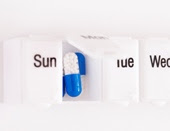 |
| Scientists report new progress on a long-sought insulin pill that could save millions the pain of daily shots. Credit: Martin Poole/Photodisc/Thinkstock |
Abstract:
Since insulin's crucial discovery nearly a century ago, countless diabetes patients have had to inject themselves with the life-saving medicine. Now scientists are reporting a new development toward a long-sought insulin pill that could save millions the pain of daily shots. Published in the ACS journal Biomacromolecules, the advance could someday not only eliminate the "ouch" factor, but also get needle-wary — and weary — patients to take their medicine when they should.
Packaging insulin into a pill-friendly form for diabetes treatment
Washington, DC | Posted on December 18th, 2013Sanyog Jain and colleagues explain that patients with diabetes sometimes skip doses or stop taking their insulin because the injections can be painful. But doing so puts their health in danger. An estimated 347 million people globally (about 26 million in the U.S.) are living with diabetes. In the U.S., more than a quarter of these patients are taking some kind of insulin therapy. For years, researchers have sought a way to transform delivery of this therapy from a shot to a pill, but it has been a challenge. The body's digestive enzymes that are so good at breaking down food also break down insulin before it can get to work. In addition, insulin doesn't get easily absorbed through the gut into the bloodstream. To overcome these hurdles, Jain's team combined two approaches to shield insulin from the digestive enzymes and then get it into the blood.
They packaged insulin in tiny sacs made of lipids, or fats, called liposomes, which are already used in some treatments. Then, they wrapped the liposomes in layers of protective molecules called polyelectrolytes. To help these "layersomes" get absorbed into the bloodstream, they attached folic acid, a kind of vitamin B that has been shown to help transport liposomes across the intestinal wall into the blood. In rats, the delivery system lowered blood glucose levels almost as much as injected insulin, though the effects of the layersomes lasted longer than that of injected insulin.
The authors acknowledge funding from the Department of Science & Technology (India) and the Council of Scientific and Industrial Research, New Delhi.
####
About American Chemical Society
The American Chemical Society is a nonprofit organization chartered by the U.S. Congress. With more than 163,000 members, ACS is the world’s largest scientific society and a global leader in providing access to chemistry-related research through its multiple databases, peer-reviewed journals and scientific conferences. Its main offices are in Washington, D.C., and Columbus, Ohio.
For more information, please click here
Contacts:
Sanyog Jain, Ph.D.
Centre for Pharmaceutical Nanotechnology
Department of Pharmaceutics
National Institute of Pharmaceutical Education and Research
Sector 67, S.A.S. Nagar (Mohali)
Punjab-160062
India
Phone: +91-0172-2292055
Cell: +91-9988-545700
Fax: +91-0172-2214692
or
Please contact Dr. Jain by cell phone or email, as he is on travel until December 21.
General Inquiries:
Michael Bernstein
202-872-6042
Science Inquiries:
Katie Cottingham, Ph.D.
301-775-8455
Copyright © American Chemical Society
If you have a comment, please Contact us.Issuers of news releases, not 7th Wave, Inc. or Nanotechnology Now, are solely responsible for the accuracy of the content.
Bookmark:


| Related Links |
| Related News Press |
News and information
 Quantum computer improves AI predictions April 17th, 2026
Flexible sensor gains sensitivity under pressure April 17th, 2026
A reusable chip for particulate matter sensing April 17th, 2026
Detecting vibrational quantum beating in the predissociation dynamics of SF6 using time-resolved photoelectron spectroscopy April 17th, 2026
Govt.-Legislation/Regulation/Funding/Policy
Quantum computer improves AI predictions April 17th, 2026
Metasurfaces smooth light to boost magnetic sensing precision January 30th, 2026
New imaging approach transforms study of bacterial biofilms August 8th, 2025
Nanomedicine
A fundamentally new therapeutic approach to cystic fibrosis: Nanobody repairs cellular defect April 17th, 2026
New molecular technology targets tumors and simultaneously silences two ‘undruggable’ cancer genes August 8th, 2025
New imaging approach transforms study of bacterial biofilms August 8th, 2025
Electrifying results shed light on graphene foam as a potential material for lab grown cartilage June 6th, 2025
Discoveries
Quantum computer improves AI predictions April 17th, 2026
Flexible sensor gains sensitivity under pressure April 17th, 2026
A reusable chip for particulate matter sensing April 17th, 2026
Detecting vibrational quantum beating in the predissociation dynamics of SF6 using time-resolved photoelectron spectroscopy April 17th, 2026
Announcements
A fundamentally new therapeutic approach to cystic fibrosis: Nanobody repairs cellular defect April 17th, 2026
UC Irvine physicists discover method to reverse ‘quantum scrambling’ : The work addresses the problem of information loss in quantum computing system April 17th, 2026
Interviews/Book Reviews/Essays/Reports/Podcasts/Journals/White papers/Posters
A fundamentally new therapeutic approach to cystic fibrosis: Nanobody repairs cellular defect April 17th, 2026
UC Irvine physicists discover method to reverse ‘quantum scrambling’ : The work addresses the problem of information loss in quantum computing system April 17th, 2026
 |
||
 |
||
| The latest news from around the world, FREE | ||
 |
||
|
|
||
| Premium Products | ||
 |
||
|
Only the news you want to read!
Learn More |
||
 |
||
|
Full-service, expert consulting
Learn More |
||
|
|
||