Home > Press > Graphene makes light work of aircraft design
 |
Abstract:
Faster and lighter aircraft could be built using an incredible super-thin material just one atom thick, according to new research conducted at The University of Manchester
Graphene makes light work of aircraft design
UK | Posted on June 16th, 2010Writing in the journal Advanced Materials, a team of materials scientists and physicists say graphene has the potential to replace carbon fibres in high performance materials that are used to build aircraft.
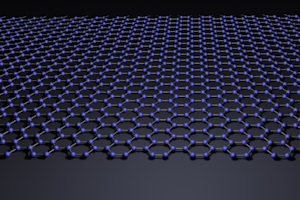
Graphene - discovered in 2004 by physicists Prof Andre Geim and Dr Kostya Novoselov at The University of Manchester - is a two-dimensional layer of carbon atoms that resembles chicken wire.
As well as being an excellent conductor of electrons, with the potential to replace silicon, graphene is also one of the stiffest-known materials. A recent study found it to be the strongest material ever measured.
This led researchers to investigate its behaviour and properties when mixed with other materials.
A University of Manchester team, which included Dr Novoselov, put a single graphene sheet between two layers of polymer and used a technique called Raman spectroscopy to measure how the carbon bonds responded when the graphene was stretched.
Raman spectroscopy works by shining a laser light onto a molecule and then collecting and analysing the wavelength and intensity of the resulting scattered light.
The technique basically measures bond vibration between atoms. As researchers stretch the bond the vibration changes frequency. It can be compared to tuning a guitar string and hearing the pitch change.
Researchers were able to use Raman spectroscopy to look at the change of the vibrational energy of the bond and then worked out the change in bond length. From this information they calculated the improvement in stiffness the graphene gave to the polymer composite.
Professor Robert Young of the School of Materials, said: "We have found the theories developed for large materials still hold even when a material is just one atom thick."
"We can now start to use the decades of research into traditional carbon fibre composites to design the next generation of graphene-based materials."
Dr Ian Kinloch, a researcher in the School of Materials, commented: "This relatively new material continues to amaze, and its incredible properties could be used to make structural, lightweight components for fuel efficient vehicles and aircraft."
The research was supported by the Engineering and Physical Sciences Research Council (EPSRC) and the Royal Society.
The paper, ‘Interfacial Stress Transfer in a Graphene Monolayer Nanocomposite' by L. Gong, I. A. Kinloch, R. J. Young, I. Riaz, R. Jalil and K. S. Novoselov, is available on request.
####
For more information, please click here
Contacts:
Dan Cochlin
Media Relations
The University of Manchester
Tel: 0161 275 8387
Copyright © University of Manchester
If you have a comment, please Contact us.Issuers of news releases, not 7th Wave, Inc. or Nanotechnology Now, are solely responsible for the accuracy of the content.
Bookmark:


| Related News Press |
News and information
 Quantum computer improves AI predictions April 17th, 2026
Flexible sensor gains sensitivity under pressure April 17th, 2026
A reusable chip for particulate matter sensing April 17th, 2026
Detecting vibrational quantum beating in the predissociation dynamics of SF6 using time-resolved photoelectron spectroscopy April 17th, 2026
Possible Futures
A fundamentally new therapeutic approach to cystic fibrosis: Nanobody repairs cellular defect April 17th, 2026
UC Irvine physicists discover method to reverse ‘quantum scrambling’ : The work addresses the problem of information loss in quantum computing system April 17th, 2026
Nanotubes/Buckyballs/Fullerenes/Nanorods/Nanostrings/Nanosheets
Tiny nanosheets, big leap: A new sensor detects ethanol at ultra-low levels January 30th, 2026
Enhancing power factor of p- and n-type single-walled carbon nanotubes April 25th, 2025
Chainmail-like material could be the future of armor: First 2D mechanically interlocked polymer exhibits exceptional flexibility and strength January 17th, 2025
Innovative biomimetic superhydrophobic coating combines repair and buffering properties for superior anti-erosion December 13th, 2024
Announcements
A fundamentally new therapeutic approach to cystic fibrosis: Nanobody repairs cellular defect April 17th, 2026
UC Irvine physicists discover method to reverse ‘quantum scrambling’ : The work addresses the problem of information loss in quantum computing system April 17th, 2026
Energy
Sensors innovations for smart lithium-based batteries: advancements, opportunities, and potential challenges August 8th, 2025
Simple algorithm paired with standard imaging tool could predict failure in lithium metal batteries August 8th, 2025
Automotive/Transportation
Decoding hydrogen‑bond network of electrolyte for cryogenic durable aqueous zinc‑ion batteries January 30th, 2026
Sensors innovations for smart lithium-based batteries: advancements, opportunities, and potential challenges August 8th, 2025
Simple algorithm paired with standard imaging tool could predict failure in lithium metal batteries August 8th, 2025
Aerospace/Space
Decoding hydrogen‑bond network of electrolyte for cryogenic durable aqueous zinc‑ion batteries January 30th, 2026
ICFO researchers overcome long-standing bottleneck in single photon detection with twisted 2D materials August 8th, 2025
Onion-like nanoparticles found in aircraft exhaust May 14th, 2025
 |
||
 |
||
| The latest news from around the world, FREE | ||
 |
||
|
|
||
| Premium Products | ||
 |
||
|
Only the news you want to read!
Learn More |
||
 |
||
|
Full-service, expert consulting
Learn More |
||
|
|
||