Home > Press > New Resource for Nanomaterials Engineering
 |
Abstract:
Spartanics Laser Die Cutting Applications Laboratory for Materials Research
New Resource for Nanomaterials Engineering
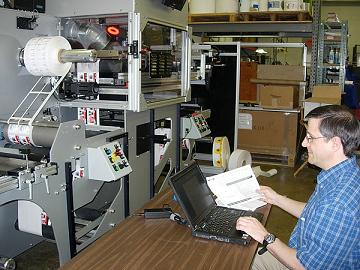
Rolling Meadows, IL | Posted on May 25th, 2010Nanomaterials engineers seeking to use rapidly advancing laser die cutting technology for nanomaterials product innovations can now determine if the materials they use can be handled by modern laser die cutting technology by sending samples for engineering studies and analyses to the new Spartanics Laser Cutting Applications Laboratory for Materials Research (*).
Spartanics laser die cutting applications engineers have extensively tested laser die cutters with varying laser strengths and software configurations with a wide range of materials including: plastic films; polyesters; polycarbonates; foams; textiles; paper; adhesive tapes; non-wovens, wood, laminates, pressure-sensitive substrates, magnetic materials, polypropylene, polymides, abrasives, rubber, among others. Formalization of the Applications Laboratory signals Spartanics intent to systematize this growing knowledgebase for cross-industry access.
The Spartanics Laser Die Cutting Applications Laboratory for Materials Research provides no-cost detailed engineering analyses of maximum material thicknesses that can be handled with these different substrates, including brand name materials, correlated to laser power and other variables.
To arrange for a no-cost materials analysis of suitability for finishing, marking and other detailing with laser die cutting, contact Mike Bacon, Spartanics VP, at
Paul Dirienzo, Spartanics Director of Engineering explains that the formalization of the Spartanics Laser Die Cutting Applications Laboratory for Materials Research is a natural outgrowth of the ongoing R&D investments Spartanics has made in advancing laser die cutting technology. Dirienzo comments, "The explosion in new materials with different properties-- tensile strengths, toughness, resilience, etc.---has been especially pronounced in the last decade. During this same time period, laser die cutting technology, largely due to more sophisticated software engineering, continues to evolve at such a rapid pace that the conclusions one might make today about whether a certain plastic, non-woven, or even nanomaterial can be adequately handled by digital die cutting is likely not going to be the same in just a few years. Spartanics has opened this Laser Die Cutting Applications Laboratory for Materials Research to facilitate the systematic study of match-up between laser die cutting and materials—both long-established brand names and newer material innovations. We will also be publishing these studies in the future in some manner, to be announced, and partnering with the major materials suppliers around the world to create a knowledgebase that will become a standard reference across industries."
Spartanics Finecut Laser Die Cutting Systems (www.spartanics.com/product_groups_detail.cgi?id_num=5)--sheet, roll or combination sheet/roll-- are used in a wide array of applications --- flexible circuits, membrane switches, gaskets, labels, cardstock and paperboard products, packaging, automotive and medical device components, discs, belts, and gaskets, novelty magnets, RFID tags, P-O-P display products, industrial textile applications, and more.
Video demonstrations of Spartanics Finecut technology can be seen at www.spartanics.com/index.cgi?videoid=2.
Sales inquiries can be directed to +847-394-5700.
(*) www.spartanics.com/products_detail.cgi?id_num=58&styleid=2
####
About Spartanics
USA-headquartered Spartanics (www.spartanics.com) specializes in tightly integrating advanced software engineering with sophisticated handling systems to manufacture best-in-class technology for both tool-free (laser-based), steel rule die, and male/female hard tool cutting systems, screen printing systems and other equipment for fabricating products made from flat stock materials. Its worldwide service organization uses state-of-the-art virtual service technician technology and also maintains offices and spare parts in Europe.
For more information, please click here
Contacts:
Amy Munice
ALM Communications
+1-773-862-6800
(skype) ALM Communications
Copyright © Spartanics
If you have a comment, please Contact us.Issuers of news releases, not 7th Wave, Inc. or Nanotechnology Now, are solely responsible for the accuracy of the content.
Bookmark:


| Related News Press |
News and information
 Quantum computer improves AI predictions April 17th, 2026
Flexible sensor gains sensitivity under pressure April 17th, 2026
A reusable chip for particulate matter sensing April 17th, 2026
Detecting vibrational quantum beating in the predissociation dynamics of SF6 using time-resolved photoelectron spectroscopy April 17th, 2026
Videos/Movies
ICFO researchers overcome long-standing bottleneck in single photon detection with twisted 2D materials August 8th, 2025
New X-ray imaging technique to study the transient phases of quantum materials December 29th, 2022
Solvent study solves solar cell durability puzzle: Rice-led project could make perovskite cells ready for prime time September 23rd, 2022
Scientists prepare for the world’s smallest race: Nanocar Race II March 18th, 2022
Announcements
A fundamentally new therapeutic approach to cystic fibrosis: Nanobody repairs cellular defect April 17th, 2026
UC Irvine physicists discover method to reverse ‘quantum scrambling’ : The work addresses the problem of information loss in quantum computing system April 17th, 2026
Tools
Metasurfaces smooth light to boost magnetic sensing precision January 30th, 2026
From sensors to smart systems: the rise of AI-driven photonic noses January 30th, 2026
Japan launches fully domestically produced quantum computer: Expo visitors to experience quantum computing firsthand August 8th, 2025
Textiles/Clothing
Protective equipment with graphene nanotubes meets the strictest ESD safety standards March 25th, 2022
Polymer fibers with graphene nanotubes make it possible to heat hard-to-reach, complex-shaped items February 11th, 2022
Flexible material shows potential for use in fabrics to heat, cool July 3rd, 2020
 |
||
 |
||
| The latest news from around the world, FREE | ||
 |
||
|
|
||
| Premium Products | ||
 |
||
|
Only the news you want to read!
Learn More |
||
 |
||
|
Full-service, expert consulting
Learn More |
||
|
|
||