Home > Press > Tiny 'lab-on-a-chip' detects pollutants, disease and biological weapons
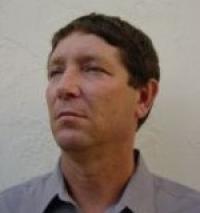 |
| This is Yosi Shacham-Diamand of Tel Aviv University.
Credit: AFTAU |
Abstract:
Tel Aviv University scientists develop highly accurate nano-scale biomonitoring solution
Tiny 'lab-on-a-chip' detects pollutants, disease and biological weapons
New York, NY and Tel Aviv, Israel | Posted on March 1st, 2009For centuries, animals have been our first line of defense against toxins. A canary in a coalmine served as a living monitor for poisonous gases. Scientists used fish to test for contaminants in our water. Even with modern advances, though, it can take days to detect a fatal chemical or organism.
Until now. Working in the miniaturized world of nanotechnology, Tel Aviv University researchers have made an enormous -- and humane -- leap forward in the detection of pollutants.
A team led by Prof. Yosi Shacham-Diamand, vice-dean of TAU's Faculty of Engineering, has developed a nano-sized laboratory, complete with a microscopic workbench, to measure water quality in real time. Their "lab on a chip" is a breakthrough in the effort to keep water safe from pollution and bioterrorist threats, pairing biology with the cutting-edge capabilities of nanotechnology.
"We've developed a platform -- essentially a micro-sized, quarter-inch square 'lab' -- employing genetically engineered bacteria that light up when presented with a stressor in water," says Prof. Shacham-Diamand. Equipment on the little chip can work to help detect very tiny light levels produced by the bacteria.
Instead of using animals to help detect threats to a water supply, Prof. Shacham-Diamand says "Our system is based on a plastic chip that is more humane, much faster, more sensitive and much cheaper."
Tiny Lab-on-Chip Boosts Accuracy
"Basically, ours is an innovative advance in the 'lab on a chip' system," says Prof. Shacham-Diamand. "It's an ingenious nano-scale platform designed to get information out of biological events. Our solution can monitor water with never-before-achieved levels of accuracy. But as a platform, it can also be used for unlimited purposes, such as investigating stem cell therapies or treating cancer."
According to published literature, Tel Aviv University is one of the top five universities in the world pioneering the "lab on a chip" concept. The nanolabs can be used to evaluate several biological processes with practical applications, such as microbes in water, stem cells, or breast cancer development. Prof. Shacham-Diamand's active lab group publishes a major paper about once a month in this field, most recently in the journal Nano Letters.
Environmental, Medical and Defense Uses for "Mini-Labs"
Partnering with other Israeli scientists, Tel Aviv University is currently building and commercializing its water-testing mini-labs to measure and monitor how genetically engineered bacteria respond to pollution such as E. coli in water. Cities across Israel have expressed interest in the technology, as has the state of Hawaii.
But other uses are being explored as well. Funded by a $3 million grant from the United States Department of Defense Projects Agency (DARPA), the new lab-on-a-chip could become a defensive weapon that protects America from biological warfare. His system, Prof. Shacham-Diamand says, can be also modified to react to chemical threats and pollution. With some tweaking here and there, it can be updated as new threats are detected.
Prof. Shacham-Diamond's research has also attracted the interest of cancer researchers around the world. He recently addressed 400 physicians at a World Cancer Conference who are seeking new devices to measure and monitor cancer and pharmaceuticals. "They need sensors like Tel Aviv University's lab on a chip. It's a hot topic now," says Prof. Shacham-Diamond.
####
About American Friends of Tel Aviv University
American Friends of Tel Aviv University (www.aftau.org) supports Israel's leading and most comprehensive center of higher learning. In independent rankings, TAU's innovations and discoveries are cited more often by the global scientific community than all but 20 other universities worldwide.
Internationally recognized for the scope and groundbreaking nature of its research programs, Tel Aviv University consistently produces work with profound implications for the future.
For more information, please click here
Contacts:
George Hunka
212-742-9070
Copyright © American Friends of Tel Aviv University
If you have a comment, please Contact us.Issuers of news releases, not 7th Wave, Inc. or Nanotechnology Now, are solely responsible for the accuracy of the content.
Bookmark:


| Related News Press |
News and information
 Quantum computer improves AI predictions April 17th, 2026
Flexible sensor gains sensitivity under pressure April 17th, 2026
A reusable chip for particulate matter sensing April 17th, 2026
Detecting vibrational quantum beating in the predissociation dynamics of SF6 using time-resolved photoelectron spectroscopy April 17th, 2026
Announcements
A fundamentally new therapeutic approach to cystic fibrosis: Nanobody repairs cellular defect April 17th, 2026
UC Irvine physicists discover method to reverse ‘quantum scrambling’ : The work addresses the problem of information loss in quantum computing system April 17th, 2026
Homeland Security
The picture of health: Virginia Tech researchers enhance bioimaging and sensing with quantum photonics June 30th, 2023
Sensors developed at URI can identify threats at the molecular level: More sensitive than a dog's nose and the sensors don't get tired May 21st, 2021
Highly sensitive dopamine detector uses 2D materials August 7th, 2020
Military
Quantum engineers ‘squeeze’ laser frequency combs to make more sensitive gas sensors January 17th, 2025
Chainmail-like material could be the future of armor: First 2D mechanically interlocked polymer exhibits exceptional flexibility and strength January 17th, 2025
Single atoms show their true color July 5th, 2024
NRL charters Navy’s quantum inertial navigation path to reduce drift April 5th, 2024
Environment
A reusable chip for particulate matter sensing April 17th, 2026
Researchers unveil a groundbreaking clay-based solution to capture carbon dioxide and combat climate change June 6th, 2025
 |
||
 |
||
| The latest news from around the world, FREE | ||
 |
||
|
|
||
| Premium Products | ||
 |
||
|
Only the news you want to read!
Learn More |
||
 |
||
|
Full-service, expert consulting
Learn More |
||
|
|
||