Home > Press > Entrepreneurship in materials interview: José Maria Lagaron
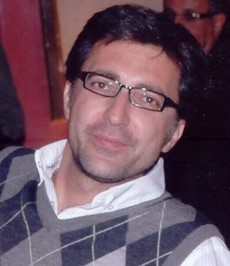 |
| José Maria Lagaron |
Abstract:
This is the second installment of our series of interviews with materials scientists who have gone on to start companies commercializing the technology from their lab.
Entrepreneurship in materials interview: José Maria Lagaron
Germany | Posted on November 1st, 2012Packaging materials are some of the most used and often overlooked objects in our daily lives. With the current high cost of petroleum feedstocks and the need to look outside the box for solutions with lower environmental impact, this is an area of very active research and commercial development. We talked to Jose Maria Lagaron, researcher at CSIC (High Council of Scientific Research) in Valencia and part time Professor at the University Jaume I of Castellón, Spain, who is also the founder of packaging materials manufacturer NanoBioMatters Industries S.L.. In our chat we discover issues with European startups, tips for budding entrepreneurs, and much more.
Can you give me a brief pitch about what the main product of your company (NanoBioMatters Industries S.L.) is, and what is its purpose?
We develop nanoclay-based products with passive, such as gas and vapor barrier promoters, and active functionalities, such as antimicrobial, oxygen scavenger, antioxidant, etc… The purpose is to reinforce and provide novel functionalities to polymers of value in many applications, mainly in packaging.
What is your role within the company, and how much are you involved now with the business side of the company? How different do you feel that the role you play within NanoBioMatters is, with respect to having the same job at a large, established company?
I was the founder of the company and the main technology developer, therefore, I have been playing CSO and CTO roles but also a business development role in the early days. I was also heavily involved in the everyday overall management and I was, and still am, within the executive board of the company. Currently, I am still helping, in all of these roles, the full time employees wearing the official hats, since I never left my academic position across the whole process of company development. The reason for the latter is that I have much more research freedom and scope of action as an academic, and potentially the ability to create other new businesses with entirely new people.
The main differences with regard to working in large and established companies, is the feeling of carrying out a personal challenge realization and to have an overall company visibility and also input. Additionally, the dynamics and the level of commitment in a start-up are much more intense and also more rewarding. Lastly, start-ups provide a means to innovate not only in your own way but also in the way of your associates; they are places to strongly relate to people with all kind of backgrounds and typically all is muscle in the organization, there is no fat or politics involved.
When did you figure out that there was a good opportunity for commercial exploitation of this discovery/material?
It is difficult to say. I was working in the nanocomposites area with companies before and was frustrated to see that the existing products were not providing the desired property enhancements and were not satisfactory from a legislation viewpoint. When I realized that, I thought: "Well, the ceramics are not my area of expertise but I am going to start learning and cooperating with experts in this field to become one and to get done what I think needs to be done".
How long was the process from the "idea" to the creation of the company? Can you give me a detailed breakdown (R&D, IP protection, setting up the company…)?
I thought about that more seriously in a very long mountain marathon. 67 km running through the mountains mostly alone, gives you a lot of time to think … So I developed the idea during the race. When I finished the race, I told one of my colleagues, who were ahead of me all the time and who got there earlier: "I have just thought that we ought to start a company to develop tailor made technology for plastic packaging". That was a Sunday, on Monday we started the company.
We developed the IP within the company already, after we got it minimally funded with business angel capital. It was fast because we knew what we wanted to achieve and how to do it based on the previous experience and failures of my research group. We currently have more than 15 parent patents in the company IP portfolio. The first patent application came in very quickly, few months after creation.
The process of IP protection: what restrictions did it place on what you could and could not talk about with colleagues and at conferences?
Well, it imposed a number of drawbacks of course, it changed the way in which my research group was used to work; everything had to be confidential, screened and patented first and then published; but still today we do not describe in some of our papers the full composition or processing that goes with the additives we developed to make nanocomposites. This generates tension sometimes when you have to work with outsiders in joint projects or with other academics with no business interests, but it is mandatory to work in this way, so we carry on the best we can and this has not impeded the development of my academic carrier. I publish every year no less than 10 papers, typically between 10 and 15, in good journals and get invited to conferences all the time. So it is not necessarily an impediment to pursue an academic career.
Where did you turn for funding? If you used venture capital, was it difficult to get funded outside the "traditional" geographical locations of venture capital firms?
I first convinced a group of business angels, then government money for technology startups and later venture capital (3 rounds so far) and bank credit. We have turned to all sources of funding available and got a bit from all.
Before starting this venture, did you want to become an entrepreneur?
Not sure, I guess I had the right mindset but never really thought about it until I went through with it. It was not in my agenda to do this.
How influential was the environment you were in? Are many startups created around your university and CSIC institute? Were there any key facilities/procedures/initiatives at your university that substantially simplified the process of creating a company? Europe is often perceived as tougher terrain for startups, with respect to the United States: do you have any examples to share about when these disadvantages become deal breakers?
It was a nightmare in my institution at first, to the point that we had to start the company outside the University or CSIC system. We did not have support but only trouble on the horizon. Spain was not at the time like other places, where the route from the academia to the start-up was defined or supported. We had to guess and do all the time without even legal certainty. CSIC is even worse than University for this. This has now changed a bit, at least the route for startups is clearer and there are more initiatives, but the paperwork is hefty and speed is still very slow. I agree that Europe is still very tough for the survival of start-ups, the money is scarce especially now. Academics have major conflicts to start companies and dedicate time to them. For instance in Spain, it was not allowed for a government employee to have more than 10% share of his own startup, this has now changed by law, but in actual fact still there are many systemic barriers to small and medium enterprise creation.
What is the main change in mindset that this venture brought to you? What is the most important thing you could not have possibly understood had you not started your own company?
Many things, I have a much broader perspective and understanding now as to how difficult it is to bring a technology from the lab to the market. There are many issues that need to align even with a very good proof of concept in your hands, such as scalability, processing with your customer, quality control, fabrication within cost, legislation and legal barriers, social and perception barriers to adopt new technologies, dealing with yours and others' IP, dealing properly with human resources that have no scientific background, the value of educating customers, how to approach new research with a full angle perspective, how to tackle open innovation if at all viable, how hard is to judge and fire people, relating with your colleagues who are now business associates, etc … The timing required is always much more enormous than anticipated, this is hard learning.
I thought that doing one experiment in the lab and proving the concept in a small extruder was enough to guarantee success, I have now learned how complex trials with customers are, and how difficult it is to standardize a technology to provide the same properties day in and day out. With every customer, it can be very different. I learned about the real life struggles of the plastics industry from the production and commercialization view point. Having worked in plastics industries on the research side does not prepare you for this.
What advice would you give to someone with a good idea who wants to commercialize it? Or, what would you have done differently?
I simply advise them to make sure that they team up with people from the real business world and to learn to be flexible and open minded even if they think they already are. Scientists can very easily be the opposite of business creation. If they plan to become the CEO, they need to do an MBA, otherwise they need to hire and trust a very good CFO and a very good Business Development Director. Put public money and venture capital in your company, it will be difficult that you make serious mistakes in this way, since you are screened all the time. I would have done many things differently, but not the important ones to be honest. The difficult question is always the same: Are you going to drop off your academic career to be full time employee of the company or not. You think about this very carefully. If you are not full time, it can create frustration in a scientist accustomed to have full control, for not being able to tackle the issues with enough dedication or that other people take decisions on your behalf.
How has this changed your interaction with other scientists? (i.e. giving things away for free)
Oh well, it gives you a very new perspective that others do not have about the real value in monetary terms of the research work. It makes you become more cautious when doing joint cooperative work. Of course, cooperating is learning but one must be careful with the core stuff of your company, sharing this can bring problems.
How important do you think being an entrepreneur is, in today's academic world? Do you think departments are more likely to "like" a candidate if s/he has an entrepreneurial background?
I believe it has become very important to make good use of the money you spend in hiring someone who has to carry out applied research projects. Today's funding, whether institutional or industrial, is more focused on projects that bring short and medium term innovation. It is very difficult to get young people with this background but at a higher level of hiring, postdoc or senior level, I believe it provides very good value, unless we are talking about very fundamental work.
In times of funding crunch, do you think this experience gives you an edge?
Yes, it is very valuable. Funding goes for innovation and for creating technologies that can be transferred to the industry and to society. There is an increasing pressure to return good value for money spent in research and an entrepreneur scientist is best qualified for this in my opinion.
Why did you decide to remain an academic scientist, as opposed to dedicate yourself full-time to NanoBioMatters Industries S.L. ?
I answered that already I think; more freedom of action, higher scope in research and academic activities, be part of other initiatives of a different nature. A company enslaves you in some ways, being an academic outsider can give you even more value for the company. You are more exposed to new ideas being in the academic world and that is a motivation for me, continuous learning and collaboration with my peers.
How do you juggle your time between your academic career and your company?
This is very difficult but I have contracts between the company and my research team that justify more dedication, but you have no life aside work basically if you try to tackle both, at least in my case.
####
For more information, please click here
Copyright © Wiley-VCH Materials Science Journals
If you have a comment, please Contact us.Issuers of news releases, not 7th Wave, Inc. or Nanotechnology Now, are solely responsible for the accuracy of the content.
Bookmark:


| Related News Press |
News and information
 Simulating magnetization in a Heisenberg quantum spin chain April 5th, 2024
NRL charters Navy’s quantum inertial navigation path to reduce drift April 5th, 2024
Discovery points path to flash-like memory for storing qubits: Rice find could hasten development of nonvolatile quantum memory April 5th, 2024
VC/Funding/Angel financing/Loans/Leases/Crowdfunding
Graphene Flagship start-up Bedimensional closes a second €10 million investment round February 10th, 2023
180 Degree Capital Corp. Issues Second Open Letter to the Board and Shareholders of Enzo Biochem, Inc. March 26th, 2021
Materials/Metamaterials/Magnetoresistance
Nanoscale CL thermometry with lanthanide-doped heavy-metal oxide in TEM March 8th, 2024
Focused ion beam technology: A single tool for a wide range of applications January 12th, 2024
Interviews/Book Reviews/Essays/Reports/Podcasts/Journals/White papers/Posters
Simulating magnetization in a Heisenberg quantum spin chain April 5th, 2024
Discovery points path to flash-like memory for storing qubits: Rice find could hasten development of nonvolatile quantum memory April 5th, 2024
Patents/IP/Tech Transfer/Licensing
Getting drugs across the blood-brain barrier using nanoparticles March 3rd, 2023
Metasurfaces control polarized light at will: New research unlocks the hidden potential of metasurfaces August 13th, 2021
Arrowhead Pharmaceuticals Announces Closing of Agreement with Takeda November 27th, 2020
 |
||
 |
||
| The latest news from around the world, FREE | ||
 |
||
|
|
||
| Premium Products | ||
 |
||
|
Only the news you want to read!
Learn More |
||
 |
||
|
Full-service, expert consulting
Learn More |
||
|
|
||