Home > Press > Ben-Gurion U. research leads to improved calcium supplement derived from crustacean shells
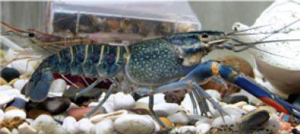 |
| Credit: Marganit Capaso/Amorphical |
Abstract:
Ben-Gurion University of the Negev (BGU) researchers have developed a unique technology that stabilizes an otherwise unstable form of calcium carbonate. This mineral form provides significantly higher biological absorption and retention rates than other sources presently used as dietary calcium supplements.
Ben-Gurion U. research leads to improved calcium supplement derived from crustacean shells
Beer-sheva, Israel | Posted on February 20th, 2011Calcium is considered to be one of the most important minerals in the human body for maintaining bone mass and coronary health. Insufficient dietary calcium intake can induce osteoporosis and poor blood-clotting.
"Since most adults today achieve their daily dietary intake of calcium with supplements, this new form will prove to be substantially more beneficial," according to Dr. Amir Berman, a researcher and a member of the BGU Ilse Katz Institute for Nanoscale Science and Technology.
According to the new study published in the Journal of Bone and Mineral Research, this type of Amorphous Calcium Carbonate (ACC) consists of unstable, nano-sized particles. Several species of crustaceans, including freshwater crayfish, are capable of stabilizing this mineral form so they can efficiently store and rapidly re-use large calcium quantities. Using new technology inspired by the crustaceans' natural process, the BGU researchers tested this synthetic ACC compound against other commonly used calcium supplements.
Results of experiments performed on laboratory animals showed that the absorption and retention rates were up to 40 percent higher in the blood and 30 percent higher in bone when the ACC compound is compared to other calcium sources. Such dramatic enhancement in absorption may be useful in reducing the necessary dosage of calcium, lowering side effects and increasing a patient's compliance.
This research was supported by a grant from Amorphical, Ltd., through B.G. Negev, Ltd. Amorphical Ltd. (www.amorphical.com) will be introducing a dietary supplement utilizing the ACC compound in 2011.
Solubility and Bioavailability of Stabilized Amorphous Calcium Carbonate
Oren E Meiron,1,5 Elad Bar-David,1,5 Eliahu D Aflalo,1,3 Assaf Shechter,5 David Stepensky,4 Amir Berman,2,3 and Amir Sagi 1,3 J. Bone and Mineral Res. 26(2) 364-372 URL: DOI 10.1002/jbmr.196
1 Department of Life Sciences, Ben-Gurion University of the Negev, Beer-Sheva, Israel
2 Department of Biotechnology Engineering, Ben-Gurion University of the Negev, Beer-Sheva, Israel
3 National Institute for Biotechnology in the Negev (NIBN), Ben-Gurion University of the Negev, Beer-Sheva, Israel
4 Department of Pharmacology, Ben-Gurion University of the Negev, Beer-Sheva, Israel
5 Amorphical, Ltd., Beer Sheva, Israel
####
About American Associates, Ben-Gurion University of the Negev
American Associates, Ben-Gurion University of the Negev (AABGU) plays a vital role in sustaining David Ben-Gurion's vision, creating a world-class institution of education and research in the Israeli desert, nurturing the Negev community and sharing the University's expertise locally and around the globe. With some 20,000 students on campuses in Beer-Sheva, Sede Boqer and Eilat in Israel's southern desert, BGU is a university with a conscience, where the highest academic standards are integrated with community involvement, committed to sustainable development of the Negev. AABGU is headquartered in Manhattan and has nine regional offices throughout the U.S.
For more information, please click here
Contacts:
Andy Lavin
516-944-4486
Copyright © American Associates, Ben-Gurion University of the Negev
If you have a comment, please Contact us.Issuers of news releases, not 7th Wave, Inc. or Nanotechnology Now, are solely responsible for the accuracy of the content.
Bookmark:


| Related News Press |
News and information
 Simulating magnetization in a Heisenberg quantum spin chain April 5th, 2024
NRL charters Navy’s quantum inertial navigation path to reduce drift April 5th, 2024
Discovery points path to flash-like memory for storing qubits: Rice find could hasten development of nonvolatile quantum memory April 5th, 2024
Products
Spectradyne Partners with Particle Technology Labs for Measurement Services December 6th, 2018
Mode-Changing MEMS Accelerometer from STMicroelectronics Combines High Measurement Resolution and Ultra-Low Power for Industrial Applications November 7th, 2018
Fat-Repellent Nanolayers Can Make Oven Cleaning Easier October 17th, 2018
Aculon, Inc. Enters into Strategic Partnership Agreement with Henkel Corporation to Supply Key Mobile Device Manufacturers with NanoProof® PCB Waterproof Technology October 17th, 2018
Govt.-Legislation/Regulation/Funding/Policy
NRL charters Navy’s quantum inertial navigation path to reduce drift April 5th, 2024
Discovery points path to flash-like memory for storing qubits: Rice find could hasten development of nonvolatile quantum memory April 5th, 2024
Chemical reactions can scramble quantum information as well as black holes April 5th, 2024
Academic/Education
Rice University launches Rice Synthetic Biology Institute to improve lives January 12th, 2024
Multi-institution, $4.6 million NSF grant to fund nanotechnology training September 9th, 2022
Materials/Metamaterials/Magnetoresistance
Nanoscale CL thermometry with lanthanide-doped heavy-metal oxide in TEM March 8th, 2024
Focused ion beam technology: A single tool for a wide range of applications January 12th, 2024
Announcements
NRL charters Navy’s quantum inertial navigation path to reduce drift April 5th, 2024
Discovery points path to flash-like memory for storing qubits: Rice find could hasten development of nonvolatile quantum memory April 5th, 2024
Food/Agriculture/Supplements
Silver nanoparticles: guaranteeing antimicrobial safe-tea November 17th, 2023
Night-time radiative warming using the atmosphere November 17th, 2023
DGIST and New Life Group launched a research project on "Functional beauty and health products using the latest nanotechnology" May 12th, 2023
 |
||
 |
||
| The latest news from around the world, FREE | ||
 |
||
|
|
||
| Premium Products | ||
 |
||
|
Only the news you want to read!
Learn More |
||
 |
||
|
Full-service, expert consulting
Learn More |
||
|
|
||