Home > Press > Agilent Technologies Expands miRNA Microarray Catalog with New Human, Mouse and Rat Assays
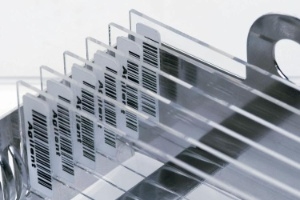 |
| MicroRNAs are estimated to regulate approximately 30 percent of all human genes. Agilent Technologies is expanding its catalog with new human, mouse and rat miRNA microarrays. (Photo: Business Wire) |
Abstract:
Agilent Technologies Inc. (NYSE:A) today introduced three new microRNA microarray designs: Human miRNA Microarray v2.0, Mouse miRNA Microarray v1.0 and Rat miRNA Microarray v1.0. All are based on the Sanger Institute's miRBase 10.1, updated in December 2007.
Agilent Technologies Expands miRNA Microarray Catalog with New Human, Mouse and Rat Assays
SANTA CLARA, CA | Posted on April 11th, 2008 "Researchers tell us that they value specificity and sensitivity above other attributes, and this plays well to Agilent's strengths in microarray manufacturing," said Yvonne Linney, Agilent vice president and general manager, Genomics. "Our breakthrough direct-labeling method requires very small amounts of sample input, and the flexibility of our SurePrint inkjet fabrication platform makes it extremely easy to update content as it becomes available."
The updated Human miRNA Microarray v2.0 contains 723 human and 76 human viral probe sets. Viral miRNAs are increasingly associated with some cancers, so Agilent included these probe sets to provide additional value for cancer researchers.
The new Mouse miRNA Microarray v1.0 contains all known mouse and mouse gamma herpes virus miRNAs. There are 567 mouse and 10 mouse gamma herpes virus distinct probe sets.
The new Rat miRNA Microarray v1.0 contains all 350 known rat miRNA probe sets.
Agilent launched the first comprehensive microarray system for expression profiling of human miRNAs in April 2007, and it has been positively received by the research community.
"Tumor-specific predictors based on high-throughput nucleic acid assays offer significant advances over current clinically-derived models," said David Neil Hayes, M.D., assistant professor of medicine, Division of Hematology/Oncology, University of North Carolina School of Medicine. The Hayes team is studying glioblastoma, a highly aggressive type of brain tumor. "My team is on the cusp of being able to correlate a tumor's genetic pattern to clinically-relevant events. We would be hard-pressed to reach this ability in such a short period of time to elucidate a tumor's genetic pattern and understand the regulatory networks between miRNA and gene expression, without the use of Agilent's miRNA and gene expression arrays."
The Agilent miRNA microarray platform's limit of detection is less than 1 attomole with a dynamic range of five orders of magnitude. Probe specificity and the unique labeling procedure discriminates individual miRNAs. Agilent's novel method for efficiently labeling miRNA in total RNA eliminates tedious size fractionation and requires only 100 nanograms of input RNA from precious samples.
The Agilent miRNA assays are delivered as eight 15K arrays per standard 1 in. x 3 in. glass slide. The Human v2.0 kit, Mouse v1.0 kit and Rat v1.0 kit are each available as two different pack sizes: one slide with eight arrays or three slides with 24 arrays. The human, mouse and rat miRNA assays are also available as individual slides, each containing eight microarrays. This helps users tailor purchases to their research requirements.
For more information about Agilent's upgraded miRNA portfolio, please visit www.opengenomics.com.
####
About Agilent Technologies Inc.
Agilent Technologies Inc. (NYSE:A) is the world’s premier measurement company and a technology leader in communications, electronics, life sciences and chemical analysis. The company’s 19,000 employees serve customers in more than 110 countries. Agilent had net revenue of $5.4 billion in fiscal year 2007. Information about Agilent is available on the Web at www.agilent.com.
NOTE TO EDITORS: Further technology, corporate citizenship and executive news is available on the Agilent news site at www.agilent.com/go/news.
For more information, please click here
Contacts:
Agilent Technologies Inc.
Stuart Matlow
+1-408-553-7191
Copyright © Business Wire 2008
If you have a comment, please Contact us.Issuers of news releases, not 7th Wave, Inc. or Nanotechnology Now, are solely responsible for the accuracy of the content.
Bookmark:


| Related News Press |
News and information
 Simulating magnetization in a Heisenberg quantum spin chain April 5th, 2024
NRL charters Navy’s quantum inertial navigation path to reduce drift April 5th, 2024
Discovery points path to flash-like memory for storing qubits: Rice find could hasten development of nonvolatile quantum memory April 5th, 2024
Nanomedicine
New micromaterial releases nanoparticles that selectively destroy cancer cells April 5th, 2024
Good as gold - improving infectious disease testing with gold nanoparticles April 5th, 2024
Researchers develop artificial building blocks of life March 8th, 2024
Announcements
NRL charters Navy’s quantum inertial navigation path to reduce drift April 5th, 2024
Discovery points path to flash-like memory for storing qubits: Rice find could hasten development of nonvolatile quantum memory April 5th, 2024
Tools
Ferroelectrically modulate the Fermi level of graphene oxide to enhance SERS response November 3rd, 2023
The USTC realizes In situ electron paramagnetic resonance spectroscopy using single nanodiamond sensors November 3rd, 2023
 |
||
 |
||
| The latest news from around the world, FREE | ||
 |
||
|
|
||
| Premium Products | ||
 |
||
|
Only the news you want to read!
Learn More |
||
 |
||
|
Full-service, expert consulting
Learn More |
||
|
|
||