Home > Press > SLAS Technology provides insight into the future of bioprinting: The SLAS Technology special issue, Bioprinting the Future, examines the transformative potential of bioprinting in medicine
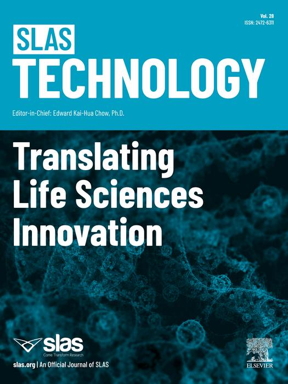 |
| SLAS Technology, Bioprinting the Future | Available Now CREDIT SLAS Technology |
Abstract:
Ideas that were once inconceivable, such as generating human tissue for organ transplants, are quickly becoming a reality as bioprinting technology is rapidly advancing. The June special issue of SLAS Technology showcases the latest developments in the field of biotechnology with its collection of seven research articles.
SLAS Technology provides insight into the future of bioprinting: The SLAS Technology special issue, Bioprinting the Future, examines the transformative potential of bioprinting in medicine
Oak Brook, IL | Posted on June 30th, 2023“With the continuous development of novel materials, fabrication techniques and bio-ink compositions, bioprinting is poised to revolutionize many aspects of medicine, from drug development to organ transplantation,” says SLAS Technology Editor-in-Chief Edward Kai-Hua Chow, Ph.D. (National University of Singapore). “By highlighting these areas of research, the special issue provides a comprehensive overview of the current state of bioprinting and sets the stage for future advances in the field.”
The special issue collection contains topics pertaining to light in bioprinting, 4D printing in cancer therapy, tissue engineering advances and 3D bioprinting.
Read the seven bioprinting articles available in Volume 28, Issue 3 of SLAS Technology:
Additive manufacturing of peripheral nerve conduits – Fabrication methods, design considerations and clinical challenges
Recent progress of 4D printing in cancer therapeutics studies
Bioprinting the future using light: A review on photocrosslinking reactions, photoreactive groups, and photoinitiators
Advances in tissue engineering of cancer microenvironment from three-dimensional culture to three-dimensional printing
Biomimetic scaffolds using triply periodic minimal surface-based porous structures for biomedical applications
Carboxymethyl cellulose-agarose-gelatin: A thermoresponsive triad bioink composition to fabricate volumetric soft tissue constructs
Salivary gland regeneration: from salivary gland stem cells to three-dimensional bioprinting
Access to the June issue of SLAS Technology is available at https://www.slas-technology.org/issue/S2472-6303(23)X0004-1
*****
SLAS Technology reveals how scientists adapt technological advancements for life sciences exploration and experimentation in biomedical research and development. The journal emphasizes scientific and technical advances that enable and improve:
Life sciences research and development
Drug delivery
Diagnostics
Biomedical and molecular imaging
Personalized and precision medicine
SLAS (Society for Laboratory Automation and Screening) is an international professional society of academic, industry and government life sciences researchers and the developers and providers of laboratory automation technology. The SLAS mission is to bring together researchers in academia, industry and government to advance life sciences discovery and technology via education, knowledge exchange and global community building.
SLAS Technology: Translating Life Sciences Innovation, 2021 Impact Factor 2.813. Editor-in-Chief Edward Kai-Hua Chow, Ph.D., National University of Singapore (Singapore).
####
For more information, please click here
Contacts:
Jill Hronek
SLAS (Society for Laboratory Automation and Screening)
Office: 630-256-7527
Copyright © SLAS (Society for Laboratory Automation and Screening)
If you have a comment, please Contact us.Issuers of news releases, not 7th Wave, Inc. or Nanotechnology Now, are solely responsible for the accuracy of the content.
Bookmark:


| Related Links |
| Related News Press |
News and information
 Quantum computer improves AI predictions April 17th, 2026
Flexible sensor gains sensitivity under pressure April 17th, 2026
A reusable chip for particulate matter sensing April 17th, 2026
Detecting vibrational quantum beating in the predissociation dynamics of SF6 using time-resolved photoelectron spectroscopy April 17th, 2026
Possible Futures
A fundamentally new therapeutic approach to cystic fibrosis: Nanobody repairs cellular defect April 17th, 2026
UC Irvine physicists discover method to reverse ‘quantum scrambling’ : The work addresses the problem of information loss in quantum computing system April 17th, 2026
Nanomedicine
A fundamentally new therapeutic approach to cystic fibrosis: Nanobody repairs cellular defect April 17th, 2026
New molecular technology targets tumors and simultaneously silences two ‘undruggable’ cancer genes August 8th, 2025
New imaging approach transforms study of bacterial biofilms August 8th, 2025
Electrifying results shed light on graphene foam as a potential material for lab grown cartilage June 6th, 2025
Discoveries
Quantum computer improves AI predictions April 17th, 2026
Flexible sensor gains sensitivity under pressure April 17th, 2026
A reusable chip for particulate matter sensing April 17th, 2026
Detecting vibrational quantum beating in the predissociation dynamics of SF6 using time-resolved photoelectron spectroscopy April 17th, 2026
Announcements
A fundamentally new therapeutic approach to cystic fibrosis: Nanobody repairs cellular defect April 17th, 2026
UC Irvine physicists discover method to reverse ‘quantum scrambling’ : The work addresses the problem of information loss in quantum computing system April 17th, 2026
Interviews/Book Reviews/Essays/Reports/Podcasts/Journals/White papers/Posters
A fundamentally new therapeutic approach to cystic fibrosis: Nanobody repairs cellular defect April 17th, 2026
UC Irvine physicists discover method to reverse ‘quantum scrambling’ : The work addresses the problem of information loss in quantum computing system April 17th, 2026
Nanobiotechnology
A fundamentally new therapeutic approach to cystic fibrosis: Nanobody repairs cellular defect April 17th, 2026
New molecular technology targets tumors and simultaneously silences two ‘undruggable’ cancer genes August 8th, 2025
New imaging approach transforms study of bacterial biofilms August 8th, 2025
Electrifying results shed light on graphene foam as a potential material for lab grown cartilage June 6th, 2025
 |
||
 |
||
| The latest news from around the world, FREE | ||
 |
||
|
|
||
| Premium Products | ||
 |
||
|
Only the news you want to read!
Learn More |
||
 |
||
|
Full-service, expert consulting
Learn More |
||
|
|
||