Home > Press > CEA-Leti Barn-Owl Inspired, Object-Localization System Uses Up to ‘5 Orders of Magnitude’ Less Energy than Existing Technology: Paper in Nature Communications Describes Neuromorphic Computing Device With ‘Virtually No Power Consumption’ When Idle, Thanks to On-Chip Non-Volatile M
 |
Abstract:
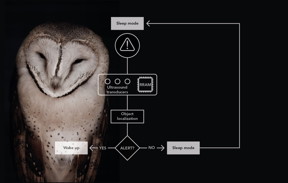
Inspired by the barn owl’s neuroanatomy, CEA-Leti has developed an event-driven, object-localization system that couples state-of-the-art piezoelectric, ultrasound transducer sensors to a neuromorphic, resistive memories-based computational map.
CEA-Leti Barn-Owl Inspired, Object-Localization System Uses Up to ‘5 Orders of Magnitude’ Less Energy than Existing Technology: Paper in Nature Communications Describes Neuromorphic Computing Device With ‘Virtually No Power Consumption’ When Idle, Thanks to On-Chip Non-Volatile M
Grenoble, France | Posted on July 8th, 2022Presented in a paper published recently in Nature Communications, the research team describes development of an auditory-processing system that increases energy efficiency by up to five orders of magnitude compared to conventional localization systems.
“Real-world sensory-processing applications require compact, low-latency, and low-power computing systems,” the paper, “Neuromorphic Object Localization Using Resistive Memories and Ultrasonic Transducers”, explains. “Enabled by their in-memory, event-driven computing abilities, hybrid memristive-complementary metal-oxide semiconductor (CMOS) neuromorphic architectures provide an ideal hardware substrate for such tasks.”
Neurobiology offers a spectrum of ultralow-power solutions to efficiently process sensory information, as different animals and insects have evolved to effectively perform difficult tasks with limited power. At the heart of biological signal processing are two fundamental concepts: event-driven sensing and analog in-memory computing.
“We drew inspiration from biology to incorporate these two aspects of computation into our hardware, leveraging CEA-Leti’s state-of-the-art ultrasound sensors and resistive memory technologies,” said Elisa Vianello, senior scientist and Edge AI program coordinator, and senior author of the paper. “In particular, we focused on the acoustic-based, object-localization task. Owls efficiently solve this problem and thus we extrapolated their computational principles into our system.”
CEA-Leti built and tested this object localization system with the help of CEA-List, University of Zurich, University of Tours and University of Udine researchers. The team leveraged CEA-Leti’s successes in developing piezoelectric micromachined ultrasound transducer (pMUT) sensors and its advancements in spiking neural networks based on resistive memory technologies.
The researchers’ first challenge was developing a pre-processing pipeline that extracts the key information from pMUTs, which encode information based on brief events or spikes. This temporal signal coding leads to higher energy-efficiencies compared to traditional continuous analogue or digital data, so that only relevant data are processed.
‘Bio-inspired analog RRAM-based circuit’
“Our system, which could have future use in sensor-fusion applications, mimics the owl’s extremely energy- efficient prey-capture mechanism, which is preceded by combined auditory and visual search,” said Filippo Moro, lead author of the paper. “The ultralow power consumption auditory search is always active and when a specific auditory neuron fires, the owl has the information it needs to start the visual search, which is more precise but more costly in terms of energy consumption.”
The second challenge was designing and fabricating a bio-inspired analog RRAM-based circuit to efficiently process the extracted events and estimate an object’s location. Resistive memory provides a compact solution to store the synaptic weights and RRAMs are non-volatile devices, a feature that matches the asynchronous event-driven nature of the team’s proposed system, resulting in no power consumption when the system is idle.
“To minimize the energy consumption of the object localization system, researchers envisioned, designed, and implemented an efficient RRAM-based neuromorphic circuit that processes signal information produced by embedded sensors to calculate a targeted object’s position in real time,” the paper reports. “Whereas conventional processing techniques would continuously sample the detected signal and crunch calculations to extract the useful information, the proposed neuromorphic solution computes asynchronously as the useful information arrives: this has allowed us to increase the system’s energy efficiency by up to five orders of magnitude.”
Over the past decade, CEA-Leti has made substantial progress in pMUT sensors and spiking neural networks based on resistive memory technologies. The current work shows that combining visual sensors, such as DVS cameras, and the proposed pMUT-based audition sensor should be explored to develop future consumer robotics.
In addition, mimicking a barn owl’s precise and efficient object-localization system is another example of the institute’s work to prove that bio-inspired concepts can dramatically improve performance of Edge-AI systems. In March, Vianello received a €3 million grant from the European Research Council (ERC) to build nanoscale memory devices inspired by insect nervous systems for such applications as consumer robotics, implantable medical diagnostic microchips and wearable electronics.
####
About CEA-Leti
Leti, a technology research institute at CEA, is a global leader in miniaturization technologies enabling smart, energy-efficient and secure solutions for industry. Founded in 1967, CEA-Leti pioneers micro-& nanotechnologies, tailoring differentiating applicative solutions for global companies, SMEs and startups. CEA-Leti tackles critical challenges in healthcare, energy and digital migration. From sensors to data processing and computing solutions, CEA-Leti’s multidisciplinary teams deliver solid expertise, leveraging world-class pre-industrialization facilities. With a staff of more than 1,900, a portfolio of 3,100 patents, 11,000 sq. meters of cleanroom space and a clear IP policy, the institute is based in Grenoble, France, and has offices in Silicon Valley and Tokyo. CEA-Leti has launched 70 startups and is a member of the Carnot Institutes network. Follow us on www.leti-cea.com and @CEA_Leti.
Technological expertise
CEA has a key role in transferring scientific knowledge and innovation from research to industry. This high-level technological research is carried out in particular in electronic and integrated systems, from microscale to nanoscale. It has a wide range of industrial applications in the fields of transport, health, safety and telecommunications, contributing to the creation of high-quality and competitive products.
For more information, please click here
Contacts:
Press Contact
Agency
Sarah-Lyle Dampoux
Copyright © CEA-Leti
If you have a comment, please Contact us.Issuers of news releases, not 7th Wave, Inc. or Nanotechnology Now, are solely responsible for the accuracy of the content.
Bookmark:


| Related Links |
| Related News Press |
News and information
 Quantum computer improves AI predictions April 17th, 2026
Flexible sensor gains sensitivity under pressure April 17th, 2026
A reusable chip for particulate matter sensing April 17th, 2026
Detecting vibrational quantum beating in the predissociation dynamics of SF6 using time-resolved photoelectron spectroscopy April 17th, 2026
Robotics
Nanofibrous metal oxide semiconductor for sensory face November 8th, 2024
Femtosecond laser technique births "dancing microrobots": USTC's breakthrough in multi-material microfabrication August 11th, 2023
Possible Futures
A fundamentally new therapeutic approach to cystic fibrosis: Nanobody repairs cellular defect April 17th, 2026
UC Irvine physicists discover method to reverse ‘quantum scrambling’ : The work addresses the problem of information loss in quantum computing system April 17th, 2026
Nanomedicine
A fundamentally new therapeutic approach to cystic fibrosis: Nanobody repairs cellular defect April 17th, 2026
New molecular technology targets tumors and simultaneously silences two ‘undruggable’ cancer genes August 8th, 2025
New imaging approach transforms study of bacterial biofilms August 8th, 2025
Electrifying results shed light on graphene foam as a potential material for lab grown cartilage June 6th, 2025
Sensors
Flexible sensor gains sensitivity under pressure April 17th, 2026
Tiny nanosheets, big leap: A new sensor detects ethanol at ultra-low levels January 30th, 2026
From sensors to smart systems: the rise of AI-driven photonic noses January 30th, 2026
Sensors innovations for smart lithium-based batteries: advancements, opportunities, and potential challenges August 8th, 2025
Discoveries
Quantum computer improves AI predictions April 17th, 2026
Flexible sensor gains sensitivity under pressure April 17th, 2026
A reusable chip for particulate matter sensing April 17th, 2026
Detecting vibrational quantum beating in the predissociation dynamics of SF6 using time-resolved photoelectron spectroscopy April 17th, 2026
Announcements
A fundamentally new therapeutic approach to cystic fibrosis: Nanobody repairs cellular defect April 17th, 2026
UC Irvine physicists discover method to reverse ‘quantum scrambling’ : The work addresses the problem of information loss in quantum computing system April 17th, 2026
Interviews/Book Reviews/Essays/Reports/Podcasts/Journals/White papers/Posters
A fundamentally new therapeutic approach to cystic fibrosis: Nanobody repairs cellular defect April 17th, 2026
UC Irvine physicists discover method to reverse ‘quantum scrambling’ : The work addresses the problem of information loss in quantum computing system April 17th, 2026
 |
||
 |
||
| The latest news from around the world, FREE | ||
 |
||
|
|
||
| Premium Products | ||
 |
||
|
Only the news you want to read!
Learn More |
||
 |
||
|
Full-service, expert consulting
Learn More |
||
|
|
||