Home > Press > Success in Intracellular Imaging of Cesium Distribution in Plants Used for Cesium Absorption
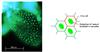 |
| Fluorescence image of Arabidopsis cotyledons (after spraying a methanol solution of Cesium Green). Bright fluorescence was observed in parts considered to be vacuoles in the cells. |
Abstract:
A research group led by Dr. Hirokazu Komatsu, a member of the YAMATO-MANA Program and a researcher at the International Center for Materials Nanoarchitectonics (MANA; Director General: Masakazu Aono) of the National Institute for Materials Science (NIMS; President: Sukekatsu Ushioda), and Dr. Katsuhiko Ariga, MANA Principal Investigator and Supermolecules Unit Director, in collaboration with postdoctoral researcher Dr. Eri Adams and unit leader Dr. Ryoung Shin of the RIKEN Center for Sustainable Resource Science, have developed a novel method for imaging cesium distributions in plant cells. Prior to this work, imaging of cesium distributions in plant cells had not been available.
Success in Intracellular Imaging of Cesium Distribution in Plants Used for Cesium Absorption
Tsukuba, Japan | Posted on August 19th, 2014Since the accident at the Fukushima Daiichi Nuclear Power Plant, the discharge of radioactive cesium, especially 137Cs (half-life: 30.17 years), into the environment has become a serious environmental problem. While various decontamination methods are currently being studied, methods involving cesium absorption from soil and water by plants (phytoremediation) has drawn attention since they can be used to concentrate cesium, produce little waste, are inexpensive, and environmentally benign. Moreover, phytoremediation does not require removal of fertile surface soil, which is the current method applied for decontamination. Thus, phytoremediation has the advantage of being applicable in agricultural areas. Despite the low absorption rates of existing plants, this method promises many advantages and there are current urgent efforts being made to develop plants that efficiently absorb cesium. However, mechanisms of cesium transportation and accumulation in plant cells are largely unclear, and there is a lack of basic knowledge which is necessary for the development of appropriate plant species, including plant varietal improvement.
The method developed in this research can be used to detect cesium carbonate particles at high resolution (micrometer-level) by using a fluorescent probe called "Cesium Green," which also enables intracellular imaging of cesium distribution. Imaging of cesium localization in cells of the general model plant, Arabidopsis, was performed. Following cultivation of Arabidopsis seedlings on a culture medium containing a high concentration of cesium carbonate, Cesium Green was applied to the seedlings, and the resulting green fluorescence observed was used to confirm the presence of cesium within the plants' cells. Furthermore, fluorescence microscopy observations, which take advantage of the precise location-detecting properties of Cesium Green, revealed that cesium has a tendency to accumulate in the vacuoles of the cells.
The technique developed in this research is anticipated to forward the elucidation of cesium transportation and accumulation mechanisms in plants and to enable the selection and improvement of plants suitable for application in phytoremediation. Since the methods involved here can be initially investigated using harmless non-radioactive cesium, which has the same chemical properties as radioactive cesium (in terms of detectability using Cesium Green), it is a highly versatile method that requires no special experimental facilities.
The results of this research will be published in the U.S. chemical journal ACS Applied Materials & Interfaces.
####
About National Institute for Materials Science (NIMS)
Only one Public Institution for Materials Science in Japan
For more information, please click here
Contacts:
Press Office
Copyright © AlphaGalileo
If you have a comment, please Contact us.Issuers of news releases, not 7th Wave, Inc. or Nanotechnology Now, are solely responsible for the accuracy of the content.
Bookmark:


| Related News Press |
News and information
 Quantum computer improves AI predictions April 17th, 2026
Flexible sensor gains sensitivity under pressure April 17th, 2026
A reusable chip for particulate matter sensing April 17th, 2026
Detecting vibrational quantum beating in the predissociation dynamics of SF6 using time-resolved photoelectron spectroscopy April 17th, 2026
Imaging
Simple algorithm paired with standard imaging tool could predict failure in lithium metal batteries August 8th, 2025
Govt.-Legislation/Regulation/Funding/Policy
Quantum computer improves AI predictions April 17th, 2026
Metasurfaces smooth light to boost magnetic sensing precision January 30th, 2026
New imaging approach transforms study of bacterial biofilms August 8th, 2025
Discoveries
Quantum computer improves AI predictions April 17th, 2026
Flexible sensor gains sensitivity under pressure April 17th, 2026
A reusable chip for particulate matter sensing April 17th, 2026
Detecting vibrational quantum beating in the predissociation dynamics of SF6 using time-resolved photoelectron spectroscopy April 17th, 2026
Announcements
A fundamentally new therapeutic approach to cystic fibrosis: Nanobody repairs cellular defect April 17th, 2026
UC Irvine physicists discover method to reverse ‘quantum scrambling’ : The work addresses the problem of information loss in quantum computing system April 17th, 2026
Interviews/Book Reviews/Essays/Reports/Podcasts/Journals/White papers/Posters
A fundamentally new therapeutic approach to cystic fibrosis: Nanobody repairs cellular defect April 17th, 2026
UC Irvine physicists discover method to reverse ‘quantum scrambling’ : The work addresses the problem of information loss in quantum computing system April 17th, 2026
Food/Agriculture/Supplements
New imaging approach transforms study of bacterial biofilms August 8th, 2025
SMART researchers pioneer first-of-its-kind nanosensor for real-time iron detection in plants February 28th, 2025
 |
||
 |
||
| The latest news from around the world, FREE | ||
 |
||
|
|
||
| Premium Products | ||
 |
||
|
Only the news you want to read!
Learn More |
||
 |
||
|
Full-service, expert consulting
Learn More |
||
|
|
||