Home > Press > Jaan Tallinn named 2012 Lifeboat Foundation Guardian Award Winner
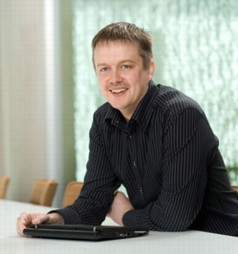 |
| Jaan Tallinn |
Abstract:
The Lifeboat Foundation Guardian Award is annually bestowed upon a respected scientist or public figure who has warned of a future fraught with dangers and encouraged measures to prevent them.
Jaan Tallinn named 2012 Lifeboat Foundation Guardian Award Winner
Minden, NV | Posted on December 13th, 2012The 2012 Lifeboat Foundation Guardian Award has been given to Jaan Tallinn in recognition of his long commitment to fighting existential risks. He has been a member of the Lifeboat Foundation advisory board since 2007, a top 10 donor of Lifeboat Foundation since 2007, a top 10 donor of the Singularity Institute for Artificial Intelligence since 2010, a speaker at the Singularity Summit since 2010, and is now cofounder of The Cambridge Project for Existential Risk which includes 2004 Guardian Award winner Sir Martin Rees.
Many scientists are concerned that developments in human technology may soon pose new, extinction-level risks to our species as a whole. Such dangers have been suggested from progress in AI, from developments in biotechnology and artificial life, from nanotechnology, and from possible extreme effects of anthropogenic climate change. The seriousness of these risks is difficult to assess, but that in itself seems a cause for concern, given how much is at stake. For a brief introduction to the issues in the case of AI, read Artificial intelligence — can we keep it in the box? by Huw Price and Jaan Tallinn.
The Cambridge Project for Existential Risk — a joint initiative between a philosopher, a scientist, and a software entrepreneur — begins with the conviction that these issues require a great deal more scientific investigation than they presently receive. Their aim is to establish within the University of Cambridge a multidisciplinary research centre dedicated to the study and mitigation of risks of this kind. They are convinced that there is nowhere on the planet better suited to house such a centre. Their goal is to steer a small fraction of Cambridge's great intellectual resources, and of the reputation built on its past and present scientific pre-eminence, to the task of ensuring that our own species has a long-term future. (In the process, they hope to make it a little more certain that we humans will be around to celebrate the University's own millennium, now less than two centuries hence.)
The Cambridge Project for Existential Risk will be developing a prospectus for a Cambridge-based Centre for the Study of Existential Risk in coming months, and welcome enquiries and offers of support.
Jaan Tallinn works on the overall strategy for Ambient Sound Investments (ASI), on top of researching and reviewing potential portfolio companies.
He is considered to be one of the foremost experts on P2P technologies, and together with Ahti and Priit worked out the core elements for Kazaa and Skype. He continues to be involved with Skype, where he's one of the lead system architects.
Jaan has been known to sketch potential solutions for teleportation on napkins. Voracious reading and home life make up the rest of his pastimes.
Jaan holds a degree in theoretical physics from the University of Tartu. Watch Jaan Tallinn on the Intelligence Stairway, TEDxProacademy — Jaan Tallinn, and Jaan Tallinn: Artificial Intelligence, Opportunities, Risks, and Approaches.
####
About Lifeboat Foundation
The Lifeboat Foundation is a nonprofit nongovernmental organization dedicated to encouraging scientific advancements while helping humanity survive existential risks and possible misuse of increasingly powerful technologies, including genetic engineering, nanotechnology, and robotics/AI, as we move towards the Singularity.
For more information, please click here
Contacts:
Lifeboat Foundation News office
1638 Esmeralda Avenue
Minden, NV 89423, USA
+1 775–329–0180
Copyright © Lifeboat Foundation
If you have a comment, please Contact us.Issuers of news releases, not 7th Wave, Inc. or Nanotechnology Now, are solely responsible for the accuracy of the content.
Bookmark:


| Related News Press |
News and information
 Simulating magnetization in a Heisenberg quantum spin chain April 5th, 2024
NRL charters Navy’s quantum inertial navigation path to reduce drift April 5th, 2024
Discovery points path to flash-like memory for storing qubits: Rice find could hasten development of nonvolatile quantum memory April 5th, 2024
Possible Futures
Discovery points path to flash-like memory for storing qubits: Rice find could hasten development of nonvolatile quantum memory April 5th, 2024
With VECSELs towards the quantum internet Fraunhofer: IAF achieves record output power with VECSEL for quantum frequency converters April 5th, 2024
Announcements
NRL charters Navy’s quantum inertial navigation path to reduce drift April 5th, 2024
Discovery points path to flash-like memory for storing qubits: Rice find could hasten development of nonvolatile quantum memory April 5th, 2024
Artificial Intelligence
Simulating magnetization in a Heisenberg quantum spin chain April 5th, 2024
Researchers’ approach may protect quantum computers from attacks March 8th, 2024
New chip opens door to AI computing at light speed February 16th, 2024
HKUST researchers develop new integration technique for efficient coupling of III-V and silicon February 16th, 2024
Grants/Sponsored Research/Awards/Scholarships/Gifts/Contests/Honors/Records
Discovery points path to flash-like memory for storing qubits: Rice find could hasten development of nonvolatile quantum memory April 5th, 2024
Chemical reactions can scramble quantum information as well as black holes April 5th, 2024
 |
||
 |
||
| The latest news from around the world, FREE | ||
 |
||
|
|
||
| Premium Products | ||
 |
||
|
Only the news you want to read!
Learn More |
||
 |
||
|
Full-service, expert consulting
Learn More |
||
|
|
||