Home > Press > Two Caltech Scientists Receive 2010 NIH Director's Pioneer Awards
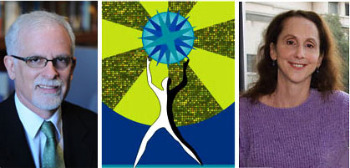 |
| Michael Roukes, left; Pamela Bjorkman, right |
Abstract:
Two scientists from the California Institute of Technology (Caltech) have been recognized by the National Institutes of Health (NIH) for their innovative and high-impact biomedical research programs.
Two Caltech Scientists Receive 2010 NIH Director's Pioneer Awards
Pasadena, CA | Posted on August 23rd, 2010Michael Roukes, professor of physics, applied physics, and bioengineering, and co-director of the Kavli Nanoscience Institute, and Pamela Bjorkman, Caltech's Max Delbrück Professor of Biology and a Howard Hughes Medical Institute investigator, now join the 81 Pioneers—including Caltech researchers Rob Phillips and Bruce Hay—who have been selected since the program's inception in 2004.
"NIH is pleased to be supporting scientists from across the country who are taking considered risks in a wide range of areas in order to accelerate research," said NIH Director Francis S. Collins in announcing the awards. "We look forward to the result of their work."
According to its website, the program provides each investigator chosen with up to $500,000 in direct costs each year for five years to pursue what the NIH refers to as "high-risk research," and was created to "support individual scientists of exceptional creativity who propose pioneering—and possibly transforming—approaches to major challenges in biomedical and behavioral research."
For Roukes, that means using "nanoscale tools to push biomedical frontiers." Specifically, he plans to leverage advances in nanosystems technology, "an approach that coordinates vast numbers of individual nanodevices into a coherent whole," he explains.
The goal? To create tiny "chips" that can be used to rapidly identify which specific bacteria are plaguing an individual patient—quickly, at the patient's bedside, and without the need for culturing. Similar chips, he says, will be capable of "obtaining physiological 'fingerprints' from exhaled breath" for use in disease diagnostics.
Roukes says the chips will also provide new approaches to cancer research through the analysis of cell mechanics and motility, and will provide less-costly ways to screen libraries of therapeutic drug candidates. Roukes's highly collaborative efforts are aimed at jump-starting what he calls a "nanobiotech incubator" at Caltech.
Roukes received his PhD in physics in 1985 from Cornell University. He has been at Caltech since 1992, and was named founding director of the Kavli Nanoscience Institute in 2004.
Bjorkman's Pioneer project will focus on ways to improve the human immune response to HIV. "HIV/AIDS remains one of the most important current threats to global public health," she says. "Although humans can mount effective immune responses using antibodies against many other viruses, the antibody response to HIV in infected individuals is generally ineffective."
This, she believes, is the result of the "unusually low number and low density of spikes" on the surface membrane of the virus. Antibodies have two identical "arms" with which to attach to a virus or bacterium. In most cases, the density of spikes on a pathogen's surface is high enough that these arms can simultaneously attach to neighboring spikes. Not so with HIV; because its spikes are so few and far between, antibodies tend to bind with only one arm attaching to a single spike. Such binding is weak, says Bjorkman, "much like if you were hanging from a bar with only one arm," and is easily eliminated by viral mutations.
That is why Bjorkman is proposing "a new methodology, designed to screen for and produce novel anti-HIV binding proteins that can bind simultaneously to all three monomers in an HIV spike trimer." A trimer is a protein made of three identical macromolecules; if an antibody can bind to all three proteins at one time, it will "interact very tightly and render the low spike density of HIV and its high mutation rate irrelevant to effective neutralization," Bjorkman explains.
Bjorkman received her PhD in biochemistry and molecular biology in 1984 from Harvard University. She has been at Caltech since 1989, and was named the Delbrück Professor in 2004.
####
For more information, please click here
Contacts:
Lori Oliwenstein
(626) 395-3631
Copyright © Caltech
If you have a comment, please Contact us.Issuers of news releases, not 7th Wave, Inc. or Nanotechnology Now, are solely responsible for the accuracy of the content.
Bookmark:


| Related News Press |
News and information
 Quantum computer improves AI predictions April 17th, 2026
Flexible sensor gains sensitivity under pressure April 17th, 2026
A reusable chip for particulate matter sensing April 17th, 2026
Detecting vibrational quantum beating in the predissociation dynamics of SF6 using time-resolved photoelectron spectroscopy April 17th, 2026
Academic/Education
Rice University launches Rice Synthetic Biology Institute to improve lives January 12th, 2024
Multi-institution, $4.6 million NSF grant to fund nanotechnology training September 9th, 2022
Nanomedicine
A fundamentally new therapeutic approach to cystic fibrosis: Nanobody repairs cellular defect April 17th, 2026
New molecular technology targets tumors and simultaneously silences two ‘undruggable’ cancer genes August 8th, 2025
New imaging approach transforms study of bacterial biofilms August 8th, 2025
Electrifying results shed light on graphene foam as a potential material for lab grown cartilage June 6th, 2025
Announcements
A fundamentally new therapeutic approach to cystic fibrosis: Nanobody repairs cellular defect April 17th, 2026
UC Irvine physicists discover method to reverse ‘quantum scrambling’ : The work addresses the problem of information loss in quantum computing system April 17th, 2026
Grants/Sponsored Research/Awards/Scholarships/Gifts/Contests/Honors/Records
Quantum computer improves AI predictions April 17th, 2026
Detecting vibrational quantum beating in the predissociation dynamics of SF6 using time-resolved photoelectron spectroscopy April 17th, 2026
Metasurfaces smooth light to boost magnetic sensing precision January 30th, 2026
Nanobiotechnology
A fundamentally new therapeutic approach to cystic fibrosis: Nanobody repairs cellular defect April 17th, 2026
New molecular technology targets tumors and simultaneously silences two ‘undruggable’ cancer genes August 8th, 2025
New imaging approach transforms study of bacterial biofilms August 8th, 2025
Electrifying results shed light on graphene foam as a potential material for lab grown cartilage June 6th, 2025
 |
||
 |
||
| The latest news from around the world, FREE | ||
 |
||
|
|
||
| Premium Products | ||
 |
||
|
Only the news you want to read!
Learn More |
||
 |
||
|
Full-service, expert consulting
Learn More |
||
|
|
||