Home > Press > Quantum mechanics reveals details of deep earth
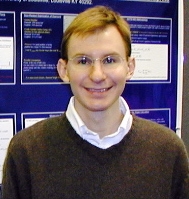 |
| Kevin Driver |
Abstract:
Scientists have used quantum mechanics to reveal that the most common mineral on Earth is relatively uncommon deep within the planet.
Quantum mechanics reveals details of deep earth
Columbus, OH | Posted on May 12th, 2010Using several of the largest supercomputers in the nation, a team of physicists led by Ohio State University has been able to simulate the behavior of silica in a high-temperature, high-pressure form that is particularly difficult to study firsthand in the lab.
The resulting discovery -- reported in this week's early online edition of the Proceedings of the National Academy of Sciences (PNAS) -- could eventually benefit science and industry alike.
Silica makes up two-thirds of the Earth's crust, and we use it to form products ranging from glass and ceramics to computer chips and fiber optic cables.
"Silica is all around us," said Ohio State doctoral student Kevin Driver, who led this project for his doctoral thesis. "But we still don't understand everything about it. A better understanding of silica on a quantum-mechanical level would be useful to earth science, and potentially to industry as well."
Silica takes many different forms at different temperatures and pressures -- not all of which are easy to study, Driver said.
"As you might imagine, experiments performed at pressures near those of Earth's core can be very challenging. By using highly accurate quantum mechanical simulations, we can offer reliable insight that goes beyond the scope of the laboratory."
Over the past century, seismology and high-pressure laboratory experiments have revealed a great deal about the general structure and composition of the earth. For example, such work has shown that the planet's interior structure exists in three layers called the crust, mantle, and core. The outer two layers -- the mantle and the crust -- are largely made up of silicates, minerals containing silicon and oxygen.
Still, the detailed structure and composition of the deepest parts of the mantle remain unclear. These details are important for geodynamical modeling, which may one day predict complex geological processes such as earthquakes and volcanic eruptions.
Even the role that the simplest silicate -- silica -- plays in Earth's mantle is not well understood.
"Say you're standing on a beach, looking out over the ocean. The sand under your feet is made of quartz, a form of silica containing one silicon atom surrounded by four oxygen atoms. But in millions of years, as the oceanic plate below becomes subducted and sinks beneath the Earth's crust, the structure of the silica changes dramatically," Driver said.
As pressure increases with depth, the silica molecules crowd closer together, and the silicon atoms start coming into contact with oxygen atoms from neighboring molecules. Several structural transitions occur, with low-pressure forms surrounded by four oxygen atoms and higher-pressure forms surrounded by six. With even more pressure, the structure collapses into a very dense form of the mineral, which scientists call alpha-lead oxide.
It's this form of silica that likely resides deep within the earth, in the lower part of the mantle, just above the planet's core, Driver said.
When scientists try to interpret seismic signals from that depth, they have no direct way of knowing what form of silica they are dealing with. So they must simulate the behavior of different forms on computer, and then compare the results to the seismic data. The simulations rely on quantum mechanics.
In PNAS, Driver, his advisor John Wilkins, and their coauthors describe how they used a quantum mechanical method to design computer algorithms that would simulate the silica structures. When they did, they found that the behavior of the dense, alpha-lead oxide form of silica did not match up with any global seismic signal detected in the lower mantle.
This result indicates that the lower mantle is relatively devoid of silica, except perhaps in localized areas where oceanic plates have subducted, Driver explained.
Wilkins, Ohio Eminent Scholar and professor of physics at Ohio State, cited Driver's determination and resourcefulness in making this study happen. The physicists used a method called quantum Monte Carlo (QMC), which was developed during atomic bomb research in World War II. To earn his doctorate, Driver worked to show that the method could be applied to studying minerals in the planet's deep interior.
"This work demonstrates both the superb contributions a single graduate student can make, and that the quantum Monte Carlo method can compute nearly every property of a mineral over a wide range of pressure and temperatures," Wilkins said. He added that the study will "stimulate a broader use of quantum Monte Carlo worldwide to address vital problems."
While these algorithms have been around for over half a century, applying them to silica was impossible until recently, Driver said. The calculations were simply too labor-intensive.
Even today, with the advent of more powerful supercomputers and fast algorithms that require less computer memory, the calculations still required using a number of the largest supercomputers in the United States, including the Ohio Supercomputer Center in Columbus.
"We used the equivalent of six million CPU hours or more, to model four different states of silica" Driver said.
He and his colleagues expect that quantum Monte Carlo will be used more often in materials science in the future, as the next generation of computers goes online.
Coauthors on the paper included Ronald Cohen of the Carnegie Institution of Washington; Zhigang Wu of the Colorado School of Mines; Burkhard Militzer of the University of California, Berkeley; and Pablo López Ríos, Michael Towler, and Richard Needs of the University of Cambridge.
This research was funded by the National Science Foundation and the Department of Energy. Computing resources were provided by the National Center for Atmospheric Research, the National Energy Research Scientific Computing Center, the National Center for Supercomputing Applications, the Computational Center for Nanotechnology Innovations, the TeraGrid, and the Ohio Supercomputer Center.
####
For more information, please click here
Contacts:
Kevin Driver
(614) 292-2887
John Wilkins
(614) 292-5193
Written by Pam Frost Gorder
(614) 292-9475
Copyright © Ohio State University
If you have a comment, please Contact us.Issuers of news releases, not 7th Wave, Inc. or Nanotechnology Now, are solely responsible for the accuracy of the content.
Bookmark:


| Related News Press |
News and information
 Simulating magnetization in a Heisenberg quantum spin chain April 5th, 2024
NRL charters Navy’s quantum inertial navigation path to reduce drift April 5th, 2024
Discovery points path to flash-like memory for storing qubits: Rice find could hasten development of nonvolatile quantum memory April 5th, 2024
Govt.-Legislation/Regulation/Funding/Policy
NRL charters Navy’s quantum inertial navigation path to reduce drift April 5th, 2024
Discovery points path to flash-like memory for storing qubits: Rice find could hasten development of nonvolatile quantum memory April 5th, 2024
Chemical reactions can scramble quantum information as well as black holes April 5th, 2024
Possible Futures
Discovery points path to flash-like memory for storing qubits: Rice find could hasten development of nonvolatile quantum memory April 5th, 2024
With VECSELs towards the quantum internet Fraunhofer: IAF achieves record output power with VECSEL for quantum frequency converters April 5th, 2024
Academic/Education
Rice University launches Rice Synthetic Biology Institute to improve lives January 12th, 2024
Multi-institution, $4.6 million NSF grant to fund nanotechnology training September 9th, 2022
Announcements
NRL charters Navy’s quantum inertial navigation path to reduce drift April 5th, 2024
Discovery points path to flash-like memory for storing qubits: Rice find could hasten development of nonvolatile quantum memory April 5th, 2024
Quantum nanoscience
Simulating magnetization in a Heisenberg quantum spin chain April 5th, 2024
Optically trapped quantum droplets of light can bind together to form macroscopic complexes March 8th, 2024
Bridging light and electrons January 12th, 2024
'Sudden death' of quantum fluctuations defies current theories of superconductivity: Study challenges the conventional wisdom of superconducting quantum transitions January 12th, 2024
 |
||
 |
||
| The latest news from around the world, FREE | ||
 |
||
|
|
||
| Premium Products | ||
 |
||
|
Only the news you want to read!
Learn More |
||
 |
||
|
Full-service, expert consulting
Learn More |
||
|
|
||