Home > Press > Imec and Holst Centre achieve breakthrough in battery-less radios
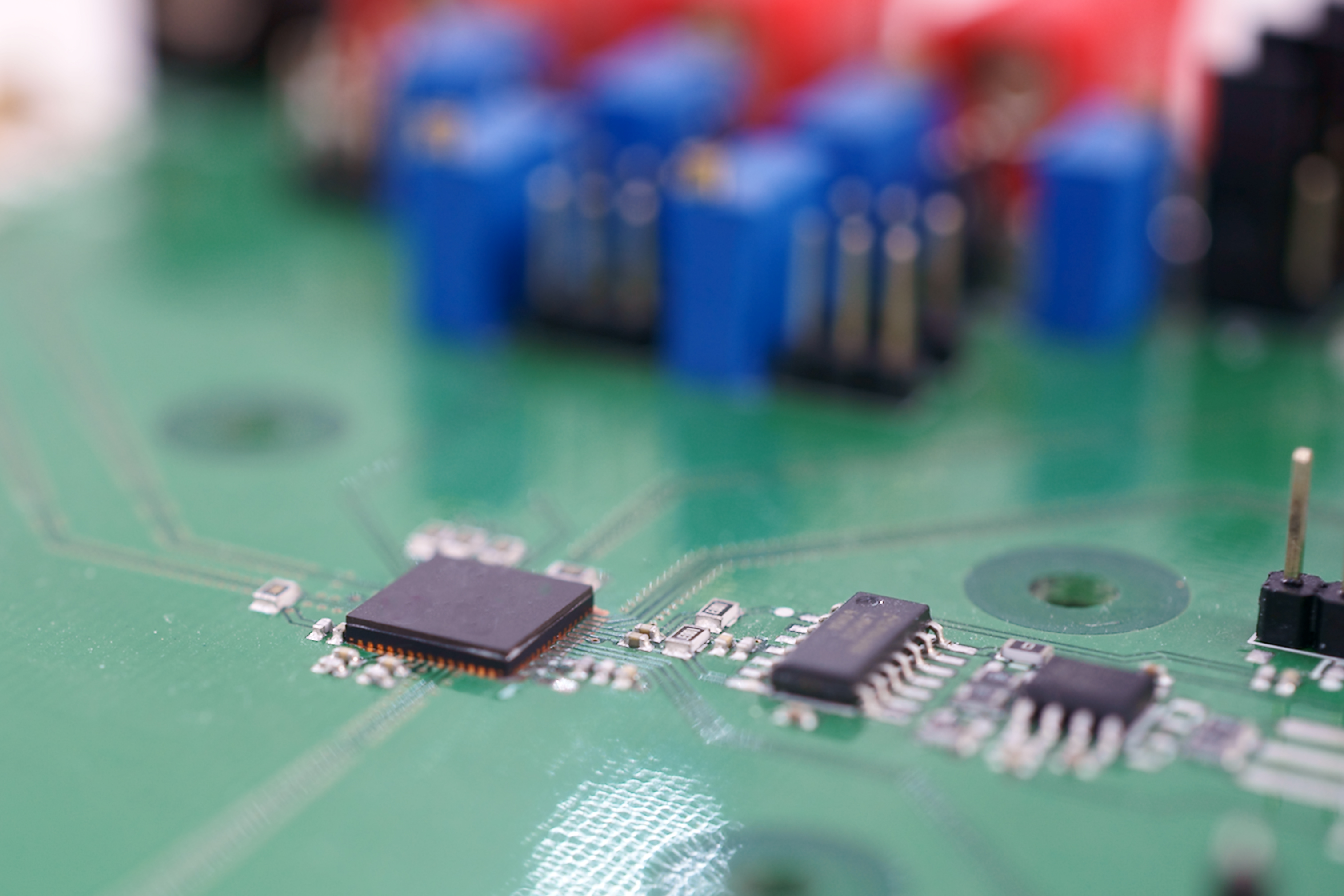 |
| Test board of imec and Holst Centre’s wake up receiver |
Abstract:
At today's International Solid State Circuit Conference, imec and Holst Centre report a 2.4GHz/915MHz wake-up receiver which consumes only 51µW power. This record low power achievement opens the door to battery-less or energy-harvesting based radios for a wide range of applications including long-range RFID and wireless sensor nodes for logistics, smart buildings, healthcare etc.
Imec and Holst Centre achieve breakthrough in battery-less radios
Leuven, Belgium and Eindhoven, The Netherlands | Posted on February 10th, 2010Today's battery-operated wireless communication systems consume a lot of power at times when the radio does not have to transmit or receive data. This means that most of their time Bluetooth or WLAN radios on mobile phones are taking energy from the battery without adding functionality. Imec and Holst Centre's wake-up receiver with ultra-low power consumption and fast response time can be put in parallel with the conventional radio to switch it on when data needs to received or transmitted.
Imec and Holst Centre developed an innovative radio architecture based on double sampling to overcome the 1/f noise problem. This noise affects most low data rate (10-100kbps) radios. As a consequence, these radios traditionally have a higher power budget than higher data rate radios achieving the same performance. By using a double-sampling technique the offset and 1/f noise is reduced and consequently the sensitivity of the receiver improves proportionally as data-rate scales.
The wake-up receiver chip was implemented in a 90nm digital CMOS technology and occupies an area of 0.36mm2. Measurements on silicon show a sensitivity of -75dBm (SNR>12dB) for the 915MHz receiver at 100kbps OOK (on off keying) modulation. When scaling the data rate to 10kbps and filtering the out-of-band noise, the sensitivity is improved by 5dB. For the 2.4GHz receiver, the sensitivity is -64dBm and -69dBm for 100kbps and 10kbps data rate respectively.
"Within our wireless autonomous sensor system research, we aim to develop wireless sensor systems powered by energy harvested from the environment instead of using batteries. The power budget of such systems is only 100µW for the DSP, radio and sensor. This ultra-low power radio of only 51µW with small form factor is a major step forward to achieve our goal. It opens the door to many new battery-less applications such as long-range RFID, smart lighting, and sensor tags." said Bert Gyselinckx, general manager imec the Netherlands at Holst Centre.
At this week's International Solid State Circuit Conference, imec and Holst Centre present their newest breakthroughs in ultra-low power design for wireless communications and wireless sensor networks and in organic electronics with an impressive number of contributions including 10 reviewed publications and 6 contributions to tutorials and workshops.
This news release is based on paper 11.5: A 2.4GHz/915MHz 51ìW Wake-Up Receiver with Offset and Noise Suppression.
####
About imec
Imec performs world-leading research in nano-electronics. Imec leverages its scientific knowledge with the innovative power of its global partnerships in ICT, healthcare and energy. Imec delivers industry-relevant technology solutions. In a unique high-tech environment, its international top talent is committed to providing the building blocks for a better life in a sustainable society.
Imec is headquartered in Leuven, Belgium, and has offices in Belgium, the Netherlands, Taiwan, US, China and Japan. Its staff of more than 1,650 people includes over 550 industrial residents and guest researchers. In 2008, imec's revenue (P&L) was 270 million euro.
About Holst Centre
Holst Centre is an independent open-innovation R&D centre that develops generic technologies for Wireless Autonomous Transducer Solutions and for Systems-in-Foil. A key feature of Holst Centre is its partnership model with industry and academia around shared roadmaps and programs. It is this kind of cross-fertilization that enables Holst Centre to tune its scientific strategy to industrial needs.
Holst Centre was set up in 2005 by imec (Flanders, Belgium) and TNO (The Netherlands) with support from the Dutch Ministry of Economic Affairs and the Government of Flanders. It is named after Gilles Holst, a Dutch pioneer in Research and Development and first director of Philips Research.
Located on High Tech Campus Eindhoven, Holst Centre benefits from the state-of-the-art on-site facilities. Holst Centre has over 150 employees from around 25 nationalities and a commitment from over 20 industrial partners.
For more information, please click here
Contacts:
imec
Katrien Marent
Director of External Communications
T: +32 16 28 18 80
Mobile : +32 474 30 28 66
Holst Centre
Koen Snoeckx
Communication Manager
T: +31 40 277 40 91
Mobile: +31 612 719843
Copyright © imec
If you have a comment, please Contact us.Issuers of news releases, not 7th Wave, Inc. or Nanotechnology Now, are solely responsible for the accuracy of the content.
Bookmark:


| Related News Press |
News and information
 Simulating magnetization in a Heisenberg quantum spin chain April 5th, 2024
NRL charters Navy’s quantum inertial navigation path to reduce drift April 5th, 2024
Discovery points path to flash-like memory for storing qubits: Rice find could hasten development of nonvolatile quantum memory April 5th, 2024
Possible Futures
Discovery points path to flash-like memory for storing qubits: Rice find could hasten development of nonvolatile quantum memory April 5th, 2024
With VECSELs towards the quantum internet Fraunhofer: IAF achieves record output power with VECSEL for quantum frequency converters April 5th, 2024
Chip Technology
Discovery points path to flash-like memory for storing qubits: Rice find could hasten development of nonvolatile quantum memory April 5th, 2024
Utilizing palladium for addressing contact issues of buried oxide thin film transistors April 5th, 2024
HKUST researchers develop new integration technique for efficient coupling of III-V and silicon February 16th, 2024
Nanomedicine
New micromaterial releases nanoparticles that selectively destroy cancer cells April 5th, 2024
Good as gold - improving infectious disease testing with gold nanoparticles April 5th, 2024
Researchers develop artificial building blocks of life March 8th, 2024
Sensors
Announcements
NRL charters Navy’s quantum inertial navigation path to reduce drift April 5th, 2024
Discovery points path to flash-like memory for storing qubits: Rice find could hasten development of nonvolatile quantum memory April 5th, 2024
Battery Technology/Capacitors/Generators/Piezoelectrics/Thermoelectrics/Energy storage
What heat can tell us about battery chemistry: using the Peltier effect to study lithium-ion cells March 8th, 2024
A battery’s hopping ions remember where they’ve been: Seen in atomic detail, the seemingly smooth flow of ions through a battery’s electrolyte is surprisingly complicated February 16th, 2024
 |
||
 |
||
| The latest news from around the world, FREE | ||
 |
||
|
|
||
| Premium Products | ||
 |
||
|
Only the news you want to read!
Learn More |
||
 |
||
|
Full-service, expert consulting
Learn More |
||
|
|
||