Home > Press > Building body parts using nanocellulose
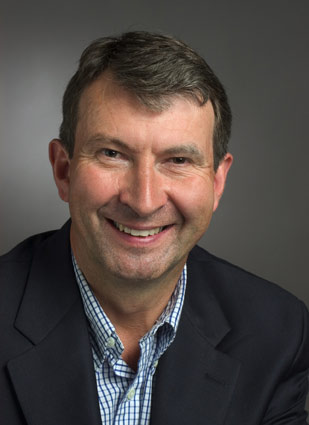 |
| Paul Gatenholm. Photo: Jan-Olof Yxell |
Abstract:
As the first group in the world, researchers from Chalmers will build up body parts using nanocellulose and the body's own cells. Funding will be from the European network for nanomedicine, EuroNanoMed.
Building body parts using nanocellulose
Sweden | Posted on January 26th, 2010Professor Paul Gatenholm at Chalmers is leading and co-ordinating this European research programme, which will construct an outer ear using nanocellulose and a mixture of the patient's own cartilage cells and stem cells.
"We are of course extremely proud as this indicates that we are at the very forefront in European nanomedicine. But above all it is exciting that we have now taking further steps with new applications for nanocellulose," states Paul Gatenholm.
Previously, Paul Gatenholm and his colleagues succeeded, in close co-operation with Sahlgrenska University Hospital, in developing artificial blood vessels using nanocellulose, where small bacteria "spin" the cellulose.
In the new programme, the researchers will build up a three-dimensional nanocellulose network that is an exact copy of the patient's healthy outer ear and construct an exact mirror image of the ear. It will have sufficient mechanical stability for it to be used as a bioreactor, which means that the patient's own cartilage and stem cells can be cultivated directly inside the body or on the patient, in this case on the head.
"As yet we do not know if it will work. It is an extremely exciting project that brings together expertise in image analysis, prototype manufacturing, biomechanics, biopolymers and cell biology. If we succeed it will open up a whole range of new and exciting areas of use."
Funding is from the European network for nanomedicine, EuroNanoMed, whose aim is to shorten the time from research to application within nanomedicine. The Swedish research Council and Vinnova are also part of the network.
"The decision came at the beginning of November and we have just received a very positive evaluation of our proposal for the programme and a final decision regarding funding," says Paul Gatenholm.
The nanocellulose programme also includes the Biomechanics Group from the university of technology ETH in Zurich, Switzerland, clinics from Ulm University Medical Center in Germany and Erasmus University Medical Center in Rotterdam in the Netherlands as well as two smaller enterprises, the German company CellMed and the Dutch company Cellco Tec.
Cellulose-based material is of strategic significance to Sweden and materials science is one of Chalmers eight areas of advance. Biopolymers are highly interesting as they are renewable and could be of major significance in the development of future materials.
Further research into using the forest as a resource for new materials is continuing at Chalmers within the new research programme that is being built up with different research groups at Chalmers and Swerea - IVF. The programme is part of the Wallenberg Wood Science Center, which is being run jointly by the Royal Institute of Technology in Stockholm and Chalmers under the leadership of Professor Lars Berglund at the Royal Institute of Technology.
####
About Chalmers University of Technology
Chalmers is a Swedish university of technology in which research and teaching are conducted on a broad front within technology, natural science and architecture. Our inspiration lies in the joy of discovery and the desire to learn. Underlying everything we do is a wish to contribute to sustainable development both in Sweden and world-wide.
For more information, please click here
Contacts:
Professor Paul Gatenholm
Biopolymer Technology
Chalmers University of Technology, Gothenburg.
Tel: +46 (0)31772 34 07, mobil: +46(0)707-535750
Copyright © Chalmers University of Technology
If you have a comment, please Contact us.Issuers of news releases, not 7th Wave, Inc. or Nanotechnology Now, are solely responsible for the accuracy of the content.
Bookmark:


| Related News Press |
News and information
 Simulating magnetization in a Heisenberg quantum spin chain April 5th, 2024
NRL charters Navy’s quantum inertial navigation path to reduce drift April 5th, 2024
Discovery points path to flash-like memory for storing qubits: Rice find could hasten development of nonvolatile quantum memory April 5th, 2024
Govt.-Legislation/Regulation/Funding/Policy
NRL charters Navy’s quantum inertial navigation path to reduce drift April 5th, 2024
Discovery points path to flash-like memory for storing qubits: Rice find could hasten development of nonvolatile quantum memory April 5th, 2024
Chemical reactions can scramble quantum information as well as black holes April 5th, 2024
Academic/Education
Rice University launches Rice Synthetic Biology Institute to improve lives January 12th, 2024
Multi-institution, $4.6 million NSF grant to fund nanotechnology training September 9th, 2022
Nanomedicine
New micromaterial releases nanoparticles that selectively destroy cancer cells April 5th, 2024
Good as gold - improving infectious disease testing with gold nanoparticles April 5th, 2024
Researchers develop artificial building blocks of life March 8th, 2024
Announcements
NRL charters Navy’s quantum inertial navigation path to reduce drift April 5th, 2024
Discovery points path to flash-like memory for storing qubits: Rice find could hasten development of nonvolatile quantum memory April 5th, 2024
Nanobiotechnology
New micromaterial releases nanoparticles that selectively destroy cancer cells April 5th, 2024
Good as gold - improving infectious disease testing with gold nanoparticles April 5th, 2024
Researchers develop artificial building blocks of life March 8th, 2024
Alliances/Trade associations/Partnerships/Distributorships
Chicago Quantum Exchange welcomes six new partners highlighting quantum technology solutions, from Chicago and beyond September 23rd, 2022
University of Illinois Chicago joins Brookhaven Lab's Quantum Center June 10th, 2022
 |
||
 |
||
| The latest news from around the world, FREE | ||
 |
||
|
|
||
| Premium Products | ||
 |
||
|
Only the news you want to read!
Learn More |
||
 |
||
|
Full-service, expert consulting
Learn More |
||
|
|
||