Home > Press > Podcast: Nanotech method to study cell detachment could lead to improved cancer therapies
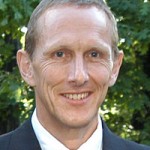 |
| Peter Searson |
Abstract:
"…We know that processes like cell detachment are important in cancer metastasis, where cells become detached from tumors…" Peter Searson
Podcast: Nanotech method to study cell detachment could lead to improved cancer therapies
Baltimore, MD | Posted on December 2nd, 2009Cancer spreads from organ to organ when cells break free from one site and travel to another. Understanding this process, known as metastasis, is critical for developing ways to prevent the spread and growth of cancer cells. Peter Searson, Reynolds Professor of Materials Science and Engineering in the Whiting School of Engineering and director of the Institute for NanoBioTechnology, led a team of engineers who have developed a method to specifically measure detachment in individual cells.
The method, which uses lab-on-a-chip technology, allows researchers to observe and record the exact point when a cell responds to electrochemical cues in its environment and releases from the surface upon which it is growing. Better knowledge of the biochemistry of cell detachment could point the way to better cancer therapies. In this "Great Ideas" podcast, Elizabeth Tracey, communications associate for the School of Medicine, interviews Searson about this current research.
To listen: inbt.jhu.edu/wp-content/uploads/2009/08/searsonfinal06011.mp3
Related links:
You can watch a video and read more about Searson's method of studying cell detachment here: inbt.jhu.edu/lab-on-a-chip-shows-how-cells-break-free/2009/03/18
Peter Searson's INBT profile page: inbt.jhu.edu/research/faculty/profile/peter-searson
This podcast was originally posted to the Johns Hopkins University "Great Ideas" web page. To view the original posting: http://www.jhu.edu/news/podcasts/
####
About Johns Hopkins
The Institute for NanoBioTechnology at Johns Hopkins University brings together 193 researchers from: Bloomberg School of Public Health, Krieger School of Arts and Sciences, School of Medicine, Applied Physics Laboratory, and Whiting School of Engineering to create new knowledge and new technologies at the interface of nanoscience and medicine.
For more information, please click here
Contacts:
For media inquiries contact:
Mary Spiro
410 516-4802
Copyright © Johns Hopkins
If you have a comment, please Contact us.Issuers of news releases, not 7th Wave, Inc. or Nanotechnology Now, are solely responsible for the accuracy of the content.
Bookmark:


| Related News Press |
News and information
 Quantum computer improves AI predictions April 17th, 2026
Flexible sensor gains sensitivity under pressure April 17th, 2026
A reusable chip for particulate matter sensing April 17th, 2026
Detecting vibrational quantum beating in the predissociation dynamics of SF6 using time-resolved photoelectron spectroscopy April 17th, 2026
Nanomedicine
A fundamentally new therapeutic approach to cystic fibrosis: Nanobody repairs cellular defect April 17th, 2026
New molecular technology targets tumors and simultaneously silences two ‘undruggable’ cancer genes August 8th, 2025
New imaging approach transforms study of bacterial biofilms August 8th, 2025
Electrifying results shed light on graphene foam as a potential material for lab grown cartilage June 6th, 2025
Announcements
A fundamentally new therapeutic approach to cystic fibrosis: Nanobody repairs cellular defect April 17th, 2026
UC Irvine physicists discover method to reverse ‘quantum scrambling’ : The work addresses the problem of information loss in quantum computing system April 17th, 2026
Nanobiotechnology
A fundamentally new therapeutic approach to cystic fibrosis: Nanobody repairs cellular defect April 17th, 2026
New molecular technology targets tumors and simultaneously silences two ‘undruggable’ cancer genes August 8th, 2025
New imaging approach transforms study of bacterial biofilms August 8th, 2025
Electrifying results shed light on graphene foam as a potential material for lab grown cartilage June 6th, 2025
 |
||
 |
||
| The latest news from around the world, FREE | ||
 |
||
|
|
||
| Premium Products | ||
 |
||
|
Only the news you want to read!
Learn More |
||
 |
||
|
Full-service, expert consulting
Learn More |
||
|
|
||