Home > Press > Researchers discover recipe for controlling carbon nanotubes
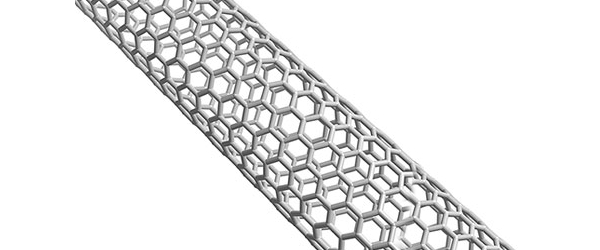 |
| Carbon nanotubes are cylindrical carbon molecules whose novel properties make them useful for applications in chemical engineering, nanotechnology, electronics and other areas. |
Abstract:
Carbon nanotubes hold promise for delivering medicine directly to a tumor; acting as sensors so keen they detect the arrival or departure of a single electron; replacing costly platinum in fuel cells; or as energy-saving transistors and wires, but building them with the right structure has been a challenge.
Researchers discover recipe for controlling carbon nanotubes
Cleveland, OH | Posted on October 14th, 2009Now, two Case Western Reserve University researchers have found that mixing different metals in a catalyst can help determine the tubes' structure and function, or chirality.
"We have established a link between the structure of a catalyst and the chirality of carbon nanotubes," said R. Mohan Sankaran, an assistant professor of chemical engineering at the Case School of Engineering. "Change the catalyst structure by varying its composition, and you can begin to control the chirality of the nanotubes and their electrical and optical properties."
Nanotubes are normally grown in bulk mixtures. When using a nickel catalyst, typically one-third of those grown are metallic and could be used like metal wires to conduct electricity. About two-thirds are semiconducting nanotubes, which could be used as transistors, said Wei-Hung Chiang, who received his doctorate in chemical engineering in May. But separating them according to properties is "costly and can damage the nanotubes," Chiang said.
Better to make what you want.
Chiang and Sankaran found that a mixed iron and nickel catalyst could change the outcome. Of the compositions tested, a catalyst of 27 percent nickel and 73 percent iron produced the most dramatic result: the majority of the nanotubes were semiconducting. The researchers are now working on assessing the purity and integrating the nanotubes into thin film transistors.
Chiang and Sankaran say their findings open the door to experimenting with other elements as catalysts and different combinations, which may produce near-pure nanotubes with desired properties. Their findings appear in a letter published Sept. 20 in the online edition of Nature Materials.
####
For more information, please click here
Copyright © Case Western Reserve University
If you have a comment, please Contact us.Issuers of news releases, not 7th Wave, Inc. or Nanotechnology Now, are solely responsible for the accuracy of the content.
Bookmark:


| Related News Press |
News and information
 Quantum computer improves AI predictions April 17th, 2026
Flexible sensor gains sensitivity under pressure April 17th, 2026
A reusable chip for particulate matter sensing April 17th, 2026
Detecting vibrational quantum beating in the predissociation dynamics of SF6 using time-resolved photoelectron spectroscopy April 17th, 2026
Chemistry
Projecting light to dispense liquids: A new route to ultra-precise microdroplets January 30th, 2026
From sensors to smart systems: the rise of AI-driven photonic noses January 30th, 2026
"Nanoreactor" cage uses visible light for catalytic and ultra-selective cross-cycloadditions October 3rd, 2025
Cambridge chemists discover simple way to build bigger molecules – one carbon at a time June 6th, 2025
Nanotubes/Buckyballs/Fullerenes/Nanorods/Nanostrings/Nanosheets
Tiny nanosheets, big leap: A new sensor detects ethanol at ultra-low levels January 30th, 2026
Enhancing power factor of p- and n-type single-walled carbon nanotubes April 25th, 2025
Chainmail-like material could be the future of armor: First 2D mechanically interlocked polymer exhibits exceptional flexibility and strength January 17th, 2025
Innovative biomimetic superhydrophobic coating combines repair and buffering properties for superior anti-erosion December 13th, 2024
Discoveries
Quantum computer improves AI predictions April 17th, 2026
Flexible sensor gains sensitivity under pressure April 17th, 2026
A reusable chip for particulate matter sensing April 17th, 2026
Detecting vibrational quantum beating in the predissociation dynamics of SF6 using time-resolved photoelectron spectroscopy April 17th, 2026
Announcements
A fundamentally new therapeutic approach to cystic fibrosis: Nanobody repairs cellular defect April 17th, 2026
UC Irvine physicists discover method to reverse ‘quantum scrambling’ : The work addresses the problem of information loss in quantum computing system April 17th, 2026
 |
||
 |
||
| The latest news from around the world, FREE | ||
 |
||
|
|
||
| Premium Products | ||
 |
||
|
Only the news you want to read!
Learn More |
||
 |
||
|
Full-service, expert consulting
Learn More |
||
|
|
||