Home > Press > Measuring mercury with nanotechnology
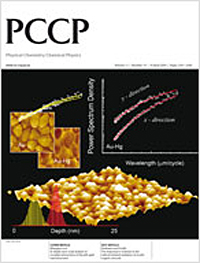 |
| RMIT’s research on mercury monitoring through nano-engineered gold surfaces recently featured on the cover of the prestigious journal, Physical Chemistry and Chemical Physics, a publication of the Royal Society of Chemistry. The research team behind the publication was led by Professor Suresh Bhargava and included Dr Prashant Sawant, Dr Vipul Bansal, Dr Samuel Ippolito and Dr Ylias Sabri. |
Abstract:
RMIT University researchers have used breakthrough nanotechnology to create a pioneering sensor that can precisely measure one of the world's most poisonous substances, mercury.
Measuring mercury with nanotechnology
Australia | Posted on May 27th, 2009The mercury sensor developed by RMIT's Industrial Chemistry Group uses tiny flecks of gold that are nano-engineered to make them irresistible to mercury molecules.
In the effort to reduce mercury contamination in the environment and the associated health risks, accurately measuring the toxin has become a priority for mercury-emitting industries like coal-burning power generators and alumina refineries.
Professor Suresh Bhargava, Dean of the School of Applied Sciences, said traditional mercury sensors used by industry could be unreliable.
"Industrial chimneys release a complex concoction of volatile organic compounds, ammonia and water vapour that can interfere with the monitoring systems of mercury sensors," Professor Bhargava said.
"We wanted a sensor that would be robust enough to cope with that kind of industrial environment but also sensitive enough to give precise readings of the amount of mercury vapour in these emissions."
The mercury sensor was developed with the use of patented electrochemical processes that enabled the RMIT researchers to alter the surface of the gold, forming hundreds of tiny nano-spikes, each one about 1,000 times smaller than the width of a human hair.
These nano-engineered surfaces are then used with existing technologies such as Quartz Crystal Microbalances - a finely tuned set of scales that measure weight down to molecular levels - to determine the levels of mercury in the atmosphere.
"We've known since ancient times that gold attracts mercury, and vice versa, but a regular gold surface doesn't absorb much vapour and any measurements it makes are inconsistent," Professor Bhargava said.
"Our nano-engineered gold surfaces are 180 per cent more sensitive than non-modified surfaces.
"They're finely targeted, so they're unaffected by the usual gases found in effluent gas streams.
"And the sensors we've created using those nano-engineered surfaces have worked successfully at a range of extreme temperatures over many months, just as they'll need to in an industrial location."
Funded through an Australian Research Council Linkage grant, the project was supported by leading industry partners, who have now engaged RMIT to develop a mercury sensing device for a pilot plant trial at one of their Australian refineries.
The Industrial Chemistry Group's multi-disciplinary team is one of Australia's leading research units working on solutions for the monitoring and clean-up of gas and liquid mercury.
The group will extend its work on mercury removal technology through an international collaboration with the Indian Institute of Chemical Technology at Hyderabad, focusing on putting the nano-engineered gold surfaces to use in a system that can absorb and remove mercury vapour from the air.
####
About RMIT University
Our mission is to provide outcome related research and consultancy services that address real world issues. We aim to make a difference to the economic, social, environmental and cultural well-being of the communities we operate within here in Australia and internationally through innovative research and research excellence.
We focus on applied research that is delivered in partnership with leading organisations and individuals who are capable of using research outcomes to create products and services that are leading edge. Our research students are fully supported to ensure they are equipped with the necessary skills to excel in their chosen professional careers.
The passion, energy and intellect of our researchers is used to create positive outcomes for the world we live in. Our success is demonstrated by the diversity of our research projects, the success of our students and the benefits to our partners.
For more information, please click here
Contacts:
Paul Noonan
Head, Media and Communications
Tel. +61 3 9925 2373
Copyright © RMIT University
If you have a comment, please Contact us.Issuers of news releases, not 7th Wave, Inc. or Nanotechnology Now, are solely responsible for the accuracy of the content.
Bookmark:


| Related News Press |
News and information
 Quantum computer improves AI predictions April 17th, 2026
Flexible sensor gains sensitivity under pressure April 17th, 2026
A reusable chip for particulate matter sensing April 17th, 2026
Detecting vibrational quantum beating in the predissociation dynamics of SF6 using time-resolved photoelectron spectroscopy April 17th, 2026
Discoveries
Quantum computer improves AI predictions April 17th, 2026
Flexible sensor gains sensitivity under pressure April 17th, 2026
A reusable chip for particulate matter sensing April 17th, 2026
Detecting vibrational quantum beating in the predissociation dynamics of SF6 using time-resolved photoelectron spectroscopy April 17th, 2026
Announcements
A fundamentally new therapeutic approach to cystic fibrosis: Nanobody repairs cellular defect April 17th, 2026
UC Irvine physicists discover method to reverse ‘quantum scrambling’ : The work addresses the problem of information loss in quantum computing system April 17th, 2026
Environment
A reusable chip for particulate matter sensing April 17th, 2026
Researchers unveil a groundbreaking clay-based solution to capture carbon dioxide and combat climate change June 6th, 2025
 |
||
 |
||
| The latest news from around the world, FREE | ||
 |
||
|
|
||
| Premium Products | ||
 |
||
|
Only the news you want to read!
Learn More |
||
 |
||
|
Full-service, expert consulting
Learn More |
||
|
|
||