Home > Press > Two Scientists Receive Grants for ‘Unconventional’ Research
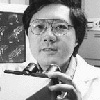 |
| David Sretavan |
Abstract:
Two UCSF researchers are among the first-ever recipients of $42.2 million in federal grants supporting projects that take scientific risks, but also offer potentially huge rewards.
print
Print story
email
E-mail story
David Sretavan, MD, PhD, a UCSF professor of ophthalmology and physiology, and John Sedat, PhD, a UCSF professor of biochemistry and biophysics, were selected, along with 36 other researchers from around the country, as part of the new Exceptional, Unconventional Research Enabling Knowledge Acceleration (EUREKA) program of the National Institutes of Health (NIH).
Two Scientists Receive Grants for ‘Unconventional’ Research
SAN FRANCISCO, CA | Posted on September 23rd, 2008According to the NIH, the program "targets investigators who are testing novel, unconventional hypotheses or are pursuing major methodological or technical challenges." The projects selected for funding must be "substantial in terms of both the size of the scientific community affected and the magnitude of [their] impact on the community," the NIH said on its website.
"EUREKA projects promise remarkable outcomes that could revolutionize science," said NIH Director Elias A. Zerhouni, MD. "The program reflects NIH's commitment to supporting potentially transformative research, even if it carries a greater than usual degree of scientific risk."
"Transform" is exactly what Sretavan hopes to do in the field of nerve injury treatment. Up to now, attempts to promote regrowth in damaged human nerve cells have not translated into successful clinical procedures.
Sretavan's idea: Splice individual nerve cells back together, using the rapidly advancing sciences of micro- and nanotechnology. He envisions a future where special "cellular surgical devices" are used to repair individual nerve cells in people with devastating neurological disorders. Such technologies are only just beginning to be used in biology and medicine, Sretavan said, calling his team's research a "radical departure from existing approaches."
"This is a whole new area of medical research and clinical medicine," he said. "It's kind of an interesting challenge because it requires us to collaborate with a lot of people who haven't really thought about their research being used in biology. It's teamwork, but teamwork with people who almost speak a different scientific language."
With the EUREKA grant money behind them, Sretavan and his team will now focus their efforts on proving that once nerve cells are joined back together, they function the way they are supposed to.
"If you can't demonstrate that, then it would go a long way to convincing others to think about and try this approach," he said.
Like Sretavan, UCSF's Sedat is also hoping to explore the biological applications of emerging technologies. His research focuses on the use of adaptive optics to reduce distortion and produce high-resolution images from deep inside living tissue. Sedat was out of the country and could not be interviewed for this article.
Sretavan, Sedat and other grant recipients will receive up to $200,000 per year for four years to fund their projects - a welcome boost in a weak economy and the current research funding environment.
"These are very tough research funding times," Sretavan said. "And what's great about this EUREKA program is that it shows that the NIH is continually trying to identify and support new ideas, even when, as an institution, it is under substantial budgetary pressure."
####
For more information, please click here
Copyright © UCSF
If you have a comment, please Contact us.Issuers of news releases, not 7th Wave, Inc. or Nanotechnology Now, are solely responsible for the accuracy of the content.
Bookmark:


| Related News Press |
News and information
 Simulating magnetization in a Heisenberg quantum spin chain April 5th, 2024
NRL charters Navy’s quantum inertial navigation path to reduce drift April 5th, 2024
Discovery points path to flash-like memory for storing qubits: Rice find could hasten development of nonvolatile quantum memory April 5th, 2024
Announcements
NRL charters Navy’s quantum inertial navigation path to reduce drift April 5th, 2024
Discovery points path to flash-like memory for storing qubits: Rice find could hasten development of nonvolatile quantum memory April 5th, 2024
Grants/Sponsored Research/Awards/Scholarships/Gifts/Contests/Honors/Records
Discovery points path to flash-like memory for storing qubits: Rice find could hasten development of nonvolatile quantum memory April 5th, 2024
Chemical reactions can scramble quantum information as well as black holes April 5th, 2024
 |
||
 |
||
| The latest news from around the world, FREE | ||
 |
||
|
|
||
| Premium Products | ||
 |
||
|
Only the news you want to read!
Learn More |
||
 |
||
|
Full-service, expert consulting
Learn More |
||
|
|
||