Home > Nanotechnology Columns > Cristian Orfescu > Art and Nanotechnology - Part 1
 |
Cris Orfescu Founder NanoArt21 |
Abstract:
Nanomaterials were used in Art from the early stages of human history. Northwestern University in Chicago published a comprehensive History of Nano Timeline on their site.
January 12th, 2009
Art and Nanotechnology - Part 1
Art - Nanotechnology interaction is over 2000 years old and possibly even older than that. During my research for a NanoArt History I came across a very interesting site and a History of Nano Timeline published by Northwestern University ( http://www.discovernano.northwestern.edu/whatis/History/# ).
Nanomaterials have been used since that time to create art objects like the famous Lycurgus cup that resides in the British Museum in London. The cup's glass contains Gold and Silver nanoparticles which make the cup to change colors from green to red when light is shone through it.
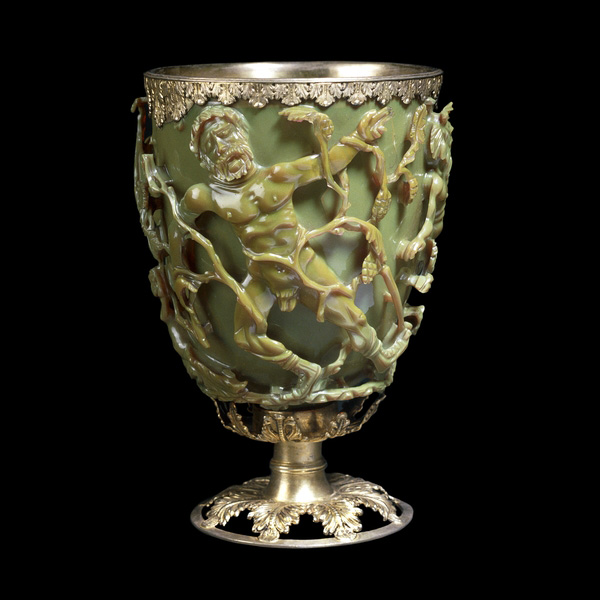 |
| Lycurgus Cup, Roman artifact, 4th Century AD |
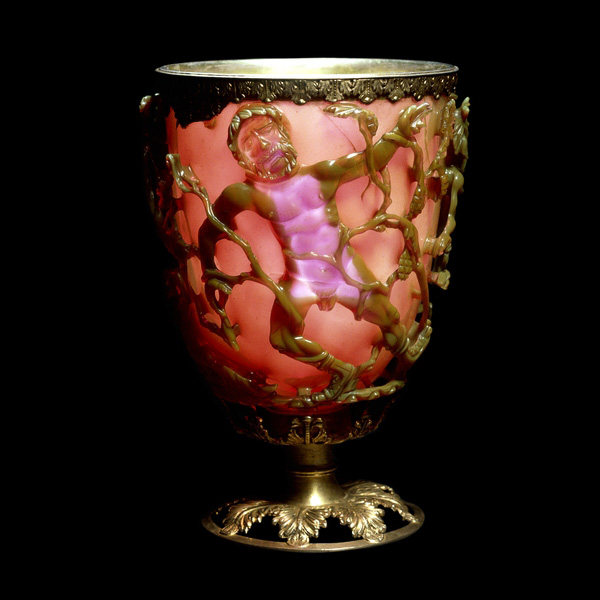 |
| Lycurgus Cup illuminated |
In the 10th-11th centuries, the stained glass began to flourish as an art. Glass was usually coloured by adding nanoparticles of metallic oxides and metals to the glass while in a molten state. Copper oxides were added to produce green, cobalt for blue, silver for yellow, and gold for red glass. After coloring, 'small pieces of glass are arranged to form pictures, held together (traditionally) by strips of lead and supported by a rigid frame' ( http://en.wikipedia.org/wiki/Stained_glass ).
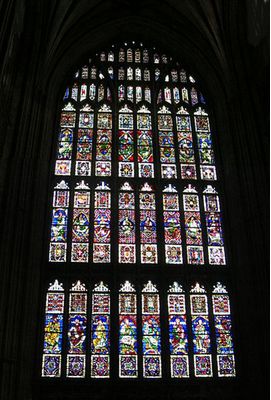 |
| Canterbury Cathedral window, c. 1400 |
In the 15th-16th centuries, Deruta (Umbria, Italy) ceramists created metallic glazes using nanoparticles of Copper and Silver metal. Earlier Deruta ceramics do not have the lustre. The lustred majolica of Gubbio owes its celebrity almost entirely to the work of Maestro Giorgio Andreoli (The Encyclopædia Britannica) who most probably learned the technique from a Moslem potter and depeloped it to perfection. Finished painted pieces were sent from other factories to receive the addition of lustre at Gubbio.
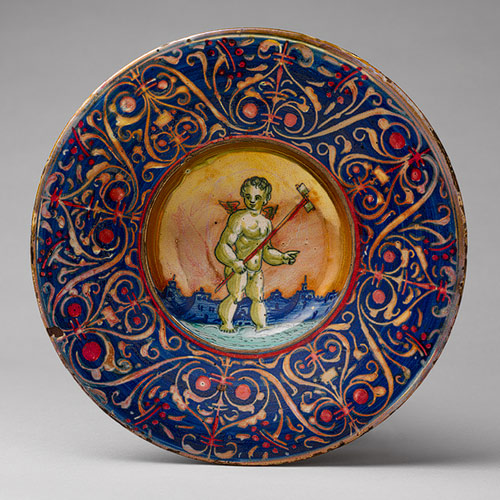 |
| Bowl with a putto holding a pinwheel, ca. 1530 |
Bookmark:


 |
||
 |
||
| The latest news from around the world, FREE | ||
 |
||
|
|
||
| Premium Products | ||
 |
||
|
Only the news you want to read!
Learn More |
||
 |
||
|
Full-service, expert consulting
Learn More |
||
|
|
||