Our NanoNews Digest Sponsors

Home > Nanotechnology Columns > Cristian Orfescu > Showcasing NanoArt Works
 |
Cris Orfescu Founder NanoArt21 |
Abstract:
Reading some of the comments after Barnaby J. Feder published his article "The Art of Nanotech" in the New York Times, I realized that we need to inform people better about NanoArt, otherwise they may think that we are trying to put together some kind of coloring book for Photoshop.
March 19th, 2008
Showcasing NanoArt Works
You can read "The Art of Nanotech" article on http://bits.blogs.nytimes.com/author/bfeder
You can also view a NanoArt slide show on the multimedia site of the New York Times at http://www.nytimes.com/slideshow/2008/01/17/technology/20080117_NANOART_SLIDESHOW_index.html
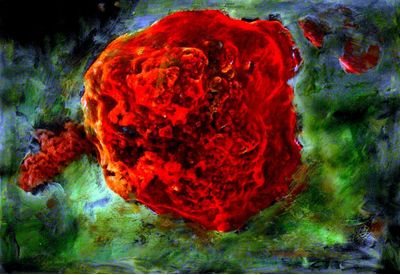 |
| All Day Live Flower, by Dorothea Fleiss, acrylics on paper |
NanoArt is a new artistic discipline at the intersections of Art, Science and Technology, and is a reflection of the technological movement. Nanotechnology is growing rapidly and this growth could easily go out of control. An irresponsible nanotech development could hurt irrevocably the human being and the entire planet.
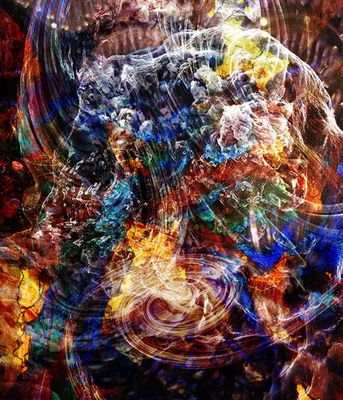 |
| Thought Form, by David Derr, digital painting and manipulation |
Conform to some statistics, over 70% of the US population is not aware of Nanotechnology although they are using nanotech products even there is not too much information regarding how safe they are. I consider Art to be the best vehicle to promote a RESPONSIBLE scientific and technological development to the general public who should be aware of Nanotechnology and its implications on our life.
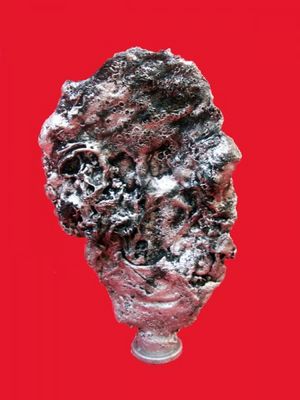 |
| La metamorphose du visage, by Serge Ntamack, sculpture |
NanoArt is a complex artistic-scientific-technological process that comprises three steps:
1. the creation of the nanosculpture (nanostructure) which is actually sculpture at atomic and molecular levels and is accomplished by manipulating atoms and molecules using chemical reactions and physical processes;
2. the visualization of this nanostructure, which is facilitated by the use of advanced microscopes;
3. the artistic interpretation of the scientific images using different artistic techniques in order to convert this image in a piece of artwork to be showcased for a large audience and to educate the public with creative images that are appealing and acceptable.
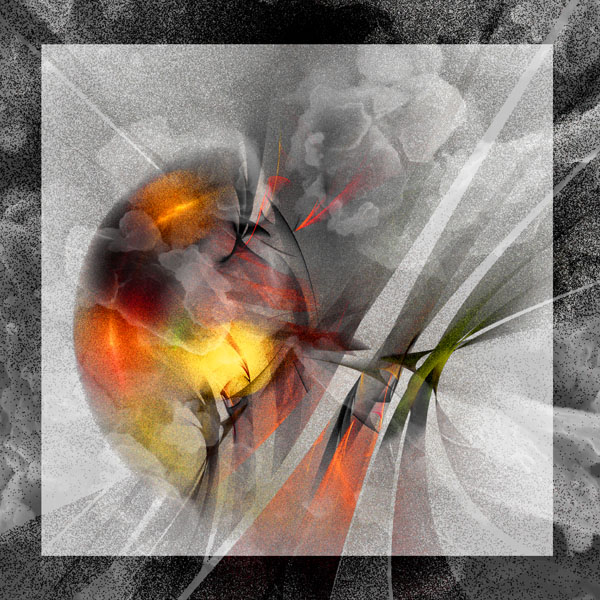 |
| Nano Encounter, by Renata Spiazzi, fractals |
Showcasing NanoArt works is not an easy task. It would be very difficult and non-productive to show the nanosculptures directly on the electron microscope to a large number of people in the same time.
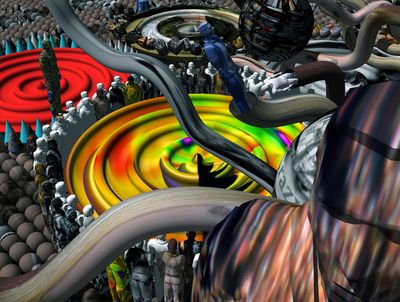 |
| Eigler’s Eyes 2, by Chris Robinson, digital drawing |
The artists have to find a more traditional way to exhibit their creations.
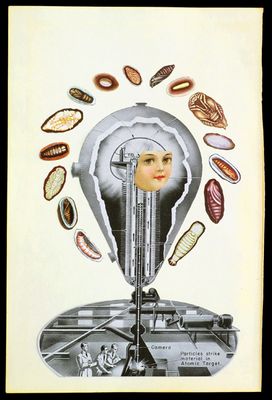 |
| Atomic Target, by Hope Kroll, paper collage |
For example, in this year's edition of the NanoArt competition (please visit http://www.nanoart21.org for more and vote for your favorite work - there is less then two weeks left until the public voting is over), the artists are using a variety of techniques including traditional painting and sculpture, animation, digital painting and manipulation, digital drawing, fractals, digital collage, colorized electron micrographs, and paper collage.
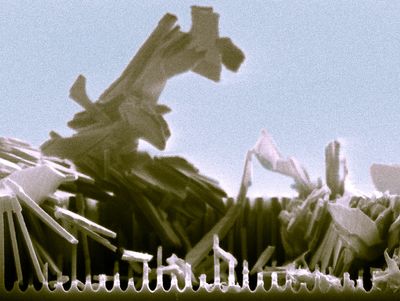 |
| Ravaged, by Pran Mukherjee, Eleanor Howe, Mark Stock, colorized micrograph |
Other artists not included in the competition, are using video (Hugh McGrory and Franziska-Maria Apprich), installations (Victoria Vesna and James Gimzewski), and multimedia (few artists including the author) to bring their NanoArt works to the public at large.
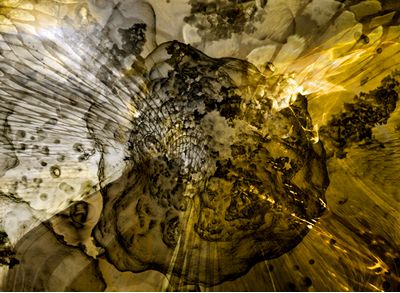 |
| Birth of a New World, by David Hylton, digital collage |
Let's make this clear: NanoArt is not Photography, and is not Digital Art. There is a lot more then Photoshop in the creative process of a NanoArt work. I think the quality of the final artwork and how it is received by the audience is more important rather than what techniques are chosen by the artists to complete the work.
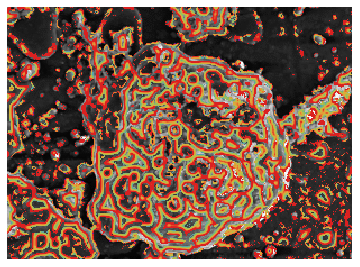 |
| Fizzix, by Steve Luttrell, animation |
To view the animation, please visit: http://bp1.blogger.com/_RhmA0RIZRMA/R4CxhlkdXPI/AAAAAAAAACM/4Vjk2nsRImg/s1600-h/Fizzix.gif
Bookmark:


 |
||
 |
||
| The latest news from around the world, FREE | ||
 |
||
|
|
||
| Premium Products | ||
 |
||
|
Only the news you want to read!
Learn More |
||
 |
||
|
Full-service, expert consulting
Learn More |
||
|
|
||