Home > Nanotechnology Columns > Center for Responsible Nanotechnology > Creating Productive Nanotech Communities
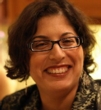 |
Jessica Margolin Director of Research Communities Center for Responsible Nanotechnology |
Abstract:
Moving forward into a rapidly changing world and making good decisions about safe development and responsible use of advanced nanotechnology will require the creation of healthy, diverse, productive communities of nanotech researchers, students, policy analysts, and interested observers.
December 8th, 2007
Creating Productive Nanotech Communities
This month's column is by Jessica Margolin, CRN's new Director of Research Communities...
A healthy community accepts different points of view.
As we move into the future, it's important to recognize how molecular manufacturing has moved from the margins into the mainstream. This is typical for impacts that require a lot of scientific understanding and which can have negative outcomes. An extreme example, Global Warming, used to be called "The Greenhouse Effect," and while people knew there was such an effect, it was unclear whether or not that was occurring on earth or whether those who pointed to it were alarmists.
Molecular manufacturing [1] is not of the same category: there are positive outcomes available as well as negative ones to avoid. Yet it's still the same type of situation, where the science requires scientists. In order to make sense of the science, lay people depend on traditional virtues like scientific rigor and respect for truth -- and conveying the possibility for error and misinterpretation -- in order to frame the situation. And of course, some non-scientists need to make judgments based on the science, whether they're activists, politicians, grantmakers, or science fiction authors.
[1] http://crnano.org/overview.htm
It's easy for well-educated people to forget their own intellectual struggles, which typically occurred within an infrastructure designed specifically to realign students' occasionally faulty intuition and inappropriate intellectual biases. Conversely, it's also easy for people without experience or education in a specific area to discount received wisdom or "book knowledge," or even to disdain the benefits of a cooperative and collaborative environment where knowledge and wisdom are freely and fluidly exchanged. Still, communities include everyone from the well-educated to the naive and curious.
It's a sign of a well-functioning community that although we might blurt out something biased in one direction or another, that something happens to remind us of the balance between the excitement of new perspectives and the stability of feeling tied to a pedagogy.
BUILDING A DIVERSE COMMUNITY
Inhabitants of diverse communities tend to withdraw from collective life, to distrust their neighbours, regardless of the colour of their skin, to withdraw even from close friends, to expect the worst from their community and its leaders, to volunteer less, give less to charity and work on community projects less often, to register to vote less, to agitate for social reform more, but have less faith that they can actually make a difference, and to huddle unhappily in front of the television. Note that this pattern encompasses attitudes and behavior, bridging and bonding social capital, public and private connections. Diversity, at least in the short run, seems to bring out the turtle in all of us.
The above quote is taken from Robert Putnam's lecture, "E Pluribus Unum: Diversity and Community in the Twenty-first Century" [2]. It precedes a very thorough analysis of the shortcomings of the work he presents.
[2] http://tinyurl.com/2so54b
I am motivated to build resilient, supportive environments, and because this requires helping others to "overcome the turtle in all of us," it's important to understand intellectually that eventually diversity is protective: you might be able to manage risk by being private or secretive, but you manage uncertainty by listening to as many voices as possible.
My BA is from UC Berkeley in physics, and my MS focused on nanotechnology research. I left scientific research years ago for many reasons, but I'm well familiar with the degree of intellectual rigor that's required to do solid, unbiased research. I know what it is to learn; and I know what it is to teach. As I get older, I know what it is to have to make decisions with incomplete knowledge and am aware that while some things are unknown because no one asked the question, other things are unknown because they're presently unknowable.
Most scenario projections of science or technology and how it impels social change fall into this particular category of "unknowable." There are many, many different ways of dealing with the feelings that arise when important things are unknowable, and that's a specific kind of diversity that can feel threatening but in fact creates resilience and strength in the face of uncertainty.
So, whether you believe "nano" is a natural progression from "micro" and that any breakthrough discoveries are within the realm of how scientific process works, or you believe that there are fundamental reasons why nanotechnology will be profoundly disruptive -- or you have different ideas altogether -- I hope you will choose to be a member of the scientific and social community surrounding nanotechnological research and policy, particularly here at CRN.
PRACTICAL STUFF ABOUT COMMUNITIES
I do some of my work in community building, in both real space and online, and I subscribe to four tenets:
- Building a community has to do with facilitating infrastructure, and keeping it open and safe for everyone. In an online forum, this means building knowledge (and the ability to find knowledge!) and helping relationships develop among people. It is those relationships that protect the community.
- Excellent participation is about optimizing signal-to-noise, not being noiseless. Another way to think about it: one person's noise is the thing another person must hear in order to be able to articulate their signal.
- Those who know my other work will know that I feel that there are several types of assets worth measuring and protecting, not just financial assets. Similarly, people have different strengths important to a community and they're all worth nurturing and protecting. Even expert communities need people whose primary contributions have nothing to do with the knowledge base itself. A healthy community is one that has tolerance, appreciation and encouragement for people who fill roles that aren't directly related to the "competitive advantage" of the community.
- A community eventually has to self-govern, even an online community. A community isn't stable until it becomes self-governing.
CRN has a new Yahoo discussion group, "CRNtalk" -- come join us! [3] Bring your questions, your observations, those news stories that bother you. Our hope is that this community will help would-be interns find internships, students find mentors, and people find other friends with like interests.
[3] http://tech.groups.yahoo.com/group/CRNtalk/
In the future, we'll be expanding and developing beyond the Yahoo group. If you want to help, whether with scientific writing or community building, let me know at jmargolin [at] crnano [dot] org
Bookmark:


 |
||
 |
||
| The latest news from around the world, FREE | ||
 |
||
|
|
||
| Premium Products | ||
 |
||
|
Only the news you want to read!
Learn More |
||
 |
||
|
Full-service, expert consulting
Learn More |
||
|
|
||