Home > Press > Painting with catalysts: nano-engineered materials for detoxifying water by use of sunlight - EU supports project “4G-PHOTOCAT” with 3.7 million Euro funding
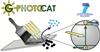 |
| Catalysts for painting: Together with their international colleagues, RUB researchers develop catalysts that detoxify water with the aid of sunlight and aerial oxygen. They aim to fabricate the catalysts as a liquid paint. Copyright: Radim Beránek |
Abstract:
Only light, aerial oxygen, and a catalyst are needed to remove pollutants from water. RUB researchers led by Prof. Radim Beránek collaborate with colleagues from seven different countries in order to develop a photocatalyst that is efficient enough to be profitable. For that purpose, they combine sunlight-absorbing semiconductors and nanostructured materials which they optimize for electron transfer processes. The aim is to implement the newly developed photocatalysts into a liquid paint with which photoreactors can easily be coated. The EU supports the project within its 7th Framework Programme (FP7) with 3.7 million Euro funding for three years.
Painting with catalysts: nano-engineered materials for detoxifying water by use of sunlight - EU supports project “4G-PHOTOCAT” with 3.7 million Euro funding
Bochum, Germany | Posted on February 20th, 2013Current problems of photocatalysis
People from many countries of the world extensively use pesticides which contaminate drinking and irrigation water with toxic organic compounds. In rural areas of Vietnam, herbicides and dioxins, resistant to degradation, made their way into the water cycle during the Vietnam war. Cancer and abnormalities in newborns can be the consequence. "Photocatalysis is potentially one of the cheapest and most efficient methods for purifying water from pollutants," Radim Beránek says. Sunlight and oxygen establish oxidizing conditions under which toxins are easily degraded into non-harmful substances like water and carbon dioxide. Up to now the process, however, faces two problems: degradation rates are too low and assembly of the needed photoreactors is too expensive.
The aim: cheeper and more efficient catalysts
Within the project "4G-PHOTOCAT", the researchers aim to develop cost-efficient photocatalysts with a considerably improved degradation rate. Therefore they fabricate innovative composite materials consisting of semiconductors and nanostructured metal oxides. In order to achieve the optimal architecture for the product, they employ advanced chemical deposition techniques with a high degree of control over composition and morphology. "Our ultimate goal is to implement the newly developed photocatalysts into a liquid paint," Radim Beránek says. "Photoreactors painted with that liquid can be used, for example, for water decontamination in remote rural areas of Vietnam."
Collaborators
"4G-PHOTOCAT "allies the expertise of seven academic and three industrial partners from five European countries and two Southeast Asian countries. At the RUB, Prof. Dr. Radim Beránek collaborates with Prof. Dr. Roland A. Fischer (Inorganic Chemistry II), Prof. Dr. Martin Muhler, and Dr. Jennifer Strunk (Industrial Chemistry). The international collaborators include scientists from the University College London, J. Heyrovský Institute of Physical Chemistry in Prague, Jagiellonian University Krakow, University of Helsinki, Universiti Teknologi Malaysia, and Hanoi University of Agriculture. Furthermore, industrial partners from Finland (Picosun), Czech Republic (Advanced Materials), and Vietnam (Q&A) have joined the team.
Editorial journalist: Dr. Julia Weiler
####
About Ruhr-Universitaet-Bochum
The sixth biggest university in Germany.
Located in the midst of the dynamic, hospitable metropolitan area of the Ruhr, in the heart of Europe, the Ruhr-Universität Bochum (RUB) with its 20 faculties, RUB’s disciplinary institutional units, is home to 5,000 employees and over 36,500 students from 130 countries. All the great scientific disciplines are united on one compact campus.
The RUB is on its way to becoming one of the leading European universities of the 21st Century. Almost all courses are offered as Bachelor and Master degree programmes. Our excellence programmes have made themselves an international name: Our Research School is an international college for structured doctoral research in the life sciences, natural sciences, engineering, the humanities and social sciences. Interfaculty and interdisciplinary Research Departments, which are mutually, nationally and internationally networked, sharpen the profile of the RUB. Added to this is an unsurpassed programme for the promotion of Early Career Researchers, and an excellent infrastructure.
What makes it all come alive is the people who meet on campus with their thirst for knowledge, their curiosity, and their commitment. They help shape the RUB and their open-mindedness makes the RUB an attractive place for people from around the world.
For more information, please click here
Contacts:
Jun.-Prof. Dr. Radim Beránek
Photoactive Materials Group
Faculty of Chemistry and Biochemistry
Ruhr-Universität
44780 Bochum, Germany
Tel. +49/234-32-29431
Copyright © AlphaGalileo
If you have a comment, please Contact us.Issuers of news releases, not 7th Wave, Inc. or Nanotechnology Now, are solely responsible for the accuracy of the content.
Bookmark:


| Related News Press |
News and information
 Simulating magnetization in a Heisenberg quantum spin chain April 5th, 2024
NRL charters Navy’s quantum inertial navigation path to reduce drift April 5th, 2024
Discovery points path to flash-like memory for storing qubits: Rice find could hasten development of nonvolatile quantum memory April 5th, 2024
Chemistry
What heat can tell us about battery chemistry: using the Peltier effect to study lithium-ion cells March 8th, 2024
Nanoscale CL thermometry with lanthanide-doped heavy-metal oxide in TEM March 8th, 2024
Discoveries
Chemical reactions can scramble quantum information as well as black holes April 5th, 2024
New micromaterial releases nanoparticles that selectively destroy cancer cells April 5th, 2024
Utilizing palladium for addressing contact issues of buried oxide thin film transistors April 5th, 2024
Announcements
NRL charters Navy’s quantum inertial navigation path to reduce drift April 5th, 2024
Discovery points path to flash-like memory for storing qubits: Rice find could hasten development of nonvolatile quantum memory April 5th, 2024
Water
Taking salt out of the water equation October 7th, 2022
Research partnerships
Discovery points path to flash-like memory for storing qubits: Rice find could hasten development of nonvolatile quantum memory April 5th, 2024
Researchers’ approach may protect quantum computers from attacks March 8th, 2024
'Sudden death' of quantum fluctuations defies current theories of superconductivity: Study challenges the conventional wisdom of superconducting quantum transitions January 12th, 2024
 |
||
 |
||
| The latest news from around the world, FREE | ||
 |
||
|
|
||
| Premium Products | ||
 |
||
|
Only the news you want to read!
Learn More |
||
 |
||
|
Full-service, expert consulting
Learn More |
||
|
|
||