Home > Press > Nanoparticles provide reinforcement for invisible brackets in orthodontics
 |
| Bracket |
Abstract:
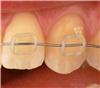
Brackets made from clear plastic polymer used in dental correction orthodontics have produced very good results in recent years, especially in relation to the improved esthetics when compared to metal brackets, but they do present certain problems of wear and tear within the mouth. "We were estimating the friction between teeth and the brackets, and it occurred to us that nanotechnology might be of use to help us resolve this issue," remarked Juan Baselga, head of the UC3M Polymers and Composite Group. The solution that they came up with is to use very hard alumina nanoparticles and spread them evenly in the polysulfone, the polymer mould that Euroortodoncia uses in the industrial production of the brackets.
Nanoparticles provide reinforcement for invisible brackets in orthodontics
Madrid, Spain | Posted on October 30th, 2012This new process, patented by the company and the UC3M researchers, has produced a new material which increases mechanical as well as friction resistance, thereby maintaining the brackets' transparency. "We have been able to develop a more rigid material with this technology which has a clearly improved friction resistance, thus helping to withstand the wear and tear produced by the teeth or by chewing, Professor Baselga explained. In addition, it is biocompatible, which is essential for something that is going to be used in the mouth, and complies with European requirements for products which are in contact with food.
These new types of materials- nano-reinforced plastics- have applications in diverse areas of industry, according to the researchers. In particular, polysulfone is of interest in the bio-health field because of its bio-compatibility in the development of medical- surgical equipment, where it is of the essence to improve rigidity and friction resistance. Furthermore, it has potential applications in the auto industry and in the area of safety such as, for example, the development of a new visor for firefighters.
This innovation allows nanoparticles to be incorporated and evenly dispersed in a polymer mould in a very low proportion. After this process that is based on green chemical techniques is carried out by UC3M researchers, the particles, which are now dispersed in the polymer through micro-extrusion and micro-injection techniques, are then mixed to produce the final piece in the CEOSA-Euroortodoncia . " We measure out the plastic since the minimum that a normal machine can inject is 15 grams, whereas our pieces weigh .06 grams…it would be akin to injecting insulin with a horse syringe", explained the company director, Alberto Cervera. "And with the technology we are using, micro-extrusion and the micro-injection, we are capable of controlling these minuscule quantities of material with the utmost precision," he added.
The relationship between UC3M and CEOSA/Euroortodoncia takes advantage of the synergy between the public and private sector. "We are a small to medium-sized enterprise and we get support from the University to produce a first rate product, which is then advantageous in the agreements which we have had for a decade in the form of end-of-degree-projects, doctorial theses and joint research programs within the European Union and in the Madrid Autonomous Community, for example," Alberto Cervera ellaborated. "We learn a lot from this collaboration," continued Juan Baselga, "because this company presented us with real problems that they face in their industrial area and they open up their laboratories to our needs."
Patents and innovated application are clear examples of the knowledge and technology transfer that UC3M promotes through the Science Park. One hundred and twenty-five research groups and various laboratories all work so that this innovation is possible. All of this, together with their own technological portfolio, shows the capacity of the University for collaboration with business, industry and institutions.
####
About Universidad Carlos III de Madrid
The objetive of Scientific Information Bureau of Carlos III University of Madrid is enhancing the transfer of knowledge to the business sector, as well as fomenting public awareness of the results of its research.
The Carlos III University of Madrid is in the Community of Madrid, 15 minutes to the city centre from its nearest campus. The three campuses are located in Getafe and Leganés, to the south of the capital, and in Colmenarejo, to the north-east.
For more information, please click here
Contacts:
Ana María Herrera
+34916246231
Copyright © AlphaGalileo
If you have a comment, please Contact us.Issuers of news releases, not 7th Wave, Inc. or Nanotechnology Now, are solely responsible for the accuracy of the content.
Bookmark:


| Related Links |
 Further information regarding UC3M capacity for innovation at:
| Related News Press |
News and information
Simulating magnetization in a Heisenberg quantum spin chain April 5th, 2024
NRL charters Navy’s quantum inertial navigation path to reduce drift April 5th, 2024
Discovery points path to flash-like memory for storing qubits: Rice find could hasten development of nonvolatile quantum memory April 5th, 2024
Discoveries
Chemical reactions can scramble quantum information as well as black holes April 5th, 2024
New micromaterial releases nanoparticles that selectively destroy cancer cells April 5th, 2024
Utilizing palladium for addressing contact issues of buried oxide thin film transistors April 5th, 2024
Materials/Metamaterials/Magnetoresistance
Nanoscale CL thermometry with lanthanide-doped heavy-metal oxide in TEM March 8th, 2024
Focused ion beam technology: A single tool for a wide range of applications January 12th, 2024
Announcements
NRL charters Navy’s quantum inertial navigation path to reduce drift April 5th, 2024
Discovery points path to flash-like memory for storing qubits: Rice find could hasten development of nonvolatile quantum memory April 5th, 2024
Patents/IP/Tech Transfer/Licensing
Getting drugs across the blood-brain barrier using nanoparticles March 3rd, 2023
Metasurfaces control polarized light at will: New research unlocks the hidden potential of metasurfaces August 13th, 2021
Arrowhead Pharmaceuticals Announces Closing of Agreement with Takeda November 27th, 2020
Dental
Innovations in dentistry: Navigational surgery, robotics, and nanotechnology October 2nd, 2020
First measurement of electron energy distributions, could enable sustainable energy technologies June 5th, 2020
Gas storage method could help next-generation clean energy vehicles: Tremendous amounts of hydrogen and methane can be stored in nanoscopic pores April 17th, 2020
 |
||
 |
||
| The latest news from around the world, FREE | ||
 |
||
|
|
||
| Premium Products | ||
 |
||
|
Only the news you want to read!
Learn More |
||
 |
||
|
Full-service, expert consulting
Learn More |
||
|
|
||