Home > Press > Robert Snyder, Materials Science Professor and School Co-Chair, Dies at 70
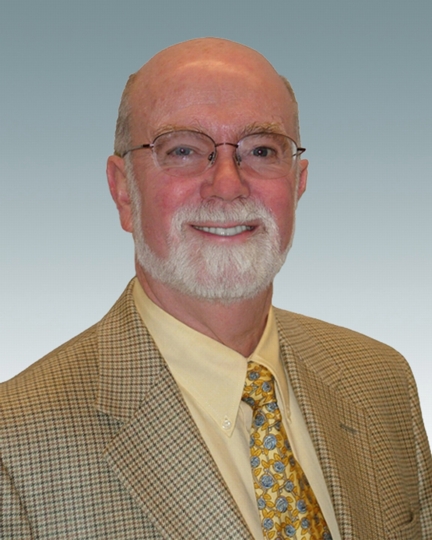 |
| Professor Robert L. Snyder |
Abstract:
Robert L. Snyder, professor and co-chair of the School of Materials Science and Engineering at Georgia Tech, passed away on Sept. 1 after a long battle with cancer. He was 70.
Robert Snyder, Materials Science Professor and School Co-Chair, Dies at 70
Atlanta, GA | Posted on September 2nd, 2011Snyder was known for building bridges between nanotechnology, biology, medicine, chemistry, materials science and engineering throughout his career.
In January 2003, Snyder joined the School of Materials Science and Engineering (MSE) at Georgia Tech and created a new joint program with Peking University, leading to 30 new positions in advanced materials, nanotechnology and bio-enabled materials. Snyder also helped oversee the merger of MSE with the former School of Polymer, Textile and Fiber Engineering.
"As a scholar, teacher, school chair and friend, Bob was everything one would hope for in a colleague," Georgia Tech College of Engineering Dean Gary May said. "He helped lead the School of Materials Science as it grew in numbers and stature to where it is now, recognized as one of the top programs in the nation. Bob's leadership and commitment to engineering education will be sorely missed."
Snyder's research focused on the characterization of advanced materials by x-ray diffraction. He studied everything from superconductors to nanomaterials and had a hand in developing some of the first automated diffractometers, a device that is now a staple in any research laboratory.
He held eight patents, published 300 papers on materials and materials characterization and presented thousands of talks around the world with more than 50 plenary and keynote lectures. Snyder authored two textbooks, edited nine technical books and contributed chapters to nine books and encyclopedias.
"Bob was one of the most dynamic, energetic and visionary leaders I have ever interacted and collaborated with," said Zhong Lin Wang, Regents' professor and College of Engineering Distinguished Professor, who worked with Snyder for nearly a decade. "His deep interest in science and education made extraordinary contributions to the materials program at Georgia Tech. His passing is a huge loss to the school, Georgia Tech and the international scientific community."
Snyder received his bachelor's degree in chemistry from Marist College in 1963 and his doctorate in physical chemistry from Fordham University in 1968. He entered the field of materials through his Ph.D. research and continued it as a post-doc at the University of Pittsburgh and NASA. He began teaching at the New York State College of Ceramics at Alfred University in 1970 and rose through the academic ranks to professor of Ceramic Science in 1982. He chaired the MSE Department at Ohio State from 1996 through 2002.
Students say Snyder was an impactful teacher and mentor, who they will remember fondly.
"I came to Professor Snyder a curious and fresh graduate student, but under his guidance and support, the world has opened up to me, and I have developed into a scientist," said Ken Beyerlein, Snyder's former graduate student. " I always went to him when I would run into a wall in my research, and he always had the uncanny ability to immediately identify and directly address the root of a problem."
The memorial service will be from 1 p.m. to 4 p.m. on Oct. 1 in the Gordy Room of the William C. Wardlaw Jr. Center, located at 177 North Ave. Snyder is survived by his wife of 48 years, Sheila, son Robert, daughter Krissy and two grandchildren.
####
For more information, please click here
Contacts:
Liz Klipp
Media Relations
404-894-6016
Copyright © Georgia Institute of Technology
If you have a comment, please Contact us.Issuers of news releases, not 7th Wave, Inc. or Nanotechnology Now, are solely responsible for the accuracy of the content.
Bookmark:


| Related Links |
| Related News Press |
News and information
 Simulating magnetization in a Heisenberg quantum spin chain April 5th, 2024
NRL charters Navy’s quantum inertial navigation path to reduce drift April 5th, 2024
Discovery points path to flash-like memory for storing qubits: Rice find could hasten development of nonvolatile quantum memory April 5th, 2024
Academic/Education
Rice University launches Rice Synthetic Biology Institute to improve lives January 12th, 2024
Multi-institution, $4.6 million NSF grant to fund nanotechnology training September 9th, 2022
Announcements
NRL charters Navy’s quantum inertial navigation path to reduce drift April 5th, 2024
Discovery points path to flash-like memory for storing qubits: Rice find could hasten development of nonvolatile quantum memory April 5th, 2024
Appointments/Promotions/New hires/Resignations/Deaths
Leibniz Prize winner Professor Dr. Oliver G. Schmidt moves to Chemnitz University of Technology: President Professor Dr. Gerd Strohmeier refers to an 'absolute top transfer' September 10th, 2021
JEOL USA Welcomes New Managing Director, Hidetaka Sawada April 19th, 2021
The National Space Society Remembers Ben Bova : NSS Mourns the Loss of a Visionary NSS Leader December 2nd, 2020
 |
||
 |
||
| The latest news from around the world, FREE | ||
 |
||
|
|
||
| Premium Products | ||
 |
||
|
Only the news you want to read!
Learn More |
||
 |
||
|
Full-service, expert consulting
Learn More |
||
|
|
||