Home > Press > UA Bioengineer Awarded $1.5M to Research Tissue Regeneration
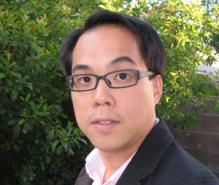 |
| Pak Kin Wong |
Abstract:
Pak Kin Wong aims to discover the rules that govern how biological tissues are formed from individual cells. He is investigating how to grow new tissue to replace that destroyed by disease.
By Pete Brown, College of Engineering
UA Bioengineer Awarded $1.5M to Research Tissue Regeneration
Tucson, AZ | Posted on October 2nd, 2010The director of the National Institutes of Health, Francis S. Collins, has announced that Pak Kin Wong, UA professor of aerospace and mechanical engineering and a BIO5 Institute member, has won a $1.5 million NIH Director's New Innovator Award.
Wong's research aims to discover the rules that govern how biological tissues are formed from individual cells. In particular, Wong is investigating how to grow new tissue to replace that destroyed by disease.
"The research holds great promise in treating degenerative diseases by stimulating damaged tissues to repair themselves, or replacing them with engineered tissues when the body cannot heal itself," Wong said.
Collins announced the award Sept. 30 at the start of the Sixth Annual NIH Director's Pioneer Award Symposium in Bethesda, Md. This is the first time the award has been made to a researcher in any Arizona university.
"NIH is pleased to be supporting early-stage investigators from across the country who are taking considered risks in a wide range of areas in order to accelerate research," said Collins. "We look forward to the results of their work."
"It is a great honor to receive this prestigious award from NIH that supports exceptionally innovative biomedical research," Wong said. "With the support, we will be able to explore extremely challenging research problems that may produce important medical advances."
Wong is working with professor Carol Gregorio, director of the molecular cardiovascular research program in the UA College of Medicine. "We are studying biological processes related to muscular dystrophy and cardiomyopathy," Wong said. "We are also exploring neurodegeneration."
Much of the research conducted by College of Engineering faculty involves collaboration with other UA departments and with external research teams. College of Engineering Dean Jeff Goldberg described Wong as "an outstanding faculty member whose research spans mechanical engineering, medicine and biology."
"Dr. Wong strongly complements the college's goals of solving important problems by working on interdisciplinary teams in areas that are not traditionally engineering oriented," Goldberg said. "Our aim is to be a strong partner with both campus and external research teams, and with faculty members like Dr. Wong we can achieve that goal in our key research areas."
Wong's research project is seeking the answer to a crucial question in tissue regeneration: How do the cells of a tissue know how to organize into structures that are much bigger than themselves?
"This project will investigate the fundamental rules of cells that collectively drive complex tissue architectures," Wong said. His research will look at how individual cells know what they are supposed to do without a central coordinator or a blueprint. "We aim to study, understand, and control how nature builds complex tissue," he said.
Wong is director of the UA's Systematic Bioengineering Laboratory, which weaves bio, nano and information technologies together to advance what is known about design rules at a cellular level.
"While we have the technologies to study nature at the molecular level, conversely, nature provides an excellent model to develop even better nanotechnologies," Wong says on his lab's website. Wong's lab develops tools and approaches to understand complex biological systems.
He is also researching how to control and mimic what he calls the "fantastic designs" found in cells and tissues. He describes this field of study as "systematic bioengineering technologies" and says it has "great potential in revolutionizing medical science and the concept of nanotechnology we think of today."
####
For more information, please click here
Contacts:
Media Contact
Pete Brown
College of Engineering
520-621-3754
Copyright © University of Arizona
If you have a comment, please Contact us.Issuers of news releases, not 7th Wave, Inc. or Nanotechnology Now, are solely responsible for the accuracy of the content.
Bookmark:


| Related News Press |
News and information
 Simulating magnetization in a Heisenberg quantum spin chain April 5th, 2024
NRL charters Navy’s quantum inertial navigation path to reduce drift April 5th, 2024
Discovery points path to flash-like memory for storing qubits: Rice find could hasten development of nonvolatile quantum memory April 5th, 2024
Academic/Education
Rice University launches Rice Synthetic Biology Institute to improve lives January 12th, 2024
Multi-institution, $4.6 million NSF grant to fund nanotechnology training September 9th, 2022
Nanomedicine
New micromaterial releases nanoparticles that selectively destroy cancer cells April 5th, 2024
Good as gold - improving infectious disease testing with gold nanoparticles April 5th, 2024
Researchers develop artificial building blocks of life March 8th, 2024
Announcements
NRL charters Navy’s quantum inertial navigation path to reduce drift April 5th, 2024
Discovery points path to flash-like memory for storing qubits: Rice find could hasten development of nonvolatile quantum memory April 5th, 2024
Grants/Sponsored Research/Awards/Scholarships/Gifts/Contests/Honors/Records
Discovery points path to flash-like memory for storing qubits: Rice find could hasten development of nonvolatile quantum memory April 5th, 2024
Chemical reactions can scramble quantum information as well as black holes April 5th, 2024
Nanobiotechnology
New micromaterial releases nanoparticles that selectively destroy cancer cells April 5th, 2024
Good as gold - improving infectious disease testing with gold nanoparticles April 5th, 2024
Researchers develop artificial building blocks of life March 8th, 2024
 |
||
 |
||
| The latest news from around the world, FREE | ||
 |
||
|
|
||
| Premium Products | ||
 |
||
|
Only the news you want to read!
Learn More |
||
 |
||
|
Full-service, expert consulting
Learn More |
||
|
|
||