Home > Press > Nanomaterials Researcher Hopes His Work Helps Build a More-Efficient Nuclear Reactor
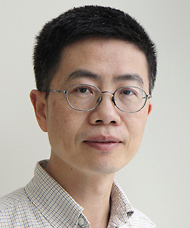 |
| Dr. Hongbing Lu has landed the biggest research grant yet within the University’s young Mechanical Engineering Department. |
Abstract:
With renewed attention being given to nuclear power, a UT Dallas researcher has snagged an $875,000 Department of Energy (DOE) grant to explore a means to boost power plant efficiency and reduce nuclear waste.
Nanomaterials Researcher Hopes His Work Helps Build a More-Efficient Nuclear Reactor
Dallas, TX | Posted on July 19th, 2010It's the biggest research grant yet within the University's young Mechanical Engineering Department.
Dr. Hongbing Lu, a nanomaterials expert and the first holder of the Louis Beecherl Jr. Chair in mechanical engineering at the Erik Jonsson School of Engineering and Computer Science, will simulate the cracks that form in the metal-alloy surface, or cladding, of nuclear fuel rods. These cracks - which develop in the stressful reactor environment of tremendous heat, corrosion, irradiation and pressure - are microscopic in size but can cause a reduction in the fuel burn-up rate, decreasing power station efficiency and increasing nuclear waste.
"We're working on a very general simulation methodology that can be applied to that kind of environment," Lu said. "It's more than just crack growth. We need to understand how the material behaves under extreme pressure, temperature, corrosion and irradiation. With the methodology we're using, we're taking all of those factors into consideration and incorporating material behaviors into some mathematical models to describe them under very complicated conditions."
Lu and his team will generate data about the effects of pressure and temperature, factoring in DOE information about fission and other labs' information about the effects of corrosion.
"Once we've gathered all of the information on nuclear fuel cladding in that environment, then we'll be able to plug it all into a simulation code and develop a better understanding of how quickly the cracks grow," Lu said. "At that point we can go beyond the simulations and begin working on actual materials tested in the government labs."
The ultimate goal is to use the results to come up with a better fuel-cladding material, but the work should have application in a variety of other areas as well.
"The same simulation methodologies we're developing can be applied to other parts of a nuclear power station," Lu said. "Take the pressure vessels, for instance. The environment may not be as extreme as in the fuel cladding - the temperature and radiation may be lower - but, overall, the two environments are very similar. And if you remove the radiation, you can apply the methodologies to other high-pressure environments such as engines."
Despite lingering concerns by the public about the safety of nuclear power plants even decades after the Three-Mile Island and Chernobyl nuclear accidents, the planet is in the midst of what has been called a nuclear renaissance, especially in China and India. Lu hopes to assuage people's concerns.
"With the use of modern technology, nuclear energy is really safe," Lu said. "It's quite different from many decades ago. The nuclear physics has already been figured out. Other things are dictating the efficiency of the fuel burn-up. You need people from all disciplines. My contribution has to do with the mechanics and materials aspects of the nuclear fission process."
Energy is one of the primary issues society has to deal with right now, he added, noting that alternatives to fossil fuels are desperately needed.
####
For more information, please click here
Contacts:
Media Contact: Jimmie Markham, UT Dallas, (972) 883-2198,
Office of Media Relations, UT Dallas, (972) 883-2155,
Copyright © UT Dallas
If you have a comment, please Contact us.Issuers of news releases, not 7th Wave, Inc. or Nanotechnology Now, are solely responsible for the accuracy of the content.
Bookmark:


| Related News Press |
News and information
 Simulating magnetization in a Heisenberg quantum spin chain April 5th, 2024
NRL charters Navy’s quantum inertial navigation path to reduce drift April 5th, 2024
Discovery points path to flash-like memory for storing qubits: Rice find could hasten development of nonvolatile quantum memory April 5th, 2024
Announcements
NRL charters Navy’s quantum inertial navigation path to reduce drift April 5th, 2024
Discovery points path to flash-like memory for storing qubits: Rice find could hasten development of nonvolatile quantum memory April 5th, 2024
Environment
Billions of nanoplastics released when microwaving baby food containers: Exposure to plastic particles kills up to 75% of cultured kidney cells July 21st, 2023
Energy
Development of zinc oxide nanopagoda array photoelectrode: photoelectrochemical water-splitting hydrogen production January 12th, 2024
Shedding light on unique conduction mechanisms in a new type of perovskite oxide November 17th, 2023
Inverted perovskite solar cell breaks 25% efficiency record: Researchers improve cell efficiency using a combination of molecules to address different November 17th, 2023
The efficient perovskite cells with a structured anti-reflective layer – another step towards commercialization on a wider scale October 6th, 2023
Grants/Sponsored Research/Awards/Scholarships/Gifts/Contests/Honors/Records
Discovery points path to flash-like memory for storing qubits: Rice find could hasten development of nonvolatile quantum memory April 5th, 2024
Chemical reactions can scramble quantum information as well as black holes April 5th, 2024
 |
||
 |
||
| The latest news from around the world, FREE | ||
 |
||
|
|
||
| Premium Products | ||
 |
||
|
Only the news you want to read!
Learn More |
||
 |
||
|
Full-service, expert consulting
Learn More |
||
|
|
||