Home > Press > Palos Physician's Research Advances New Therapy in Cartilage Repair
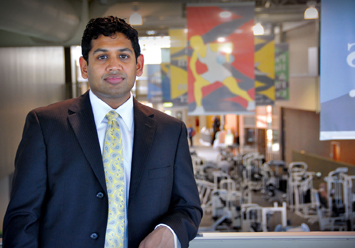 |
| Dr. Nirav A. Shah, MD |
Abstract:
Dr. Nirav A. Shah, MD, an orthopaedic sports medicine surgeon affiliated with Palos Community Hospital is the first to design a new nanotechnology biomedical therapy that promotes the growth of new, stronger cartilage to aid in the treatment of joint injuries.
Palos Physician's Research Advances New Therapy in Cartilage Repair
Palos Heights, IL | Posted on April 16th, 2010"In conjunction with current minimally invasive surgical techniques, we have discovered that we can accelerate and enhance cartilage repair by using a synthetically developed biomaterial which is composed of the amino acids that normally exist in humans," says Dr. Shah. "Translating this to a clinical solution may mean quicker return to athletic activities and work, and possibly prevent injuries from progressing to further cartilage degeneration or end-stage arthritis."
Cartilage damage is typically associated with work and athletic injuries, and commonly occurs in conjunction with ACL tears and other ligament problems. Damaged cartilage can lead to joint pain, swelling, stiffness and loss of mobility, and eventually to osteoarthritis, a condition that currently affects 27 million people in the United States. With an aging and increasingly active population, that figure is expected to grow.
Unlike bone, cartilage does not grow back, so treatments to regenerate the tissue are critical. Current cartilage repair techniques oftentimes lead to Type I collagen, which resembles scar tissue, Dr. Shah explains. However, normal cartilage is composed of Type II collagen. The self-assembling peptide molecules used by Dr. Shah and his colleagues are able to more closely mimic the nano-structure of natural cartilage.
Dr. Shah's research at Northwestern University focused on cartilage damage to the knee, but other joints - including the shoulder, elbow, hip and ankle - could potentially benefit from the new therapy. "While still in pre-clinical trials, we are hopeful we could use this as an adjunct to current minimally invasive surgical techniques to improve and accelerate cartilage repair and regeneration," Dr. Shah says. "In the long run, we hope this also will slow and possibly decrease the incidence of arthritis after these types of injuries."
Dr. Shah anticipates that clinical trials may begin in as little as five years. In the meantime, he recommends that patients and primary care physicians have a low threshold for seeking out the expertise of an orthopaedic sports medicine specialist if there is concern for a cartilage injury.
"It's important for patients to present early on to an orthopaedic sports medicine physician with acute knee or other joint injuries so proper treatment, whether surgical or non-surgical, can begin immediately to maximize recovery and achieve the best possible outcomes," says Dr. Shah. "While these biological advancements are exciting, if safe and expedient intervention is not performed, future or early surgical treatments may not be as effective."
Dr. Shah and his colleagues' findings were reported by the Proceedings of the National Academy of Science on February 1, and are also published in the April 7, issue of the Journal of the American Medical Association. This significant contribution to orthopaedics also was awarded first place at the 2008 Orthopaedic Research & Education Foundation (OREF) Midwest Resident Research Symposium. OREF is the research and education arm of the American Orthopaedic Association, the American Association of Orthopaedic Surgeons, and the Orthopaedic Research Society.
Born and raised in the suburbs of Chicago, Dr. Shah is an orthopaedic surgeon with a sub-specialty in sports medicine. He completed his residency at McGaw Medical Center at Northwestern University, Chicago, and received his medical degree from the University of Illinois College of Medicine. He completed his subspecialty training in sports medicine and arthroscopic surgery in Houston, TX, at Methodist Hospital and Baylor College of Medicine where he worked with high school, collegiate and professional teams. Dr. Shah is affiliated with Palos Community Hospital in Palos Heights, IL.
A leading provider of orthopaedic care, Palos Community Hospital unites orthopaedic surgical excellence with exceptional nursing care and comprehensive physical therapy to provide a multi-disciplinary approach that quickly and safely returns patients to an optimal level of functionality. This, combined with Palos Home Health Care services and the professional staff and state-of-the-art facilities of the Palos Health & Fitness Center, makes orthopaedic care at Palos Community Hospital one of the most comprehensive in the Chicago area.
####
About Palos Community Hospital
Palos Community Hospital is a 436-bed non-profit health care facility located in Palos Heights, IL. As one of the leading area hospitals, Palos has been serving the communities of Chicago's southwest suburbs for nearly 40 years. Its 530-affiliate physicians represent more than 40 specialties and subspecialties. Palos Community Hospital is operated in accordance with the Ethical and Religious Directives for Catholic Healthcare Facilities.
For more information, please click here
Contacts:
(708) 923-4000
12251 S. 80th Avenue
Palos Heights, IL 60463
Copyright © Palos Community Hospital
If you have a comment, please Contact us.Issuers of news releases, not 7th Wave, Inc. or Nanotechnology Now, are solely responsible for the accuracy of the content.
Bookmark:


| Related News Press |
News and information
 Simulating magnetization in a Heisenberg quantum spin chain April 5th, 2024
NRL charters Navy’s quantum inertial navigation path to reduce drift April 5th, 2024
Discovery points path to flash-like memory for storing qubits: Rice find could hasten development of nonvolatile quantum memory April 5th, 2024
Possible Futures
Discovery points path to flash-like memory for storing qubits: Rice find could hasten development of nonvolatile quantum memory April 5th, 2024
With VECSELs towards the quantum internet Fraunhofer: IAF achieves record output power with VECSEL for quantum frequency converters April 5th, 2024
Self Assembly
Liquid crystal templated chiral nanomaterials October 14th, 2022
Nanoclusters self-organize into centimeter-scale hierarchical assemblies April 22nd, 2022
Atom by atom: building precise smaller nanoparticles with templates March 4th, 2022
Nanostructures get complex with electron equivalents: Nanoparticles of two different sizes break away from symmetrical designs January 14th, 2022
Nanomedicine
New micromaterial releases nanoparticles that selectively destroy cancer cells April 5th, 2024
Good as gold - improving infectious disease testing with gold nanoparticles April 5th, 2024
Researchers develop artificial building blocks of life March 8th, 2024
Announcements
NRL charters Navy’s quantum inertial navigation path to reduce drift April 5th, 2024
Discovery points path to flash-like memory for storing qubits: Rice find could hasten development of nonvolatile quantum memory April 5th, 2024
Sports
Surrey reveals its implantable biosensor that operates without batteries May 22nd, 2020
Collagen nanofibrils in mammalian tissues get stronger with exercise December 14th, 2018
Epoxy compound gets a graphene bump: Rice scientists combine graphene foam, epoxy into tough, conductive composite November 14th, 2018
Nanobiotechnology
New micromaterial releases nanoparticles that selectively destroy cancer cells April 5th, 2024
Good as gold - improving infectious disease testing with gold nanoparticles April 5th, 2024
Researchers develop artificial building blocks of life March 8th, 2024
 |
||
 |
||
| The latest news from around the world, FREE | ||
 |
||
|
|
||
| Premium Products | ||
 |
||
|
Only the news you want to read!
Learn More |
||
 |
||
|
Full-service, expert consulting
Learn More |
||
|
|
||