Home > Press > White House nominates Berkeley Lab’s Majumdar to head key DOE agency
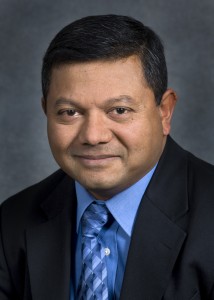 |
| Arun Majumdar |
Abstract:
The White House announced its intention to nominate Lawrence Berkeley National Laboratory and University of California, Berkeley engineer and scientist Arun Majumdar to become the first director of the U.S. Department of Energy's Advanced Research Projects Agency-Energy (ARPA-E).
White House nominates Berkeley Lab’s Majumdar to head key DOE agency
Berkeley, CA | Posted on September 19th, 2009ARPA-E's goals are to create technologies that have the potential to reduce the nation's reliance on foreign energy supplies, reduce energy-related greenhouse gas emissions, and improve energy efficiency. It focuses on high-risk, high-payoff technologies that promise to transform the energy landscape.
Majumdar's nomination must undergo Senate confirmation.
A mechanical engineer and materials scientist, Majumdar's wide-ranging expertise spans energy efficiency technology research and implementation in the U.S. and abroad, as well as materials science innovations such as using nanotechnology to harness the energy lost as heat during the production of electricity.
He views the nomination as an honor and a call to duty.
"It is a rare privilege and an honor when the President asks you to serve the nation in such a capacity," says Majumdar. "I came to this country as an immigrant and am deeply appreciative and indebted to this nation for opening the doors and welcoming me with open arms. I have received so much. This is my way of stepping up and paying back."
Adds Interim Berkeley Lab Director Paul Alivisatos, "I am very excited and pleased that a scientist of Arun Majumdar's distinction and caliber has been nominated by the President to serve as the head of ARPA-E. Arun's leadership and energy at Berkeley Lab's Energy and Environmental Technologies Division has been exemplary, and he will be greatly missed."
Majumdar took the helm of Berkeley Lab's Environmental Energy Technologies Division in 2007. The division conducts research in advanced energy technologies, atmospheric sciences, energy-efficient building technologies, energy analysis, and indoor environmental quality. Majumdar has also served as Berkeley Lab's Associate Laboratory Director for Energy and Environmental Sciences since February 2009.
He has been a member of the University of California, Berkeley faculty since 1997, where he holds the Almy and Agnes Maynard Chair Professorship in the College of Engineering.
While serving as head of the Environmental Energy Technologies Division, Majumdar further cemented the Lab's role as a world-renowned leader in energy efficiency research.
Earlier this year, he helped forge ties between Berkeley Lab and China's Tsinghua University to promote the shared development and implementation of building energy efficiency, a move intended to reduce energy consumption and greenhouse gas emissions in the U.S and China.
In a similar partnership, he helped usher in a joint research and development program between the U.S. and India. The Berkeley-India Joint Leadership on Energy and the Environment, announced last year, brings together researchers from Berkeley Lab and UC Berkeley, and other U.S. and Indian universities and institutions. Its goal is to reduce greenhouse gas emissions while maintaining sustained economic growth in both nations.
And in keeping with his roots as a leading materials scientist and mechanical engineer, Majumdar recently developed a way to use silicon nanowires to capture and use the energy lost as heat during the production of electricity. The futuristic technology could someday be used to convert the large amounts of waste heat into useful electricity. His research interests include energy conversion, transport, and storage ranging from molecular and nanoscales to large energy systems.
If confirmed by the Senate, Majumdar will resign from Berkeley Lab and the University of California. Ashok Gadgil will then serve as interim director of the Lab's Environmental Energy Technologies Division.
Among his many positions, Majumdar has served as director of the Berkeley Nanosciences and Nanoengineering Institute, an umbrella organization for expanding and coordinating Berkeley research and educational activities in nanoscale science and engineering.
He is the founding chair of the American Society of Mechanical Engineers' Nanotechnology Institute. He also served as a member of the Council of Materials Science and Engineering at the Department of Energy, and on the Advisory Committee to the Engineering Directorate of the National Science Foundation.
Majumdar is a fellow of the American Society of Mechanical Engineers and the American Association for the Advancement of Science. He is also a member of the U.S. National Academy of Engineering. He received a Ph.D. in mechanical engineering from the University of California, Berkeley in 1989.
####
About Berkeley Lab
Berkeley Lab is a U.S. Department of Energy national laboratory located in Berkeley, California. It conducts unclassified scientific research and is managed by the University of California for the DOE Office of Science.
For more information, please click here
Contacts:
Jeff Miller
(510) 508-1090
Copyright © Berkeley Lab
If you have a comment, please Contact us.Issuers of news releases, not 7th Wave, Inc. or Nanotechnology Now, are solely responsible for the accuracy of the content.
Bookmark:


| Related News Press |
News and information
 Simulating magnetization in a Heisenberg quantum spin chain April 5th, 2024
NRL charters Navy’s quantum inertial navigation path to reduce drift April 5th, 2024
Discovery points path to flash-like memory for storing qubits: Rice find could hasten development of nonvolatile quantum memory April 5th, 2024
Govt.-Legislation/Regulation/Funding/Policy
NRL charters Navy’s quantum inertial navigation path to reduce drift April 5th, 2024
Discovery points path to flash-like memory for storing qubits: Rice find could hasten development of nonvolatile quantum memory April 5th, 2024
Chemical reactions can scramble quantum information as well as black holes April 5th, 2024
Announcements
NRL charters Navy’s quantum inertial navigation path to reduce drift April 5th, 2024
Discovery points path to flash-like memory for storing qubits: Rice find could hasten development of nonvolatile quantum memory April 5th, 2024
Appointments/Promotions/New hires/Resignations/Deaths
Leibniz Prize winner Professor Dr. Oliver G. Schmidt moves to Chemnitz University of Technology: President Professor Dr. Gerd Strohmeier refers to an 'absolute top transfer' September 10th, 2021
JEOL USA Welcomes New Managing Director, Hidetaka Sawada April 19th, 2021
The National Space Society Remembers Ben Bova : NSS Mourns the Loss of a Visionary NSS Leader December 2nd, 2020
 |
||
 |
||
| The latest news from around the world, FREE | ||
 |
||
|
|
||
| Premium Products | ||
 |
||
|
Only the news you want to read!
Learn More |
||
 |
||
|
Full-service, expert consulting
Learn More |
||
|
|
||